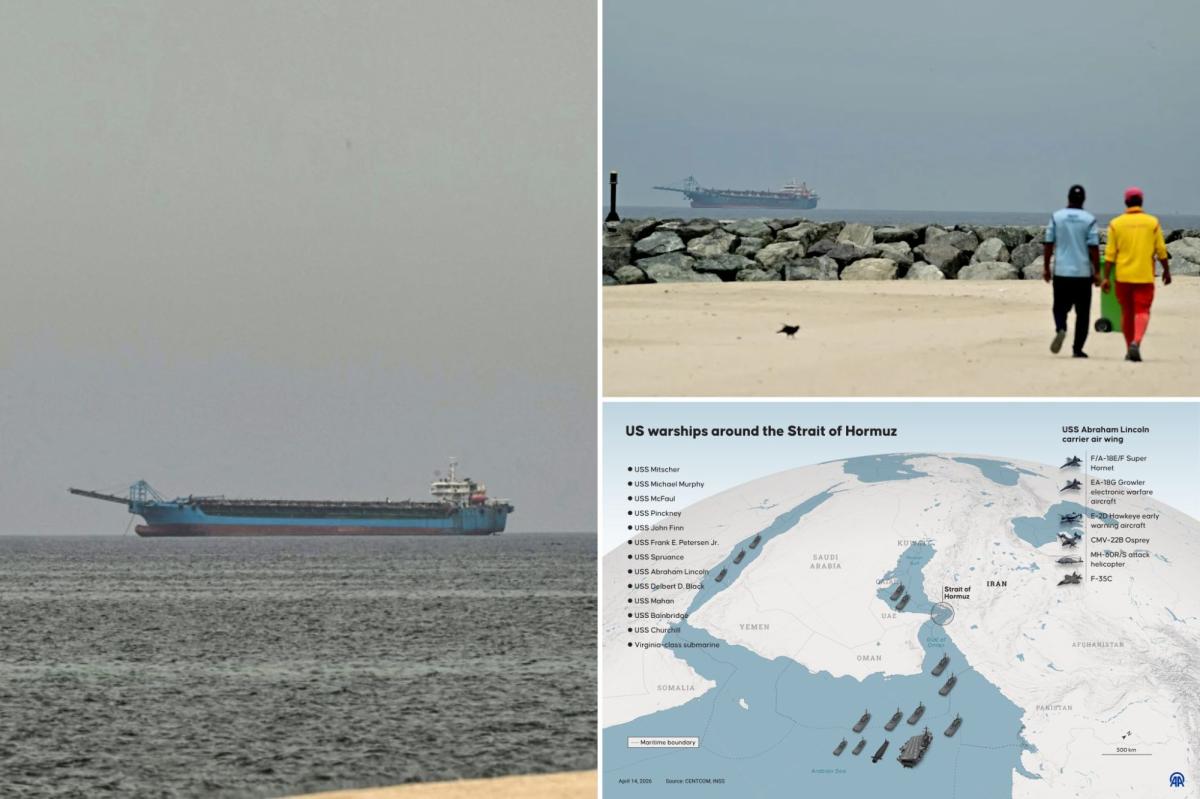


According to tracking data, at least four vessels linked to Iran, including a Chinese tanker, navigated the Strait of Hormuz on Tuesday, nearly a full day following President Trump’s imposition of a blockade.
It remains uncertain whether these ships were granted passage through the vital trade route as part of a U.S. “grace period.” This temporary measure allowed certain vessels already within the waterway to exit despite the blockade coming into effect at 10 a.m. ET on Monday.
MarineTraffic data revealed that two of these ships, the Christianna and Elpis, had previously docked at Iranian ports.
The blockade enforces a ban on ships entering or leaving Iranian ports, while keeping the strait accessible for most other maritime traffic, according to U.S. military statements.
The Elpis, a methanol carrier previously known as Chamtang, had already been sanctioned by the U.S. due to its affiliations with Iran’s clandestine fleet.
Additionally, the Rich Starry and Murlikishan tankers, which are also subject to U.S. sanctions for engaging in Iran-related trade, passed through this crucial oil transit point overnight.
The Rich Starry, which is owned by a Chinese shipping company, initially appeared to halt its journey away from an Iranian port and back to China but eventually continued through and out of the strait to make its way back home, the New York Times reported.
The Shanghai Xuanrun Shipping Company tanker is carrying about 250,000 barrels of methanol, according to maritime trackers.
Trump vowed on Monday to fight back against Iran’s “WORLD EXTORTION” and ensure that no one paying tolls to the regime would get through the waterway after cease-fire negotiations fell through.
The move is also likely to put pressure on Iran’s already struggling economy by dealing a blow to its oil industry.
In retaliation, Tehran threatened to hit naval ships going through the strait and to retaliate against its Gulf neighbors’ ports.
China’s foreign ministry Tuesday slammed the US blockade as “dangerous and irresponsible,” warning that it would only aggravate tensions in the already volatile Middle East.
“We urge relevant parties to honor the ceasefire agreement, stick to the direction of peace talks and take concrete actions to de-escalate the situation so that normal traffic via the Strait will be able to resume as soon as possible,” ministry rep Lin Jian said in a statement.
China, which gets more than half its crude from the Middle East, serves as Iran’s biggest trading partner, buying about 80% of Tehran’s oil.
Beijing did not make mention of its ships passing through the strait under the blockade.
Since the US-Israeli war against Iran began Feb. 28, only a handful of ships have passed through the Strait of Hormuz every day, a far cry from the more than 130 that previously crossed every day.
The majority of ships that had continued to go through the strait have links to either Iran and China. `
With Post wires


