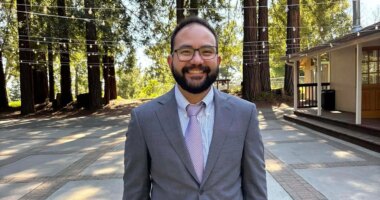

When conversing with the political figures representing Greater Southern California, the state’s strong Democratic leanings aren’t immediately apparent.
Beyond what local officials describe as Sacramento’s “blue curtain,” there is a rising discontent among the region’s more than 1.1 million registered Republicans—a GOP contingent larger than those in 40 other U.S. states—alongside independent voices pushing back against the status quo.
Some critics liken their situation to being in an “abusive relationship” with a single-party state, accusing it of swapping the California Dream for extreme policies that leave families feeling “robbed” every time they refuel their vehicles.
“Driving is a necessity for us, particularly for parents and working individuals, many of whom commute because, as you know, Los Angeles County covers 4,600 square miles, and the areas with the most job opportunities are the priciest to reside in,” shared LA GOP Chair Roxanne Hoge with Fox News Digital. In fact, Los Angeles County spans approximately 4,751 square miles. “Kamala Harris, our former vice president, once stood in front of a gas station in North Carolina and remarked, ‘Can you believe this price, $3.97?’ We’d welcome $3.97 here in LA, but that’s not what we’re seeing.”
“This is a topic on everyone’s lips because it doesn’t just affect gas prices but also the cost of food and the entire economy… I feel it in my own wallet,” noted Los Angeles City Council member John Lee, the city’s sole elected official not affiliated with the Democratic Party. “I notice it when my family shops for groceries; prices have soared… Historically, California consistently ranks as either the first or second most expensive state for gas, and that’s due to the high taxes and fees imposed by the government.”
For many Californians, a trip to the gas station isn’t merely a routine task but a financial burden, one that critics attribute to the state’s legislative actions. The combined effect of California’s local and state gas taxes, along with environmental regulations, reportedly adds about $1.50 per gallon to the national average, a situation many link to the state’s one-party rule and the absence of political diversity in its leadership.
“The real reason for the super high prices is really because of the taxes and the regulatory situation,” Chapman University professor of urban studies Joel Kotkin said. “We’ve done something absolutely astounding. We had a thriving oil industry in California. California was one of the big exporters of oil in the 30s and 40s. We have a lot of oil potential, but the problem is we have an administration that consistently has been trying to destroy the industry, particularly under [Gov. Gavin] Newsom.”
“I’m neither a Republican nor a Democrat â are there enough people to say, hey, this is what’s really happening? I mean, two things can be happening at the same time. You can have, on paper, a booming economy with lots of wealth being created, and you can still have the highest rate of poverty, highest rate youth unemployment, highest unemployment rate. You can have a whole cascade of terrible things going on, even though a small group of people are making money,” Kotkin continued.
The professor added that “the problem is we are a one-party state now⦠If you take a place like Orange County, where it’s basically 50-50, the parties have to be responsive to some extent. You can’t go crazy. You can’t be a far-left Democrat or a far-right Republican and do too well in Orange County. You have to moderate to some extent. In California, there’s no need to moderate.”
Itâs the very struggle Lee and Hoge face in their positions, especially when pushing back on Newsom-backed laws like AB X2-1, which allows the California Energy Commission (CEC) to set minimum inventory levels for refiners, and SB X1-2, which implemented oversight on oil refinery profits â as well as the infamous clean electricity grid and electric vehicle mandates.
Gov. Gavin Newsomâs office declined an interview with Fox News Digital and directed questions to the CEC, which said AB X2-1 and SB X1-2 saved Californians $9.3 billion compared to 2022, and that the recent price hikes are “a direct result of global oil market disruption driven by the war in Iran and the effective closure of the Strait of Hormuz.”
“They’re going to have to show me where we are saving money. I don’t care what any spreadsheet is telling them, but all you have to do is look up at the price of gas and ask any person in the city of Los Angeles, do they feel that the price is going down?” Lee, who recently filed a resolution asking state lawmakers to temporarily suspend the gas tax, said.
“People of the 12th District elected me to represent them in City Hall because I am that independent voice. I am that voice that does not have to look at any other person, other than to the people that I represent, to tell me what is best to serve them,” Lee said. “The easiest way is for Sacramento to reduce some of the fees and taxes that they put on energy costs. And if we could do that, that would provide the most immediate relief to our families, which is desperately needed by them right now.”
Hoge agreed: “They could repeal the gas tax, just suspend it for a while. That would save us a lot of money⦠The sad truth is that California is sitting on unbelievable oil and gas energy reserves. And that we could pump and refine our own gas right here. We should be like Alaska, where citizens get checks because we are selling so much oil to the rest of the country and the world. And we’re not. And that lays squarely at the feet of the Democrats in Sacramento.”
“Sacramento has a million and one ways to plug the holes that they have caused. By the way, they’re not just running behind on their budget and their revenues. They have an unfunded pension liability that is like a sword of Damocles that is well over a trillion dollars at this point. They are completely enumerate[d] and economically illiterate,” she said.
The disconnect with Californiaâs high-profile politicians translates into other topline issues, like recovery efforts from the Palisades and Eaton fires. Douglas Elliman agent Cory Weiss helped relocate more than 30 families after losing their homes and, two weeks after the fires, saw Los Angeles Mayor Karen Bass dining at the same steakhouse as him.
“I said, you know, âYou let us down.â I think she thought I was going to say hello and congratulate her. She didn’t know who I was. And I said, âLook, I just helped 30 families that have been displaced and you’re here having a steak dinner, you’ve let us down.â And she just gave me a blank stare and⦠just kept shaking her head⦠I didnât see any remorse,” Weiss recalled.
“I would say that I am critical of our current mayor,” Weiss said. “There’s been no accountability, no real path forward, no bringing the community together. I’m really surprised that there has not been more community events that weren’t politically driven, and, âwe’re all in this together.â And that is, to me, what’s really sad.”
Bassâ office did not respond to multiple requests for an interview with Fox News Digital.
“I think the demographic forces are pushing California’s basic politics towards a further left perspective,” Kotkin warned. “When you wipe out whole industries and people feel, ‘Well, building things isn’t going to get me anywhere,’ you’re going to have a politics that is more interested in giving money to the teachers union than creating blue collar jobs.”
“The Republicans have given up California. And, again, I’m not a Republican,” the professor reiterated, “but I would wish we had a two-party system, because if you have a one-party, it’s very hard to change anything, and nobody is accountable.”
“So many people around the country go, âOh, California, you get what you deserve.â No, we don’t. There are plenty of us fighting here behind the blue curtain who are doing our best and trying to vote and to speak up and to put our necks out to run for office,” Hoge said. “But more importantly, what happens in California does not stay in California. The crazy bills that are passed, whether it’s [Corporate Average Fuel Economy] standards or nutty equity requirements for education or gas standards and electric car mandates, they’re all coming for you. We’re such a big state by population that all those mandates are being taken up by producers. Whether you live in a ruby red state or not, you’re going to suffer if you don’t help us out.”
“We are the second-largest city in the greatest country in the world, and we are the big economic engine of the state of California, which is one of the largest economies in the world. You would think that Sacramento would pay attention to us a little bit more, and understand the differences between a city down here and maybe a city up there. Unfortunately, Sacramento loves to come up with these one-size-fit-all type of legislation that just don’t work,” Lee said. “And so, yes, it’s very frustrating. It’s very frustrating when they just take this approach without consulting with us, without talking to us, without getting our input. And so when we put in legislation like I did to request this [suspension], I’m hopeful that someone will take it up. At the same time, I don’t have control over that.”
“I think that we have the voice of being the city of Los Angeles, and I think these council members and our mayor and, including myself, we need to be putting more pressure,” the councilman said. “My colleagues, I know that they are feeling the same pinch, too, that they are understanding that their constituents are hurting as well. So I think that they need to express their voice, raise their voice and to make sure that they’re expressing their frustrations with what’s going on and how their constituents are feeling right now.”
“I think the American Dream is still alive, the California Dream is alive, but I think that we need to be able to be flexible and take a look at different ways… to provide these things to our city.”