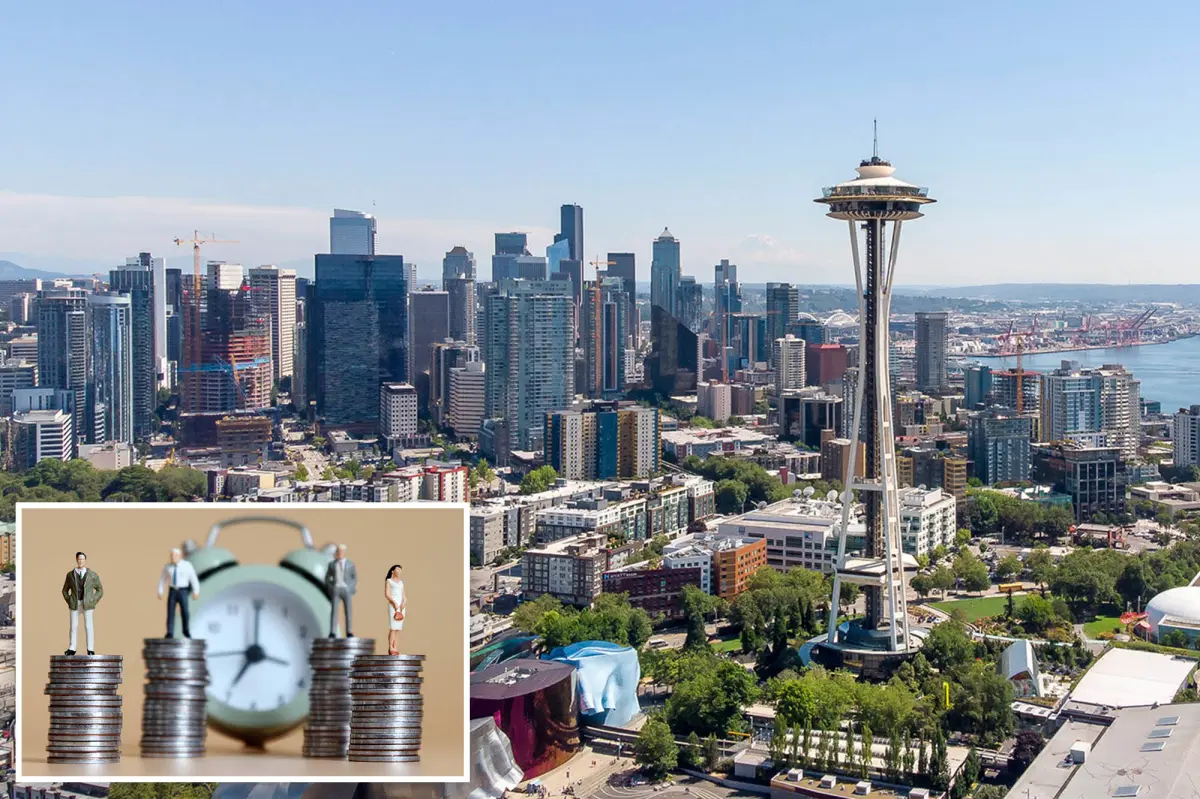

Seattle’s minimum wage is set to rise to $22.14 an hour in 2027, even as the broader metropolitan area experiences a steep decline in job openings and local businesses grapple with intensifying cost pressures.
Since 2025, every Seattle employer—including small businesses—has been required to pay the same minimum wage, which is adjusted each year to account for inflation. Several restaurant owners who have since shut down have pointed to rising labor expenses as one of the financial pressures behind their decisions.
In the first half of 2025, not long after the wage increases took effect citywide, 450 Seattle restaurants—roughly 16% of the city’s total—closed. Square data cited by The Wall Street Journal also showed restaurant and retail transactions falling by as much as 7% year over year in some commercial districts near Amazon and Microsoft campuses.
Unless another jurisdiction raises its wage floor to match or exceed Seattle’s, the city will have the nation’s highest minimum wage next year. Someone working full time at that rate would earn slightly more than $46,000 annually.
“If the servers are making $20 an hour, then I gotta pay the cooks $35,” one Seattle restaurant owner told Eater in 2024 while describing the impact of the wage increases.
“Operators are making less money than ever and are charging more than ever,” Anthony Anton, CEO of the Washington Hospitality Association, said last year, according to The Center Square.
MORE ON THIS: Canada PM Mark Carney Says He’s Prepared for a US Invasion
A peer-reviewed study from researchers at the University of Wisconsin, Madison, found that simply announcing Seattle’s minimum-wage increase reduced the rate at which new businesses were created within the city. At the same time, business formation increased in nearby suburbs with lower wage floors.
Supporters of the policy counter that Seattle’s high cost of living requires stronger wages for lower-income workers and could help prevent more residents from falling into poverty. They also argue that better pay may improve employee retention and benefit employers over time.
Still, Seattle’s deteriorating business climate began before its inflation-linked minimum-wage rules were broadly implemented.
From the start of the COVID-19 pandemic in early 2020 through 2023, approximately 500 local businesses closed, according to the Downtown Seattle Association. By the following year, the group had counted 543 vacant storefronts across the city. Many departing business owners cited property crime alongside broader local economic conditions.
The slowdown in business creation comes as Seattle residents face a shrinking job market. An Axios analysis found that job postings in the city’s metropolitan area declined 35% between February 2020 and October 2025—a drop surpassed only by San Francisco. Local business owners have even reported that people with master’s degrees and backgrounds at prominent companies such as Microsoft are applying for barista positions.
Seattle’s once-rapidly expanding, technology-led economy is showing mounting signs of strain, including weaker hiring and persistently high office vacancies downtown.
By the fourth quarter of 2025, 35.6% of downtown Seattle office space stood vacant, up from 32.3% a year earlier, according to Cushman & Wakefield data. Some of the city’s best-known companies, including Starbucks, have also moved operations away from Seattle.