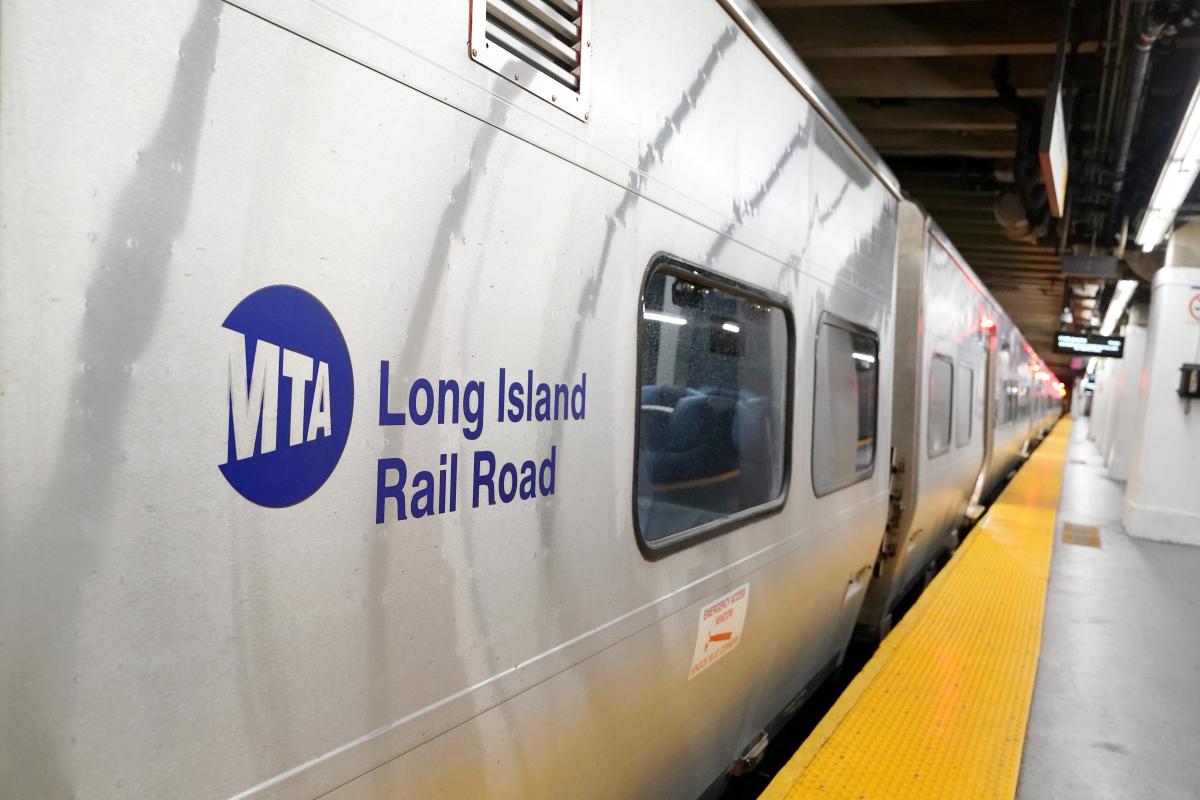


Negotiations resumed on Wednesday between union leaders of the Long Island Rail Road and officials from the Metropolitan Transportation Authority after a 40-day hiatus, yet the discussions concluded without any resolution.
With the deadline for a potential strike looming less than three weeks away, representatives from the Brotherhood of Locomotive Engineers and Trainmen, along with four other unions, attended an MTA board meeting. They accused the agency of stalling and avoiding negotiations over the protracted contract dispute.
“The clock is ticking,” expressed Gilman Lang, the engineers’ union’s general chairman, highlighting the urgency of the situation.
“Our members are prepared to strike,” he stated firmly.
Lang addressed the board, emphasizing that the five unions, which collectively represent approximately 3,500 LIRR workers, were eager to finalize an agreement. However, he claimed that the MTA’s reluctance to engage in talks was the main obstacle.
“The only barrier to reaching an agreement is the MTA’s inaction,” Lang asserted. “It’s impossible to negotiate effectively when one party refuses to come to the table.”
MTA Chair and CEO Janno Lieber bristled at the criticism, snapping back, “Let’s go have a discussion.”
He called the suggestion that the agency had been unwilling to negotiate “nonsense,” and later told reporters, “I call BS on that because we do want to meet with them.”
The two sides clashed after a virtual meeting with the National Mediation Board scheduled for Monday was postponed, which Lieber attributed to scheduling conflicts for the federal mediators.
“I don’t know that to be true,” Lang said after Lieber made his claim.
The dispute covers contracts that became amendable in 2023 and centers on wages and work rules for train workers.
The sides have agreed on raises of 3% in 2023, 3% in 2024 and 3.5% in 2025, but remain apart on the unions request for a 5% pay raise in 2026.
Union leaders say they need higher wages to keep up with inflation.
MTA board finance chair Neal Zuckerman argued the private sector stiffs workers all the time over rising inflation.
“The private sector has not seen wage increases keeping up with inflation for about 20 years,” he said.
If workers strike as early as May 16, the MTA’s options for LIRR’s more than 250,000 daily riders are limited — with Lieber suggesting most riders could “work from home.”
The MTA has planned rush‑hour shuttle buses for essential workers from five Long Island stations into Queens, at a projected cost of roughly $325,000 to $550,000 per day.
But on the same day the MTA and union leaders fretted over an LIRR shutdown, the LIRR was barely functioning anyway.
Metal debris on the tracks caused a train to get stuck in the East River Tunnel around 6 a.m., forcing passengers to be evacuated by foot onto another train and leaving 8 of 11 train lines stalled or delayed.