
Federal prosecutors in the Southern District of New York and attorneys for Luigi Mangione, the 28-year-old accused assassin, asked a U.S. judge on Tuesday to schedule a conference for Friday morning — a move that immediately fueled speculation that Mangione could be weighing a plea deal in his federal case just days before his state murder trial is set to begin.
Such a development could carry significant consequences for Manhattan District Attorney Alvin Bragg’s prosecution. New York’s expansive double-jeopardy protections have already played a decisive role in high-profile cases, including when courts in the city dismissed state charges against former Trump campaign chairman Paul Manafort following his federal convictions.
When similar reports about a possible plea agreement surfaced earlier this year, Manhattan prosecutors signaled that they could “advise” the federal judge if any deal risked undermining what they described as the “just outcome” of Mangione’s pending state case.
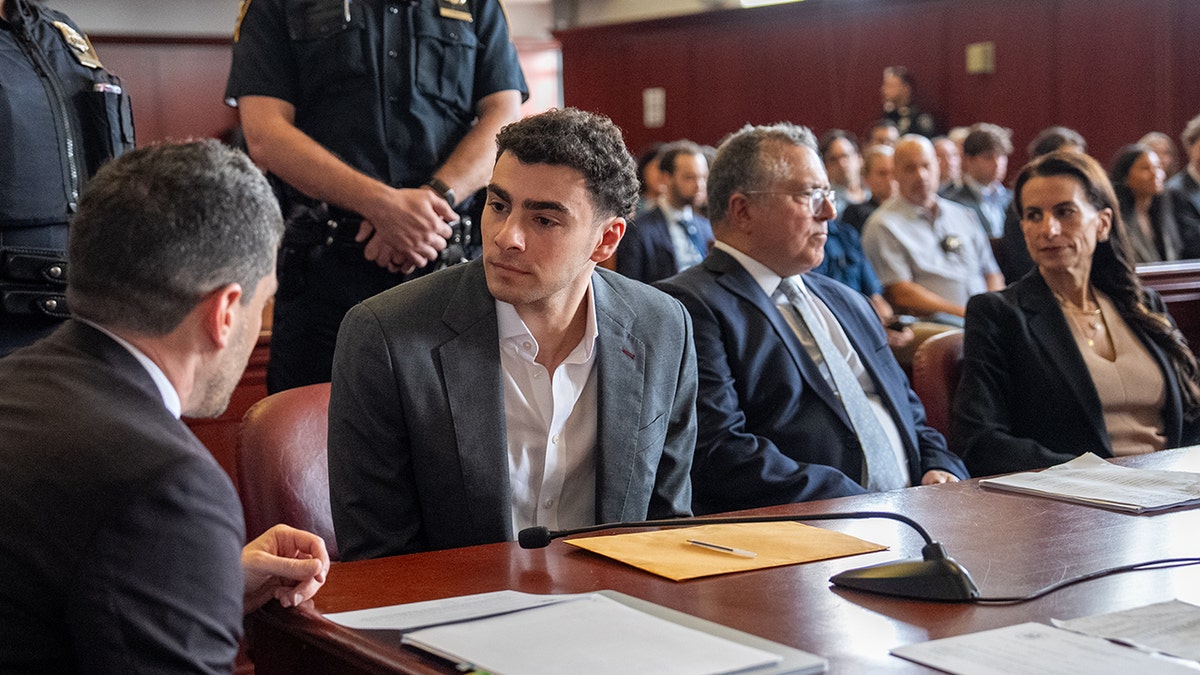
Luigi Mangione appears for a pre-trial hearing at Manhattan Criminal Court in New York City, U.S., on Aug. 11, 2026. (REUTERS/David Dee Delgado/Pool)
“If Luigi Mangione takes a plea federally, then the question is, does this state double jeopardy law get triggered?” said Donna Rotunno, a Chicago-based defense attorney, Fox News contributor and host of “Crime & Justice.”
Rotunno noted that New York’s double-jeopardy statute is broader than the federal standard. As a result, a federal resolution that comes first could potentially threaten the state murder case in a way that a state conviction would not necessarily endanger the federal prosecution.

UnitedHealthcare CEO Brian Thompson is shown in an undated portrait provided by UnitedHealth. Thompson was shot from behind and killed while heading to an investor conference in New York City, in what prosecutors have described as a politically motivated assassination. (AP Photo/UnitedHealth Group via AP)
“The prosecutors reached out to Judge Carro via letter back in July when they were talking about which case should be set for trial first and the importance of setting the state case for trial before the federal one,” Rotunno told News Outlet. “So now here we are in a situation where the state is saying wait, wait, why is the government allowing Luigi Mangione to possibly take a plea on the federal side? Because if that’s the case, it could potentially upend our case on the state side.”
Read the July letter from Manhattan prosecutors to Judge Carro:
Shortly after Friday’s pre-trial conference appeared on the docket, speculation swirled that it could involve a potential plea deal. However, neither side has commented, and the purpose of the conference remains unclear.
While Mangione is currently scheduled to go on trial on the state charges next month and see a federal trial next year, his lawyers could potentially make the double jeopardy argument in New York, if the federal case results in a conviction first.
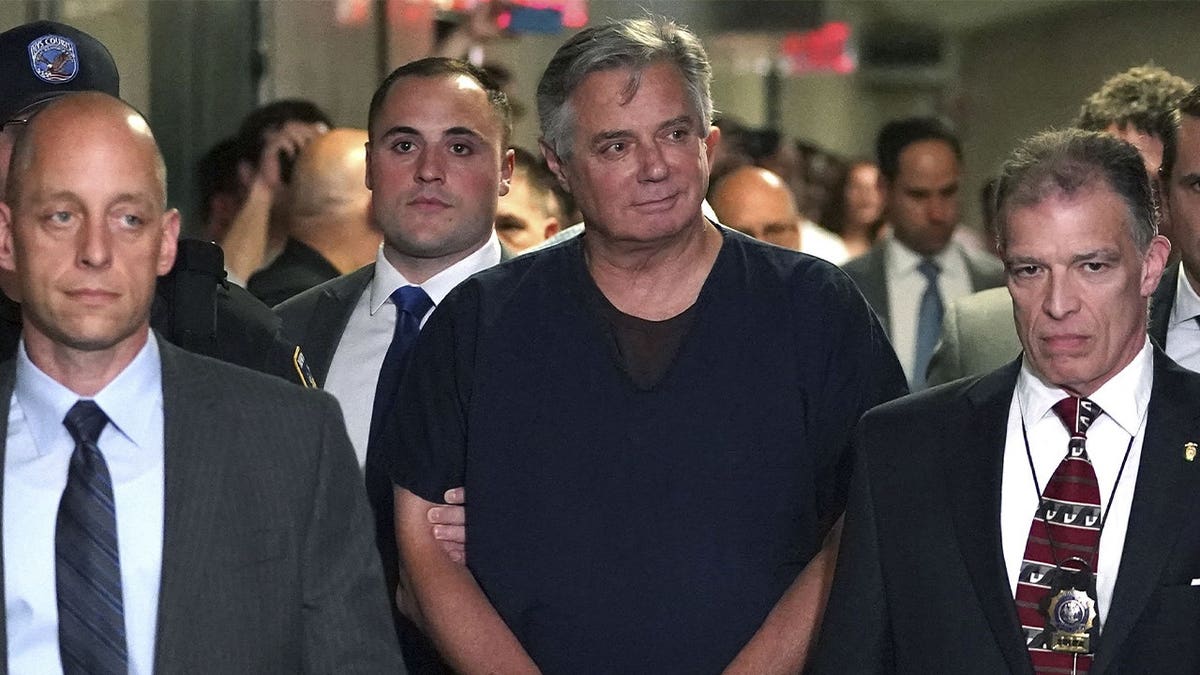
President Trump’s one-time campaign manager, Paul Manafort, arrives at Manhattan Supreme Court June 27, 2019, for his arraignment on mortgage fraud charges. (TIMOTHY A. CLARY/AFP via Getty Images)
In the 2019 Manafort case, he was charged at the state level for fraud crimes that were similar to those he had already been convicted of federally.
New York Judge Maxwell Wiley agreed to dismiss the state charges.
The factual overlap between the state and federal cases was “extensive — if not total,” Wiley wrote at the time. Then-Manhattan District Attorney Cy Vance Jr. appealed the ruling unsuccessfully.
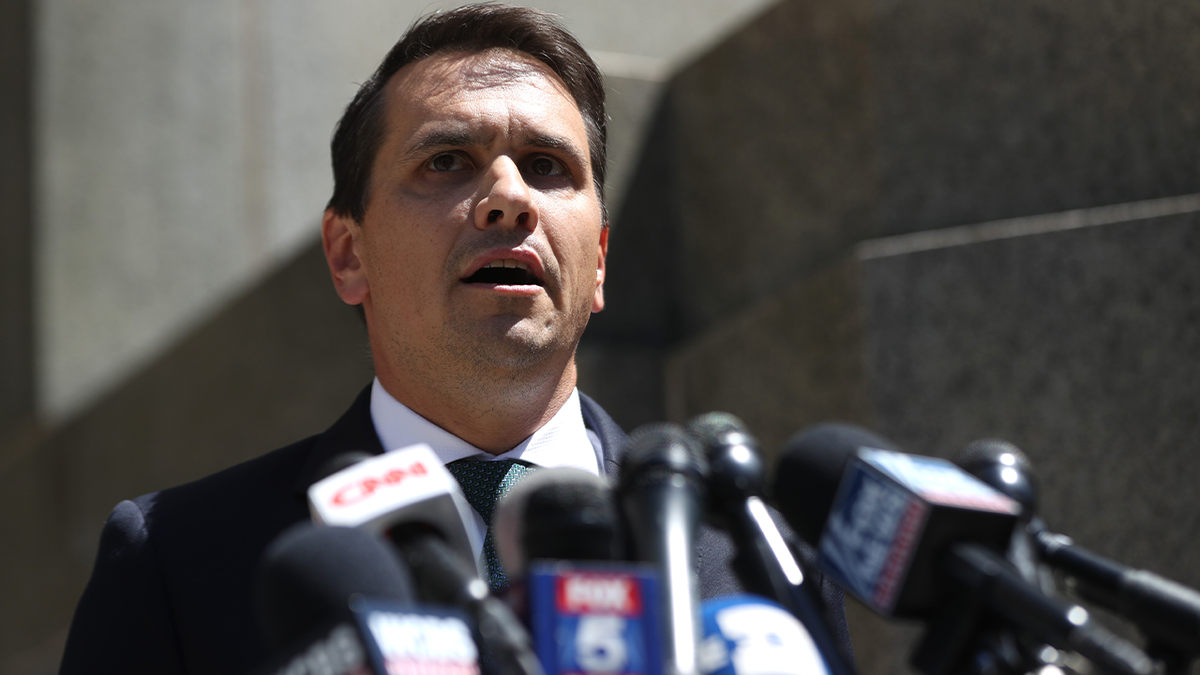
Paul Manafort’s then-attorney Todd Blanche delivers a speech to the press members at New York State Supreme Court in Manhattan in New York, United States on June 27, 2019. Blanche is now the U.S. attorney general. (Atilgan Ozdil/Anadolu Agency/Getty Images)
An appellate court unanimously upheld Wiley’s decision.
The question in the Manafort case was whether the federal and state laws were “designed to prevent very different kinds of harm or evil.” Both Manafort cases involved the same fraud and the same victims, and the courts found that the laws were not aimed at “very different kinds” of offenses.

The suspect in the UnitedHealthcare CEO assassination, later identified as Luigi Mangione, pictured by a taxi cab’s security camera looking into the front from the passenger seat in the rear. (FBI)
In Mangione’s case, should he actually reach a federal plea deal before his state trial, the question might boil down to whether a federal charge of stalking resulting in death is “very different” from New York’s second-degree murder charge.
“There’s a little bit of an argument to be made there, but again, if that was not an issue, then why were the prosecutors so concerned about making sure they go first?” Rotunno asked. “If you look at this law, this law really has to do with the state going first because the feds can prosecute any charges they want, even if they’re based on the same conduct.”
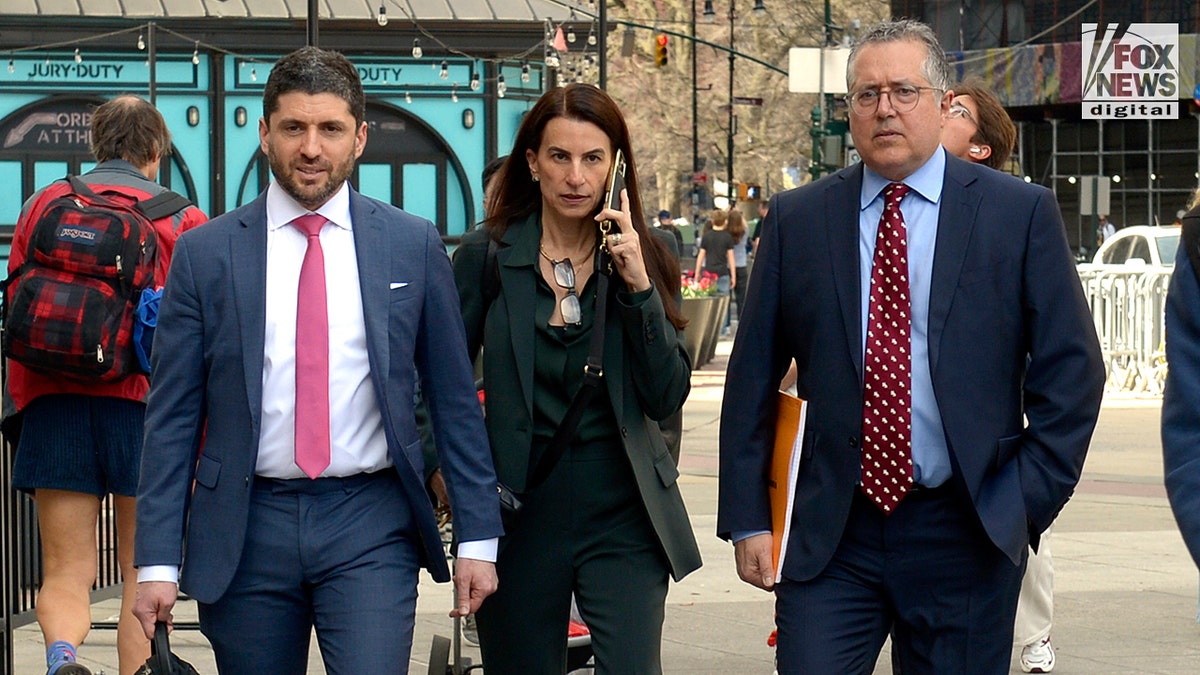
Luigi Mangione’s attorneys, Jacob Kaplan, Karen Friedman Agnifilo, and Marc Agnifilo arrive at court in Manhattan, New York, on April 1, 2026. A hearing for Mangione is held regarding the 2024 shooting of UnitedHealthcare CEO Brian Thompson. (Rashid Umar Abbasi for News Outlet)
“If the charges were so different, they wouldn’t worry about it,” she added.
Manafort’s lawyer at the time, Todd Blanche, is now the U.S. attorney general. At an unrelated Justice Department news briefing Wednesday, he declined to answer a question about whether Friday’s hearing would be related to a potential plea deal.
WATCH: DOJ questioned on possible Mangione plea deal
The top charge Mangione faces federally, stalking resulting in death, carries a maximum sentence of life in federal prison, without the possibility of parole, if convicted. At the state level, he faces a maximum of 25 years to life if convicted of the second-degree murder charge.
Even if convicted at trial, however, Rotunno said he might not get the maximum sentence based on his lack of a prior criminal history. Any plea deal that leads to less than a life sentence could be considered a win for the defense, she said.
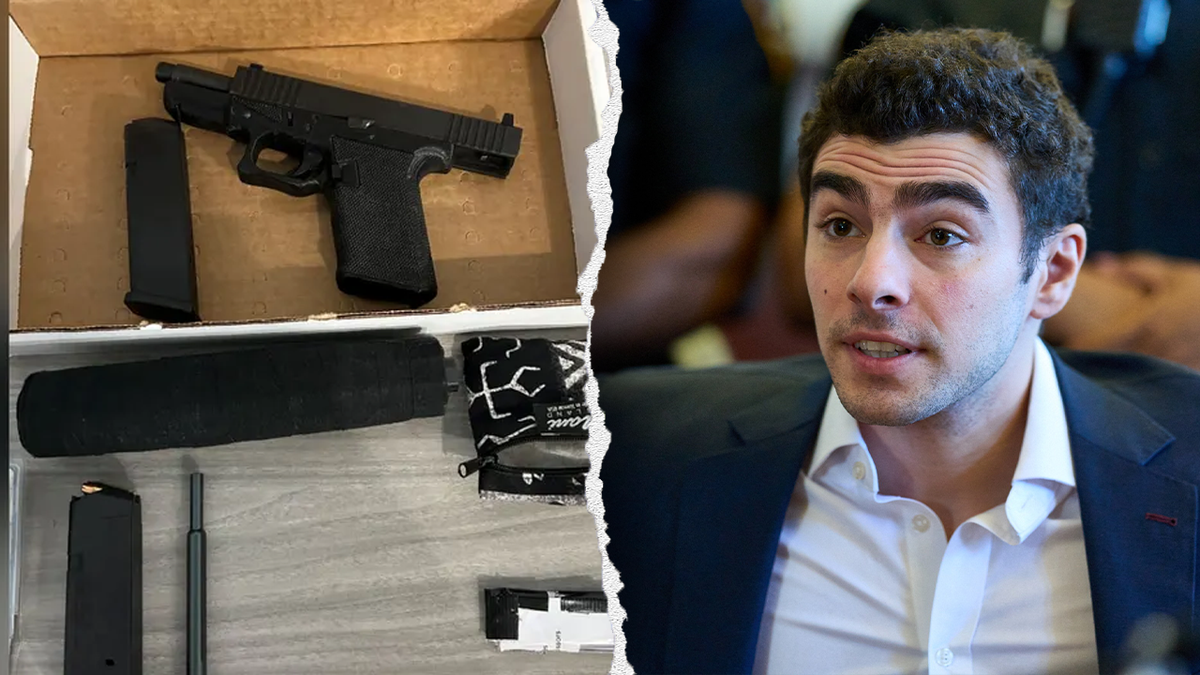
A split image showing Luigi Mangione in court and his alleged handgun and 3D-printed silencer. Mangione is accused of assassinating UnitedHealthcare CEO Brian Thompson. (Curtis Means/Pool via Reuters)
“Odds of him getting life are probably slim even after a trial, given the fact that he had no background, and the maximum is life,” she said. “But either way, he would’ve gotten such a big number that odds of him getting out would be very slim.”
Carro had previously rejected a double jeopardy claim from Mangione’s defense, and Mangione himself in February claimed he was being subject to “the same trial twice” in a courtroom outburst.
“One plus one is two,” he complained, while being escorted out of the courtroom. “Double jeopardy by any common sense.”
Mangione has pleaded not guilty to all of the charges against him in both cases.

Luigi Mangione speaks to a police officer in Altoona, Pennsylvania. (Manhattan District Attorney’s Office)
Back in May, another disparity between state and federal law left a potential impact on the case. Carro ruled that some key evidence recovered from Mangione’s backpack during his arrest at a Pennsylvania McDonald’s would be inadmissible at trial. Judge Margaret Garnett, who is overseeing the federal case, rejected the defense team’s argument that the search was improper.
At the same time, Garnett threw out the potential death penalty when she ruled that the underlying stalking charge didn’t qualify as a “crime of violence.” And that decision could fuel arguments from Manhattan prosecutors against any potential double jeopardy claims, according to Paul Mauro, a retired NYPD inspector and Fox News contributor.
“The federal judge has already found, thanks to Mangione’s own arguments, that stalking is not a ‘crime of violence,'” he told News Outlet. “And if that’s the federal position, then you have to ask yourself, is the harm of a nonviolent crime, is the potential harm trying to be prevented by the stalking charge, different enough from what the statute for murder 2 is trying to prevent so that you can say the two statutes are distinct enough that the state case could go forward.”
“But that said,” he added, “the New York state double jeopardy law is very defendant-favorable. So who knows? Maybe Luigi has just decided he prefers federal prison to state prison. Because of generally better conditions.”