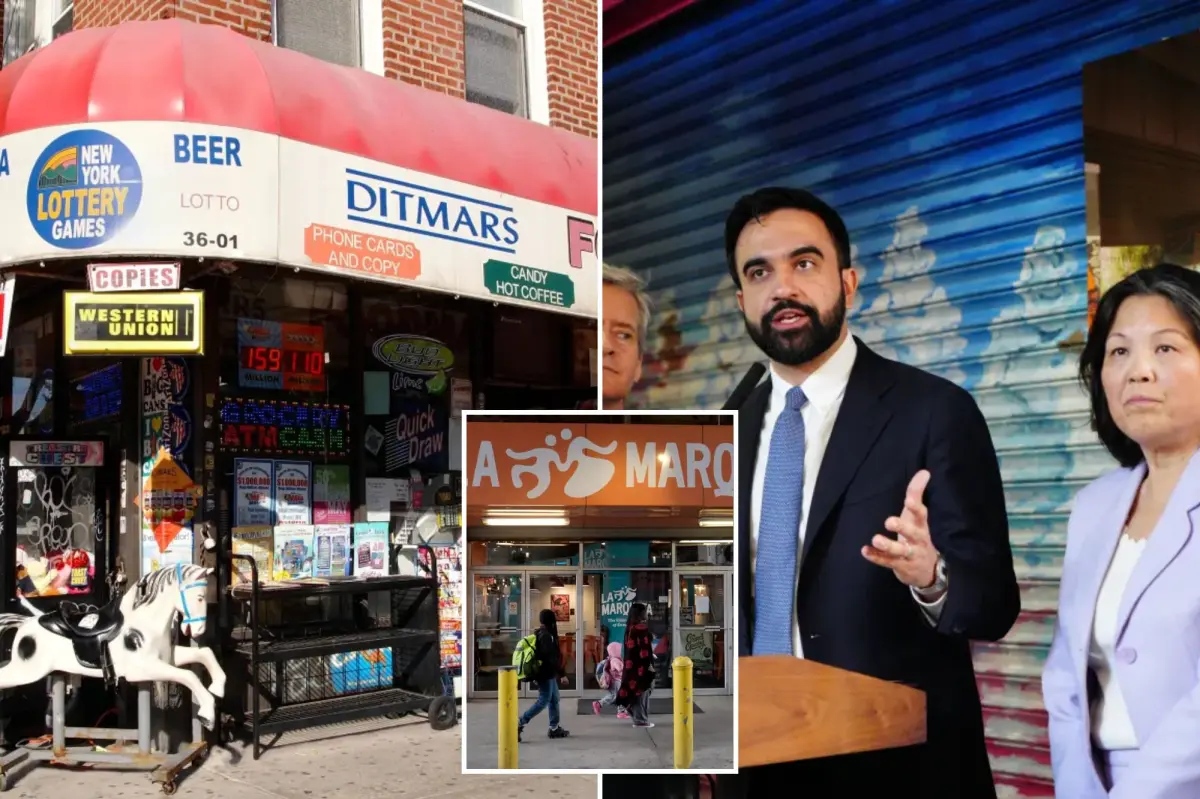

The Mamdani administration is moving quickly to calm fears over its proposal to launch city-owned supermarkets — but recent outreach appears to have intensified worries among neighborhood merchants, The Post has learned.
Bodega operators from across New York City were invited to City Hall last week for what was billed as a “roundtable discussion” by Julie Su, the deputy mayor for economic justice — but instead found themselves facing a series of “intrusive” questions about how they run their shops, according to a source familiar with the meeting.
Before last Monday’s session — which included representatives from city agencies and trade organizations tied to the city’s roughly 13,000 bodegas — Su circulated a questionnaire asking, “What items are sold the most at your stores?” and “Where is your profit margin the greatest?” sources said.
The bodega representatives refused to provide answers, sources said.
“They wanted us to share proprietary information with them but they don’t answer our questions and that’s why there is distrust,” said one bodega representative, who asked not to be named.
Store owners say City Hall is seeking their feedback only now — and seemingly belatedly — after setting off concerns in April with an unexpected proposal to create a public grocery store at La Marqueta in East Harlem. The project carries an eye-popping $30 million price tag and, critics warn, could jeopardize more than a dozen nearby stores already serving the area.
City officials maintain that their socialist-style plan to establish at least one public supermarket in each of the five boroughs — beginning with a Hunts Point location in the Bronx slated to open next year — is not intended to compete directly with existing neighborhood grocers.
“We met with bodega owners so they could help us plan and ensure that we take into account their challenges and their role as a part of the food ecosystem,” Su said in a statement to The Post.
“One of the questions we wanted to understand is whether there are key products bodegas sell and rely on that we should not sell. That’s how serious we are about not undercutting them.”
Grocers and bodega owners, however, are struggling to make sense of such claims.
Mamdani’s plan to subsidize the grocery stores with taxpayer funds so they can offer rock-bottom prices on essential items threatens grocers who operate on 2% to 3% profit margins. They say they have been forced to raise prices as costs from fuel, tariffs and property taxes have soared.
In one possible concession to existing stores, the city is considering not offering deli counters that sell sandwiches, sliced meats and cheeses, chicken cutlets and salads, according to Cathy Nonas, a former senior food policy adviser for the city’s Department of Health who is now executive director of the nonprofit Meals for Good.
“That’s a plan on the table,” Nonas said, adding that the city “wants to make sure that those who have served the community are still thriving after the public markets open.”
The mayor’s office declined to comment on the deli counters, saying in a statement, “Decisions on the exact types of food products offered will vary by store and have not been finalized at this point.”
At a City Council hearing in June, interim NYC Economic Development Corporation chief executive Jeanny Pak was asked by City Council speaker Julie Menin how the agency planned to protect businesses located near the public supermarkets.
“We did reach out to the industry, owners in the area and will continue to do that,” Pak said at the hearing. “Some of the stuff bodega owners have we won’t have. We are hoping that we can direct traffic to the bodega owners. We will find ways to support them.”
The city has been meeting with trade groups including the National Supermarket Association in May, which represents 450 independent stores in New York City. Officials are hoping to meet with a newer group, the Multicultural Business Coalition, which intends to raise $1 million to fight the mayor’s proposal.
So far, the Mamdani administration’s promises sound like empty campaign slogans, say industry executves. Meanwhile, it’s provoking alarms with nosy questions that have also included, “What is the main thing people come into your store for? What else do they buy while there?”
“It seems like a clumsy, one-sided fishing expedition,” a food policy expert who did not want to be identified told The Post.
“I would be put off if my local government asked me questions about my profits and margins,” the source who does business with the city said. “It’s none of their business.”
Grocers first need to know exactly how the city plans to avoid displacing existing businesses, Avi Kaner, former co-owner of the Morton Williams grocery store chain in Manhattan, told The Post.
“I don’t think the questions themselves are unreasonable,” Kaner said. “I think they are premature. The city should first provide transparency.”
At last week’s meeting, bodega owners got rattled partly because the city asked the invitees not to share details from the meeting with the NYC Groceries Interagency Taskforce, sources said.
“I understand why this group would be skeptical that anyone cares about them, because the bodegas have never had a city [administration] that has been particularly concerned with their needs and problems,” said Nonas, whose nonprofit provides food vouchers for local grocers in high-poverty areas.
“They are often the one market that exists in a poor area until it’s gentrified and then all of a sudden their rent goes up.”