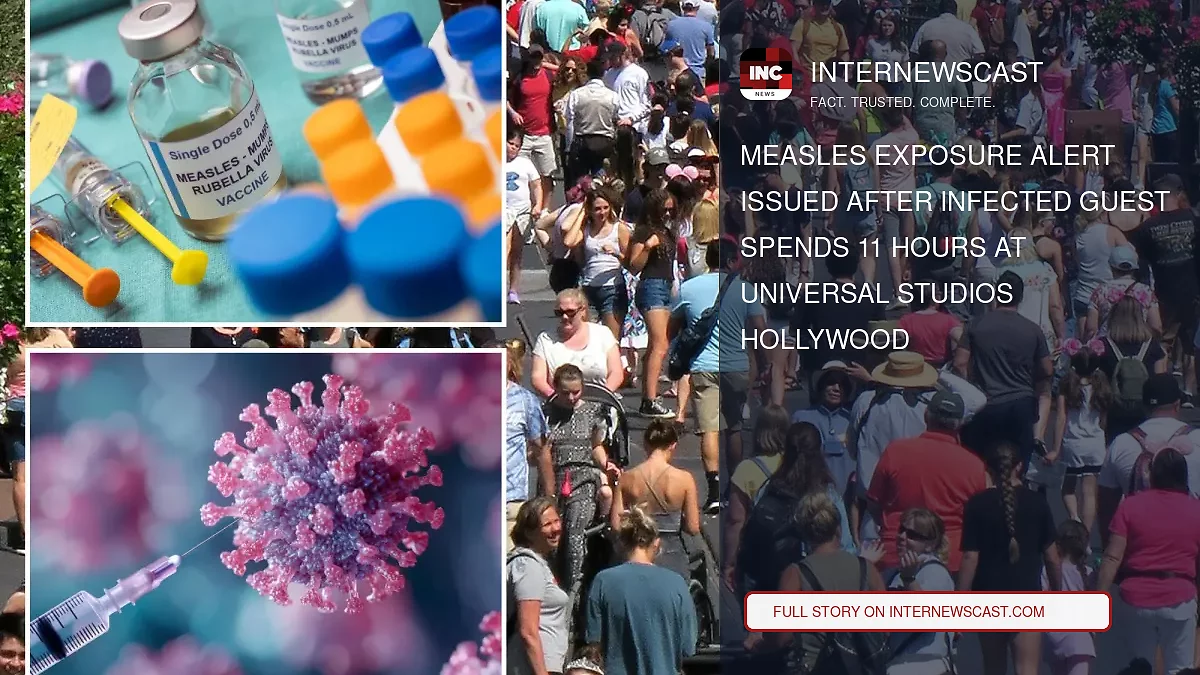

A day at Universal Studios Hollywood took an alarming turn after officials said a visitor with measles spent roughly 11 hours inside the busy theme park, prompting a public health warning.
Los Angeles County health authorities said Wednesday that guests who were at the Southern California destination on Sunday anytime from 10 a.m. to 9 p.m. could have been exposed to the highly contagious illness.
The warning arrives amid a sharp nationwide comeback for measles, a disease once considered largely under control in the United States.
As of late July, the US Centers for Disease Control and Prevention had confirmed 2,371 measles cases in 2026, marking the country’s highest yearly count since 1991.
“With summer travel underway, the risk of exposure to infectious diseases may increase,” Muntu Davis, the county’s public health officer, wrote. “We urge everyone to confirm their immunity and get the MMR vaccine if needed, especially before traveling and attending crowded events.”
Measles is an airborne virus that can spread when an infected person breathes, speaks, coughs or sneezes.
Because the virus can linger in the air and survive on surfaces for hours after someone infected has departed, high-traffic locations such as theme parks can create an elevated exposure risk.
Those infected may pass measles to others as early as four days before the telltale rash develops and remain contagious for about four days after it appears.
Infection happens by breathing contaminated air or by touching contaminated surfaces before touching the eyes, nose or mouth.
Officials said anyone who was at Universal Studios Hollywood during the exposure window could develop symptoms seven to 21 days after exposure.
“These individuals should confirm their protection against measles,” the department said in a news release. “Those who have had measles in the past or received the recommended measles vaccine are likely protected but should still monitor for symptoms.”
Visitors should monitor for symptoms through Aug. 16.
Anyone who remains symptom-free for more than 21 days after the exposure is no longer considered at risk.
Measles symptoms include fever, cough, runny nose and red, watery eyes, followed three to five days later by a rash that usually begins on the face before spreading across the body, according to the CDC.
The disease can cause severe complications, particularly in young unvaccinated children and pregnant people.
Serious cases can lead to pneumonia, encephalitis, hospitalization and, in some cases, death, according to the California Department of Public Health.
The latest exposure comes just months after another measles scare at another popular theme park.
Orange County health officials warned that an infected international traveler had visited Disneyland and Goofy’s Kitchen while contagious, potentially exposing thousands of guests.
Officials at the time urged anyone who may have been exposed to verify their vaccination status, monitor for symptoms and contact a healthcare provider if they were not immune, underscoring how quickly the highly contagious virus can spread through crowded attractions.
Anyone who develops symptoms should stay home and avoid school, work and public gatherings to help prevent further spread of the virus.