
Goldman Sachs cautions that a further escalation of attacks in the Persian Gulf and Red Sea could send global crude prices past $120 a barrel, intensifying the fuel-price shock U.S. consumers have already absorbed during the Iran war.
The bank’s warning points to a potential jump of about 20% for Brent crude, the global oil benchmark, which is currently trading near $100 a barrel. Prices have surged in recent weeks as the Middle East conflict grinds on, with U.S. forces striking three Iranian oil tankers on Saturday and Houthi rebels attacking Saudi oil facilities.
Brent briefly touched $99.46 a barrel on Tuesday before easing to $97.85. The benchmark has risen sharply from roughly $72 a barrel over the past two months, as widening fighting in the region has dimmed expectations for a deal to reopen the Strait of Hormuz, the critical passage that typically handles about one-fifth of global oil flows.
$100 billion hit
U.S. consumers paid an extra $100 billion for fuel from the start of the Iran war on Feb. 28 through Sept. 8, according to a tracker from Brown University. Gasoline accounted for about $55 billion of the added cost, while diesel made up the remaining $45 billion.
Diesel prices have been especially painful for industries that rely heavily on fuel, including trucking, construction, agriculture and rail. AAA data shows diesel hit a record $5.90 a gallon on Labor Day.
The price surge is weighing on Americans in two ways: directly through higher costs at the pump and indirectly through more expensive transportation for groceries and other retail products. Inflation is still running hot, and economists expect Friday’s Consumer Price Index report to show August prices rose 3.3% from a year earlier, remaining well above the Federal Reserve’s 2% annual target.
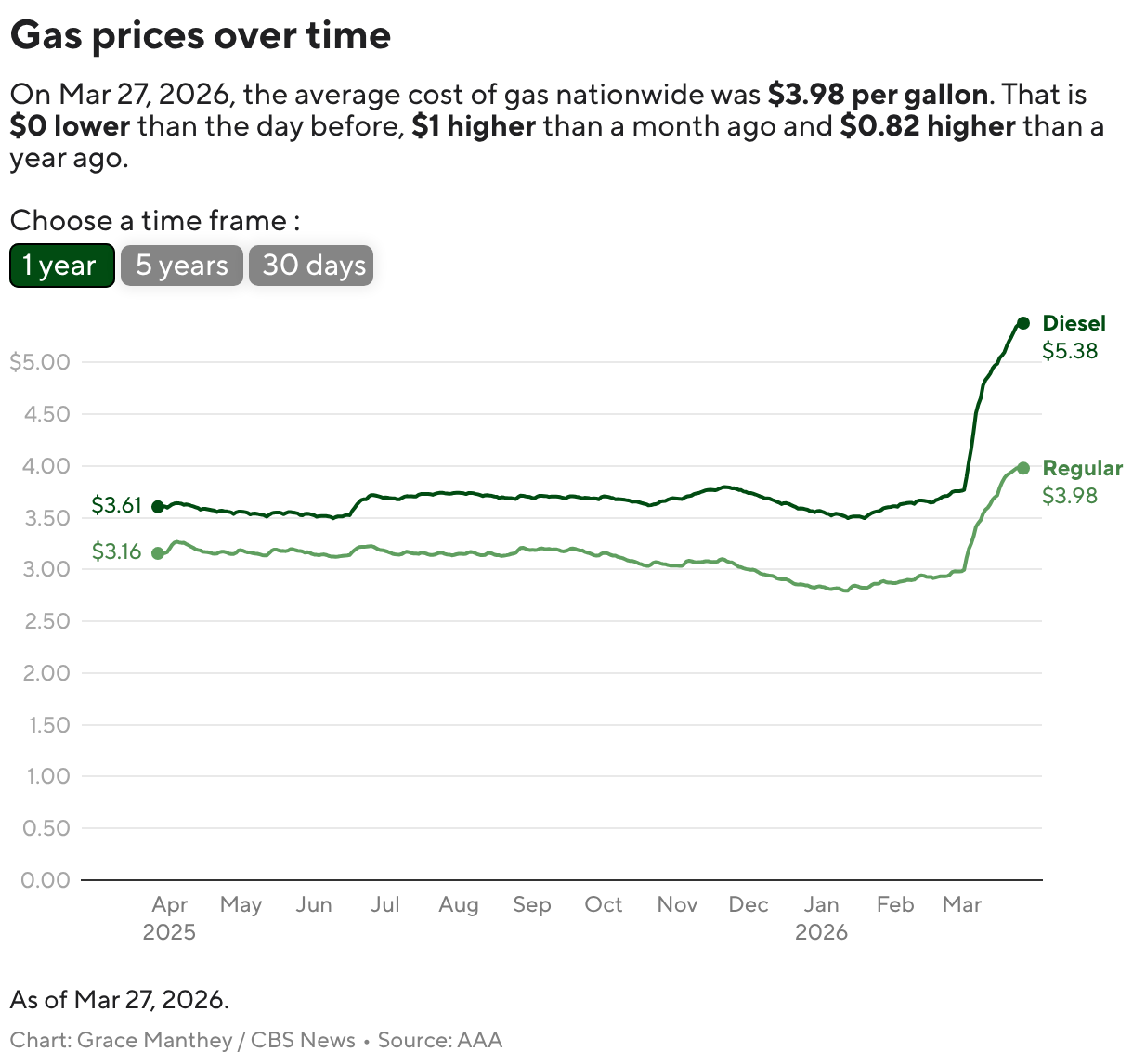

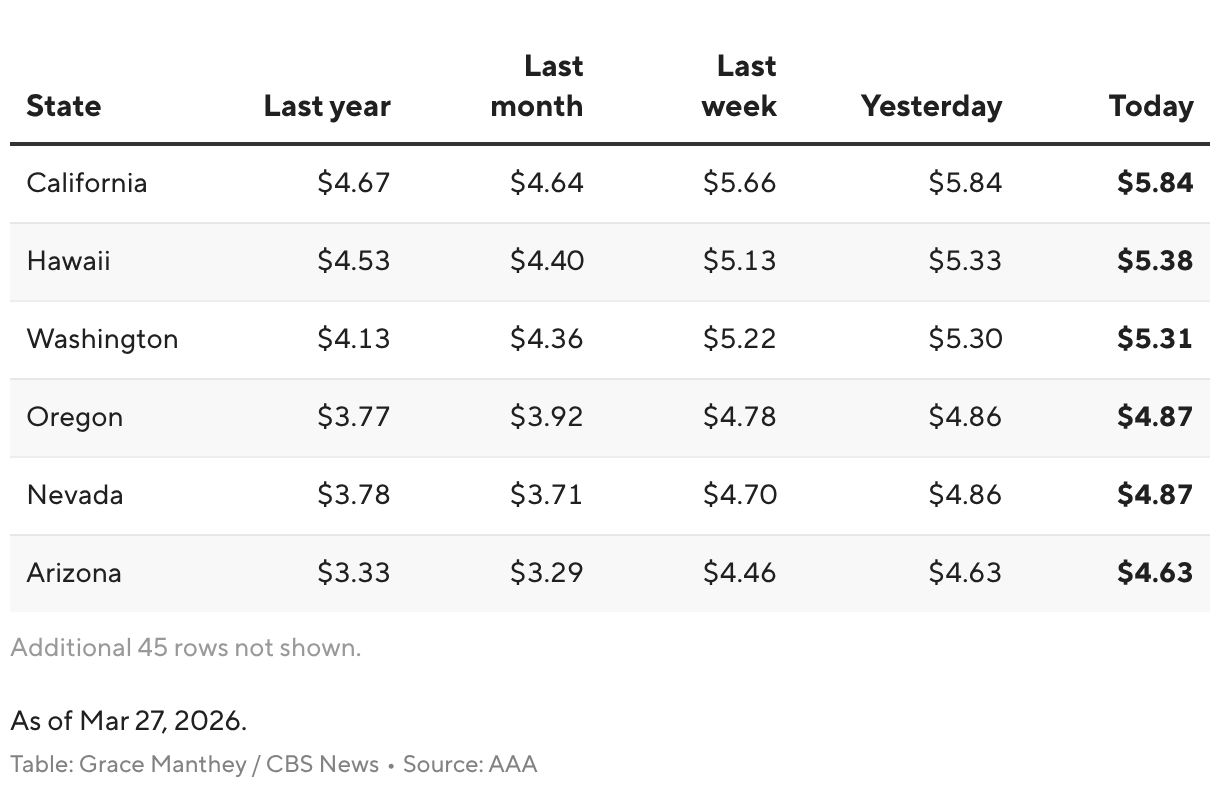
“This is the time of year that most Americans see gas prices going down as demand falls and we soon change to winter gasoline, but as of late, we’ve been seeing a lot more ups — especially for diesel — the fuel that drives the U.S. economy, and that may continue,” GasBuddy petroleum analyst Patrick De Haan said in a Sept. 7 social media post.
Another key inflation gauge is due Thursday, when the U.S. government releases the August Producer Price Index, which tracks wholesale prices. Economists expect that measure to accelerate to 5.4%, up from 4.7% in July.
Goldman’s base case
Goldman’s oil outlook hinges on a scenario in which Middle East hostilities intensify. In its base case, the bank still expects Brent to fall to $85 a barrel by the end of the year, while West Texas Intermediate, the U.S. benchmark, settles around $80 a barrel. Both projections are $5 per barrel higher than Goldman’s previous forecast.
“The price upgrade is modest despite the assumption that shipping disruptions continue for two reasons,” which are that commercial fuel inventories in developed countries have barely declined, and that oil shipments from the Middle East should slowly recover, Goldman analysts wrote in the Sept. 7 research report.
The Trump administration expects oil prices to drop below their pre-war levels when the conflict ends. Treasury Secretary Scott Bessent told Fox News on Sunday that the energy supply shock “is going to end.”
“On the other side of this, we actually could see oil prices at $40 or $50 [a barrel] because there’s so much supply coming on,” Bessent said.
Goldman said that its best-case scenario places Brent in the $60-per-barrel range in 2027, but only if oil production in the Persian Gulf increases by 1 million barrels a day above its pre-war levels. The analysts added that they see a higher likelihood that oil prices will rise rather than fall, adding, “Risks to our price forecast remain significantly tilted to the upside on net, especially near-term.”
Markets are increasingly bracing for a prolonged conflict, Goldman said. Options now imply a 25% probability that Brent will remain above $100 in March 2027, up from a 6% probability a month ago, they added.
Alain Sherter
contributed to this report.