
NEW YORK — Gordon S. Wood, a distinguished historian whose scholarly work profoundly shaped the narrative of America’s early independence, has passed away at the age of 92. Known for his influential and, at times, controversial writings, such as “The Creation of the American Republic” and “The Radicalism of the American Revolution,” Wood’s legacy remains significant in the realm of historical scholarship.
Wood, who served as a professor emeritus at Brown University, tragically died on Sunday after being struck by a vehicle in a supermarket parking lot in East Providence, Rhode Island, as confirmed by local police.
Throughout his career, Wood authored numerous books and essays. Although he may not have achieved the widespread popularity of historians like David McCullough or Doris Kearns Goodwin, his work has become a cornerstone in discussions surrounding the formation of the United States and the impact of its revolutionary past. Colleagues often viewed Wood, with his white hair and gentle demeanor, as the quintessential learned historian who prioritized factual evidence over ideological bias.

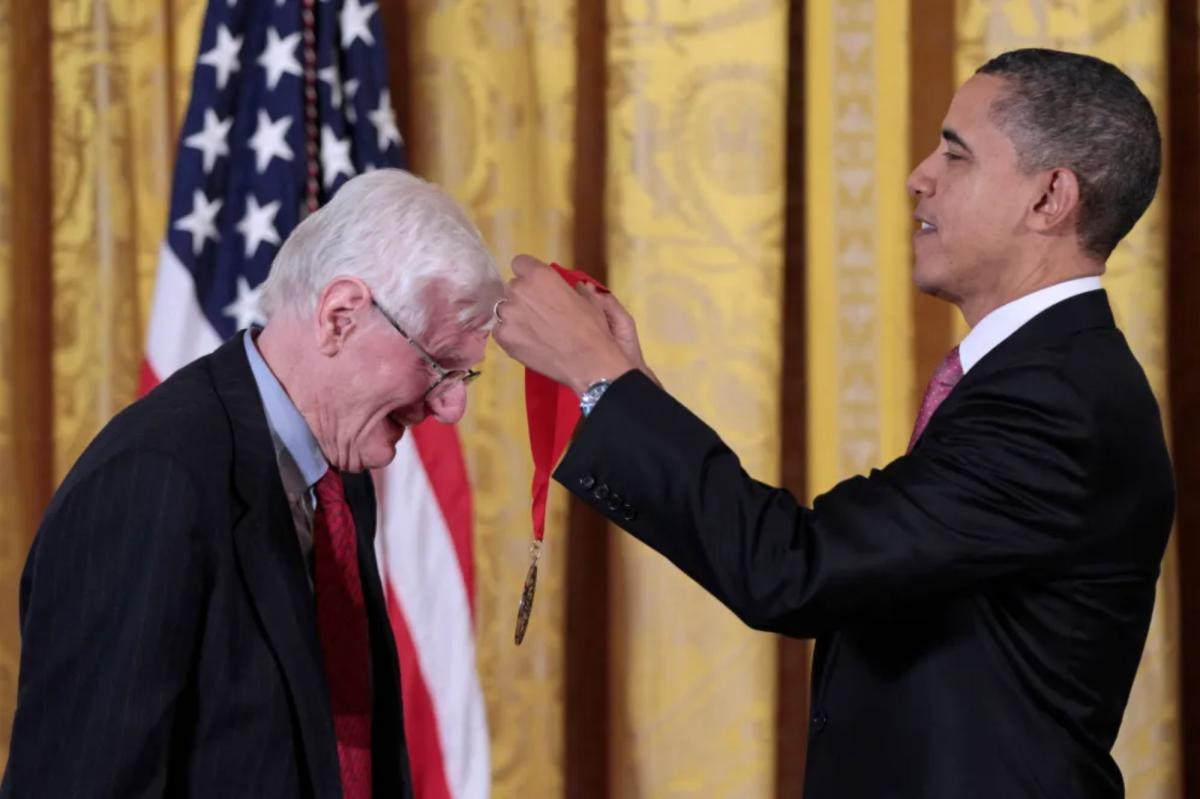
In recognition of his contributions, President Barack Obama honored Wood in 2011 with a National Humanities Medal, highlighting his scholarship that offered deep insights into the nation’s founding and the drafting of the US Constitution.
In more recent times, some younger historians have critiqued Wood for representing a traditional perspective that they argue overlooks the experiences of slaves, women, and Indigenous peoples. John L. Brooke, a history professor at Ohio State University, acknowledged Wood’s extensive scholarly contributions but also noted his tendency to shy away from complex interpretations.
Wood’s impact was both immediate and enduring. His debut work, “The Creation of the American Republic,” secured the Bancroft Prize in 1970 and continues to engage students and scholars alike. It presented a provocative view of the Constitution as an inadvertently revolutionary document crafted by elite figures, ultimately contributing to the dismantling of the social order they sought to preserve.
His “The Radicalism of the American Revolution” won the Pulitzer in 1993 and the epic “Empire of Liberty” was a finalist in 2009.
Silver screen moment
Wood’s name also was familiar to moviegoers through the Academy Award-winning “Good Will Hunting,” released in 1997. The lead character, a pugnacious, self-taught genius played by Matt Damon, taunts a Harvard undergraduate: “You’re gonna be in here regurgitating Gordon Wood, talking about, you know, the pre-revolutionary utopia and the capital-forming effects of military mobilization.” (Ideas, Wood would point out, that he did not endorse).
A few years earlier, Wood received an unexpected and uncomfortable compliment from then-House Speaker Newt Gingrich, who listed “The Radicalism of the American Revolution” as an essential work of history. Wood would remember how the Georgia Republican’s blessing was a “kiss of death” among his many liberal peers and perceived as an affirmation of conservative policies.
Regarding himself as neither radical nor reactionary, Wood claimed a middle ground between conventional “great man” narratives and the more egalitarian scholarship that emerged in the 1960s.
He acknowledged that historians had overlooked the contributions of women and minority groups, but worried that “headline political events” were being ignored entirely. He disputed Progressive era historian Charles Beard’s portrait of the US Constitution as a cynical triumph for the rich, but didn’t regard the founders as infallible sages above looking after their own interests.
“I don’t think our history should be seen as a moral tale, either good or bad,” he once wrote. “I think historians should try to understand where we came from as honestly as we can, without trying to say this was a great celebration or that this was a disaster. I don’t think either of those extremes is true of our history.”
Battles with the past
Wood did welcome scholarly breakthroughs, notably Annette Gordon-Reed’s “persuasive contextual case” that the enslaved Sally Hemings bore some of Thomas Jefferson’s children. In “Empire of Liberty,” which covered the years 1789 to 1815, he included lengthy passages on slavery and called it a cancer “eating away at the message of liberty and equality.”
At other times, Wood angrily resisted new approaches. He was a prominent critic of The New York Times’ Pulitzer Prize winning 1619 Project and its contention — later amended — that maintaining slavery was a key motivation for the American Revolution. He alleged that the project encouraged a sense “victimhood” and feeling “aggrieved,” even as he acknowledged he hadn’t read most of it. He would counter that the founders, even such plantation owners as Jefferson and James Madison, believed — mistakenly — that slavery would die a natural death and the Revolution itself energized the American abolitionist movement.
“We all want justice, but not at the expense of truth,” he wrote in 2019, adding, in a widely disputed statement, “I don’t know of any colonist who said that they wanted independence in order to preserve their slaves.”
In “Radicalism” and other books, Wood rejected conservative and liberal theories that the American Revolution did not immediately lead to any substantial new freedoms and was essentially a political event — a mere “mental shift” — that otherwise reinforced the status quo.
The new country’s early years, Wood stated, were a time of transformation and democratization in everything from how people dressed to the way they greeted each other in the streets. The shifts were so profound that even the revolution’s leaders didn’t expect or want them.
“One class did not overthrow another; the poor did not supplant the rich,” Wood wrote. “But social relationships, the way people were connected one to another — were changed and decisively so. By the early years of the 19th century the Revolution had created a society fundamentally different from the colonial society of the 18th century. It was in fact a new society unlike any that had existed anywhere in the world.”
Fellow historian and Pulitzer winner David Hackett Fischer would later write that Wood’s scholarship “altered the way historians thought about their field.”
Wood’s other books included “Revolutionary Characters” and “The Americanization of Benjamin Franklin” and his essays and reviews appeared frequently in The New York Review of Books, The New Republic and other publications. Wood also consulted on Ken Burns’ PBS documentary about Jefferson and chaired an advisory panel for the National Constitution Center in Philadelphia.
Wood married Louise Goss in 1956. They had three children, two of whom became history professors.
Gordon Wood was a self-described “simple hedgehog” who stuck to writing about the revolution, which he regarded as “the most important event in American history, bar none.” He was unhappy that students attending college knew far more about the Civil War, noting that it was impossible to understand any US conflict without understanding the country’s birth.
“We Americans have such a thin and meager sense of history that we cannot get too much of it,” he once wrote.
High school boredom, college passion
Wood was born into history: His hometown, Concord, Massachusetts, had been the residence of Ralph Waldo Emerson, Henry David Thoreau and Louisa May Alcott among others. But his passion for the subject he later mastered did not arise until college. Wood found his high school history education unbearable, suffering through classes in which the teacher simply read from a textbook.
Wood did admire his Latin instructor, who encouraged him to attend Tufts University, from which he graduated summa cum laude. He received a master’s and Ph.D. from Harvard University and studied under a celebrated Revolutionary War historian Bernard Bailyn, whose documentation of the intellectual forces behind independence in his landmark “The Ideological Origins of the American Revolution” Wood would build upon in “The Creation of the American Republic.”
In his introduction to “The Idea of America,” published in 2011, Wood looked back on his own work and the evolution of scholarship in his lifetime. He noted the many errors of the country’s founders but warned against scolding historical figures because of mistakes which seem obvious now, what he and others call “Presentism.”
“The drama, indeed the tragedy of history, comes from our understanding of the tension that existed between the conscious wills and intentions of the participants in the past and the underlying conditions that constrained their actions and shaped their future,” he wrote.
“If the study of history teaches anything, it teaches us the limitations of life. It ought to produce prudence and humility.”