
Share this @internewscast.com

A California judge, known for handling some of the state’s most dangerous criminals, has strongly criticized Governor Gavin Newsom for enacting legislation that she claims enables dangerous felons to be released early and even participate on juries.
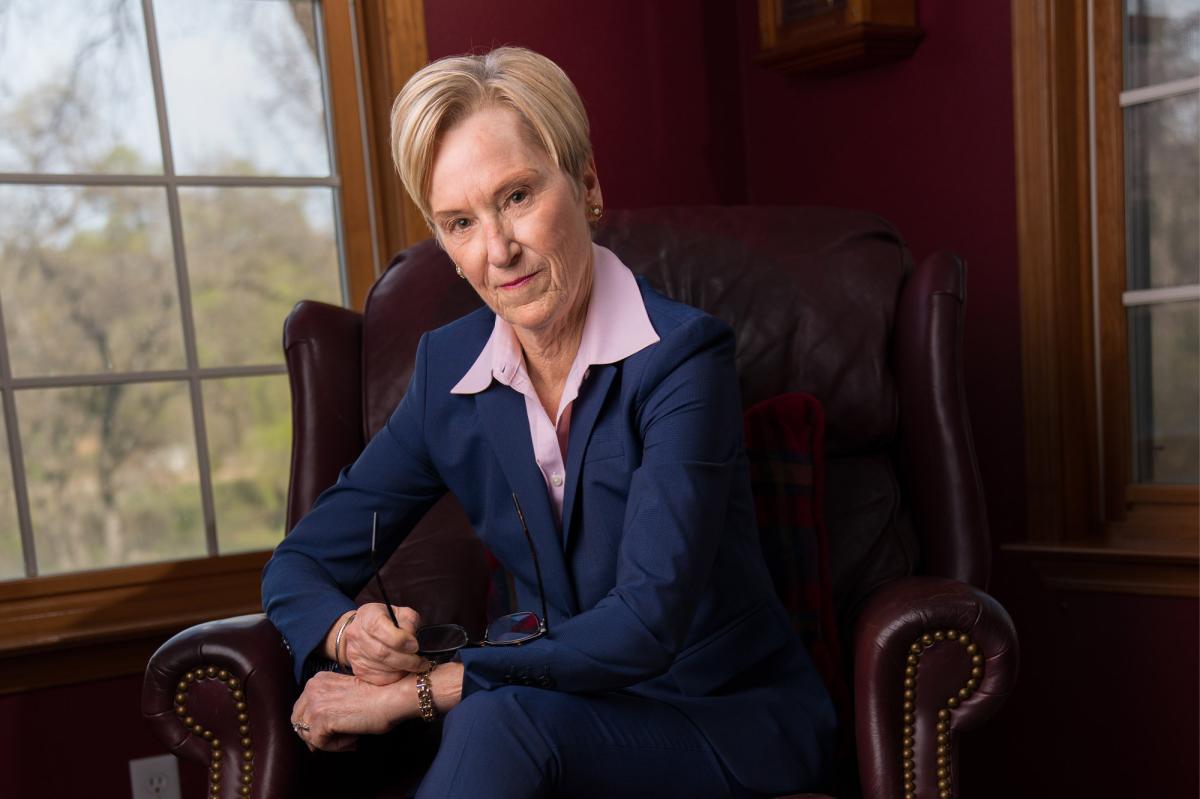
Maryann Gilliard, who served nearly 27 years as a Superior Court judge in Sacramento before her retirement in August, expressed her concerns about laws permitting the early release of “elder” felons and mental health diversion programs, suggesting these measures jeopardize public safety. This marks one of her initial interviews since stepping down from the bench.
“Currently, it’s as if California should be under a conservatorship because the individual in charge, Gavin Newsom, poses a threat to others,” Gilliard stated in an interview with The Post.
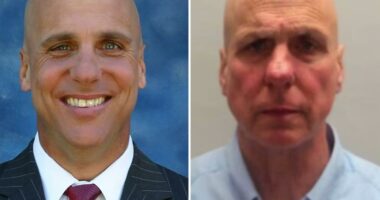
Gilliard hadn’t intended to publicly oppose Newsom’s policies on crime, but her tipping point occurred with the release of David Allen Funston. Funston, a 64-year-old convicted child molester sentenced to three life terms for the abduction and sexual assault of young children in the 1990s, was recently freed under the state’s elder parole initiative.
This program, initially started by former Governor Jerry Brown to address prison overcrowding and later expanded by Newsom, allows inmates, including those convicted of violent crimes, to seek early release if they have served at least 20 years and are over the age of 50. This expansion was made possible by AB 3234, a law signed by Newsom in 2021.
Gilliard remarked, “A 50-year-old serial child molester qualifies for elderly parole but is still too young for the senior Grand Slam at Denny’s. Criminals who were supposed to serve life sentences are being released because Gavin Newsom and his imprudent Board of Parole have approved it without considering public safety.”
Funston was hit with new charges just hours after his release on Feb. 26.
Gilliard cited a number of bills that she said have “put all of us risk” during Newsom’s tenure — including one allowing murderers to stay on parole for as little as one year, another weakening gang laws, and another letting felons who aren’t on probation or parole to serve on juries.
Newsom also signed SB 1223 in 2023, which lets criminal defendants cite virtually any diagnosis to help stay out of jail.
Under that law, if a criminal defendant has a diagnosis — ranging from ADHD to substance use disorder — it is presumed that the disorder led to the criminal act, allowing even serious offenders enter a lax and poorly-enforced mental health program in lieu of jail, according to Gilliard.
“If you pistol whip an 80 year old lady but you’re a pothead, also known as ‘cannabis use disorder,’ all you have to be is in the DSM-5 and it’s presumed that was the cause of the conduct,” she said.
A bipartisan group of state lawmakers, led by state Sen. Shannon Grove of Bakersfield, has called for stricter limits on mental health diversion.
“However well-intended this program was and might have been, in reality it did not come with enough guardrails and has become a get-out-of-jail-free card,” Grove said in a statement last week.
“The governor owns this failure, he needs to do the right thing and call a special session of the legislature and fix what he broke,” Gilliard said.
“The biggest crime scene in Sacrameto is at the state capital, and someone ought to tape it off.”
Newsom’s office pointed to falling crime statistics in California cities as evidence that the governor’s criminal justice policies are working, and disputed claims that programs like elder parole and mental health diversion are endangering the public.
Regarding elderly parole, Newsom spokesperson Diana Crofts-Pelayo said recidivism sharply drops with age and less than 2% of elder parolees are convicted of a crime again within five years of their release.
The parole process is “stringent,” she said, and decisions are made based upon the “best risk assessment tools to ensure that people released after incarceration pose no unreasonable risk to public safety.” Governors can only reverse parole board decisions in murder cases, she added.
Half of US states allow jury eligibility for convicted felons and that judges retain discretion in mental health diversion, she said.
“Mental health diversion exists because untreated mental illness drives repeat low-level offenses — and treatment reduces recidivism more effectively than cycling individuals through jail without care. It is not a ‘get out of jail free card,’” Crofts-Pelayo said.
Gilliard said that by the end of her career overseeing murder and other serious cases, she would inform victims’ families that it was “highly likely” perpetrators will be released on parole during their lifetimes.
“During sentencing, I would tell the victims and their family members, ‘the governor and the legislature are never here on Fridays, during sentencing, to see the agony and pain you’re going through because of their ‘reforms,’” she said.
“There are real live human beings who have been horrifically victimized,” added Anne Marie Schubert, a former Sacramento District Attorney and critic of elder parole and other policies.
“Nobody thinks that 50 is elderly. It’s a joke,” she said. “And when we ignore victims’ rights, it is devastating for families and victims who have to relive trauma” when offenders are eligible for parole.