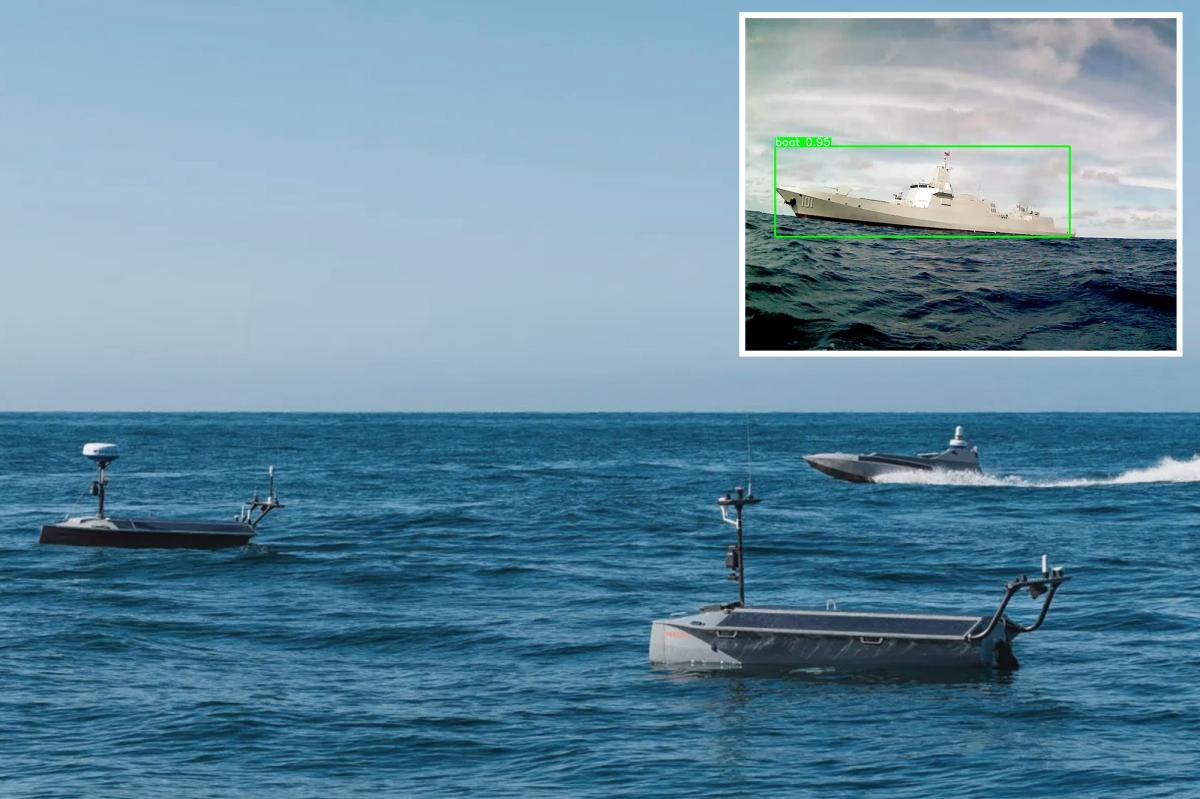


A new fleet of autonomous vessels, supported by the U.S. Navy, has been deployed off the coast of California to track down elusive Chinese “ghost ships.”
Developed by San Diego-based startup Seasats, these innovative boats are designed for intelligence, reconnaissance, and surveillance missions at sea, all without any human operators on board.
Among these vessels is the 12-foot Lightfish, capable of relaying the positions of China’s ghost fleet, monitoring weather conditions, signaling submarines, and identifying smugglers and illegal fishing activities.
“After a successful demonstration, the Navy decided to purchase them,” said Matt Flanigan, CEO and co-founder of Seasats, in an interview with the San Diego Union-Tribune.
These ships operate far offshore, using underwater acoustic signals that are converted into radio signals. These signals are then transmitted via satellite back to operators on land.
Seasats has secured $40 million from investors in addition to $100 million in defense contracts. Notably, one of their vessels detected several Chinese warships within Taiwan’s exclusive economic zone, none of which were broadcasting their identities through the Automatic Identification System.
“The Lightfish was able to track these vessels and capture images confirming their type and origin,” the company said. The trip was the first autonomous transit of the Taiwan Strait, a contested waterway between Taiwan and mainland China.
The company says the ships are especially useful because they can perform reconnaissance in a covert manner, and in a way that shore-based radar systems can’t.
“In this era of ubiquitous satellites and sensors, it may surprise some that a ship can hide in the ocean environment,” Declan Kerwin, chief of staff at Seasats, said. “That’s why these long-range autonomous vessels are so compelling. They can provide maritime awareness where shore-based radars can’t reach.”
Radio-based shore systems can’t go through water, Flanigan explained. “Submarines or divers or underwater robots can’t talk to the internet, so you have to have something right at the surface of the ocean,” he added.
Seasat will fully open a new San Diego headquarters in August. The new facility will span more than 61,000 square feet and will house 70 employees across two buildings.
The Navy is working with Seasats as tensions with Taiwan and China continue to flare. The startup says it is “actively engaging with Taiwan and allied forces across the Indo-Pacific to deploy and scale persistent maritime domain awareness where it matters.”