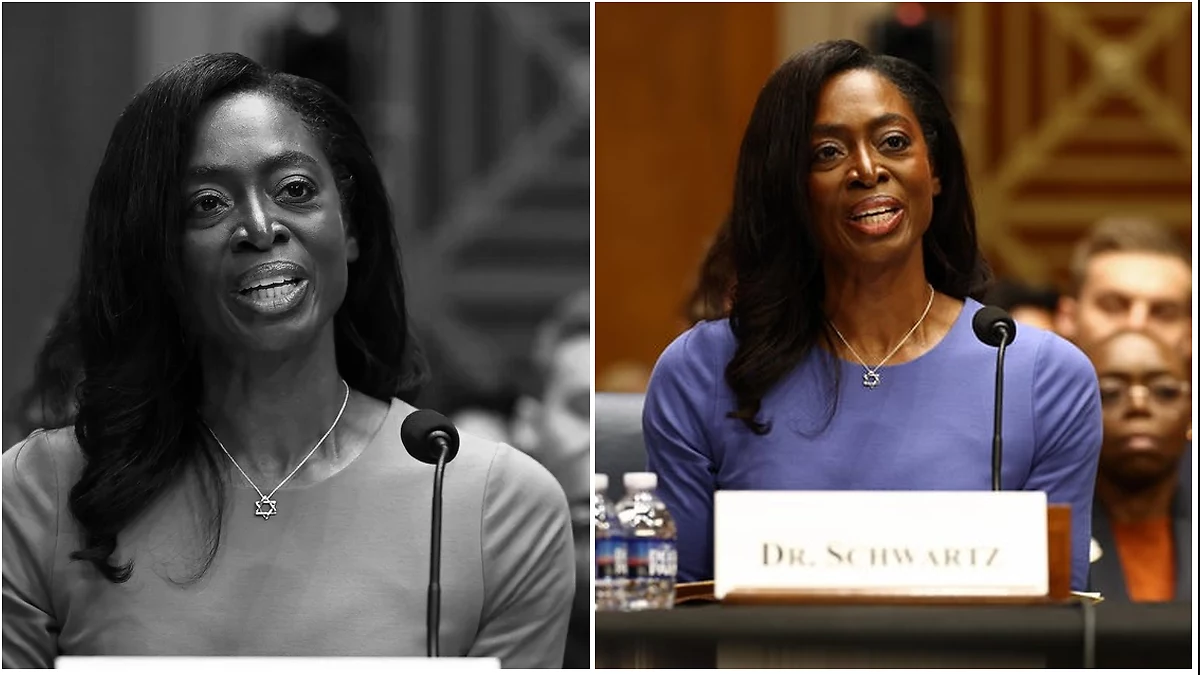

A Senate committee voted Thursday to advance Dr. Erica Schwartz’s nomination to lead the nation’s premier public health agency, moving past objections from lawmakers who questioned whether she would resist political interference.
If approved by the full Senate, Schwartz, 54, would become the 22nd director of the Atlanta-based Centers for Disease Control and Prevention, the federal agency responsible for helping shield Americans from preventable health threats. Her background spans medicine, law and public service, including medical and law degrees, a tenure as deputy surgeon general and a senior leadership role with the U.S. Coast Guard.
Her confirmation prospects looked uncertain after a hearing earlier this month before the Senate Health, Education, Labor and Pensions Committee. Committee Chairman Sen. Bill Cassidy, a Louisiana Republican, and other senators pressed Schwartz on whether she would be prepared to challenge President Trump’s health secretary, Robert F. Kennedy Jr., if he directed the CDC to take action not supported by science or sound public health practice.
But when the committee convened last week, Cassidy said he had spoken with Schwartz after the hearing, as well as with others familiar with her work and judgment.
“I’m confident that she knows what she is doing and will stand against those who do not,” said Cassidy, whose backing was critical to keeping the nomination alive.
Thursday’s vote, which fell largely along party lines, sent Schwartz’s nomination to the full Senate for consideration.
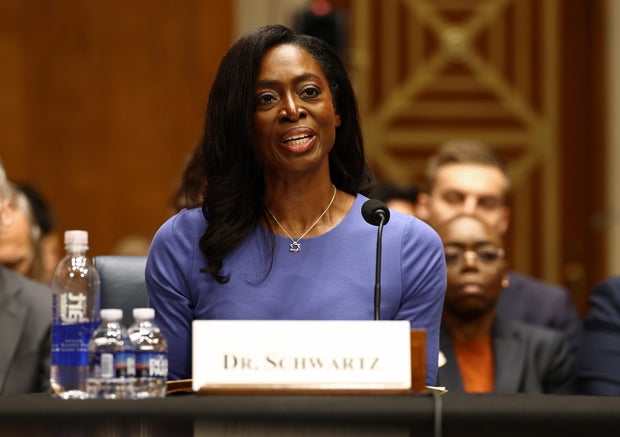
Finn Gomez / Getty Images
Sen. Bernie Sanders, the Vermont independent, was among those who voted against her.
“The issue at hand is not complicated,” Sanders said last week. “Will we have people in the Trump administration who have the guts to stand up to people who are anti-science and into conspiracy theories?”
The CDC has been in turmoil since Mr. Trump returned to office last year.
Largely due to layoffs and resignations, the agency has lost 3,000-plus employees, more than one-quarter of its workforce. Morale has plummeted as a succession of mostly temporary leaders have come and gone. The front office has been staffed by political appointees with little or no training in medicine or public health.
When Schwartz was nominated in April, public health experts were cautiously optimistic, citing her background. They also noted she was the choice of Mr. Trump and not Kennedy, a leading voice in the anti-vaccine movement before he was tapped to oversee the CDC and other federal health agencies.
Kennedy had promised not to change the nation’s vaccination schedule but later attempted a substantial rewrite of vaccine recommendations for kids. Some of those efforts were put on hold this year by a federal judge.
Kennedy’s actions have rankled Cassidy, a physician who initially expressed doubts about Kennedy as Mr. Trump’s pick to be health secretary. Cassidy ultimately signed off on Kennedy after the nominee promised not to change the nation’s childhood vaccine recommendations.
At Schwartz’s hearing, Cassidy and some other senators asked her what she would do if Kennedy or other political appointees instructed the CDC to make changes that were not supported by science. Schwartz pledged to “never betray the science,” but she repeatedly declined to dissent from some of the actions Kennedy has taken.
The National Public Health Coalition, an organization of former and current CDC workers, was not reassured by her responses and said senators should require specific written commitments from Schwartz on scientific independence, evidence-based vaccine policy, conflicts of interest and other issues.
“The public needed to hear clear commitments about how she would protect CDC guidance from political pressure,” the group said in a statement. “Too often, her stated commitments were incomplete, vague, or missing.”
At the hearing, Schwartz said she was unaware that CDC programs that worked to prevent smoking and promote vaccinations had been curtailed. She declined to commit to taking down a CDC website that suggests a link between childhood vaccines and autism. She said she had not seen it, though she agreed existing medical evidence has not found a link.
Last week, Cassidy said that “as a sign of good faith” officials at the Department of Health and Human Services had modified the page. But this week, it continued to argue that “vaccines do not cause autism” is not an evidence-based claim, despite numerous studies that have found no such link.
Dr. Georges Benjamin, executive director of the American Public Health Association, interpreted Schwartz’s performance as someone trying to please different factions. He disagreed with how she answered several questions, but continued to support her nomination.
He said in a recent interview that Schwartz is qualified, might be able to rebuild the CDC’s depleted command structure and could start to rebuild public trust in the agency by focusing on bipartisan concerns such as foodborne disease outbreaks.
Dr. Daniel Jernigan, a former top CDC official who resigned in August, echoed that.
If Schwartz is not confirmed, “it will mean a continued rudderless journey for CDC,” he said.
For Kennedy, “having to start over is probably what he wants — many more months with no one stopping him from pursuing the same anti-science and anti-vaccine efforts he has been pursuing,” Jernigan said.
Schwartz was the third Trump nominee for the office in the past 18 months.
The first was a former Florida congressman, Dr. David Weldon. His Senate hearing in March 2025 was canceled an hour before it was to begin. Weldon said at the time that he had been told not enough senators were willing to vote for him.
The White House then moved on to Susan Monarez, who had been serving as the CDC’s acting director. Monarez was confirmed by the Senate, but she was ousted in less than a month. Trump administration officials said she was not aligned with the president’s agenda so they terminated her.
Since then, there have been a series of HHS officials as acting CDC director.
The CDC position is one of a number of leadership vacancies among federal health agencies, including surgeon general and commissioner of the Food and Drug Administration.
Also unfilled is the job of assistant health secretary for preparedness and response. That official oversees preparations and response to public health emergencies and disasters and is involved in decisions about funding next-generation vaccines against pandemic flu or other infectious disease threats.
Mr. Trump wants Sean Kaufman in that post, and the Senate committee on Thursday approved the nomination by a party-line vote.
In LinkedIn postings, Kaufman has made comments cheered by vaccine skeptics, arguing against hepatitis B vaccinations for newborns and saying he served as an expert witness to advocate for people who refused the COVID-19 vaccine. He also supported a Trump administration decision last year to cancel projects to develop vaccines using mRNA technology.
“Mr. Kaufman has said some pretty stupid things and irresponsible things regarding immunization,” Cassidy said.
But Cassidy said he spoke to HHS officials and was assured that personnel changes are being made at the department to provide “better oversight to ensure that science, not ideology, is driving decision-making.”
Cassidy also said he has been assured that if Kaufman is confirmed, “he will not be involved in vaccine policy and nor will he be the ultimate decision-maker on certain issues.”
Sanders, who voted against Kaufman, said: “I think the American people are owed better than what President Trump has nominated.”


