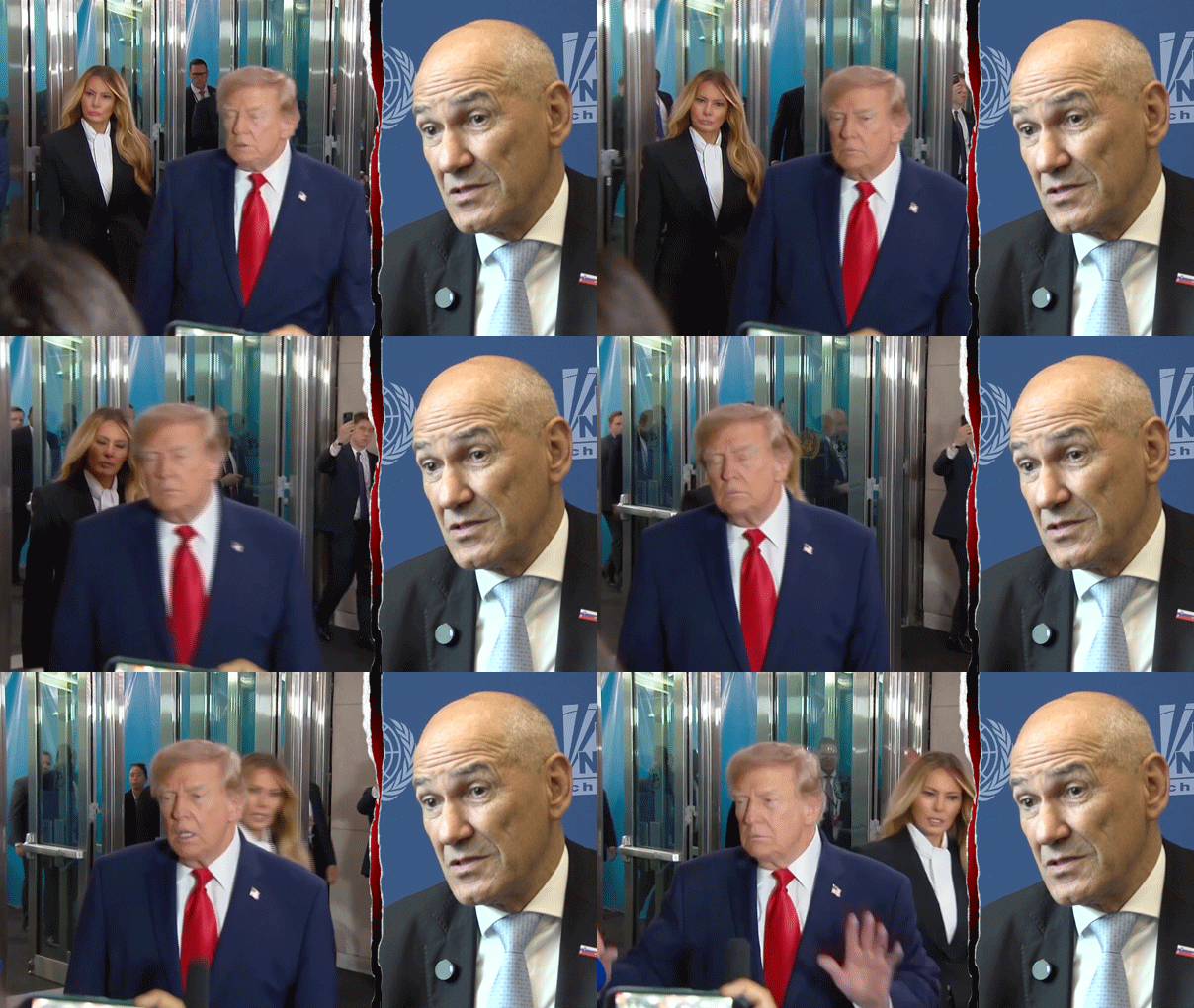
Slovenian Prime Minister Janez Janša accused the United Nations of applying double standards to international conflicts, saying the focus on Gaza has eclipsed Russia’s war in Ukraine and other humanitarian emergencies. He also disclosed that President Donald Trump has promised to visit Slovenia, the birthplace of first lady Melania Trump.
In an exclusive interview with News Outlet on the sidelines of the U.N. General Assembly in New York on Wednesday, Janša said the international community must address a wider range of conflicts instead of directing most of its diplomatic attention toward a single crisis in the Middle East.
“We have to get rid of double standards,” Janša said. He urged the U.N. to use its diplomatic and security mechanisms consistently, warning against concentrating its attention, funding and resources on one conflict while other crises are left largely overlooked.
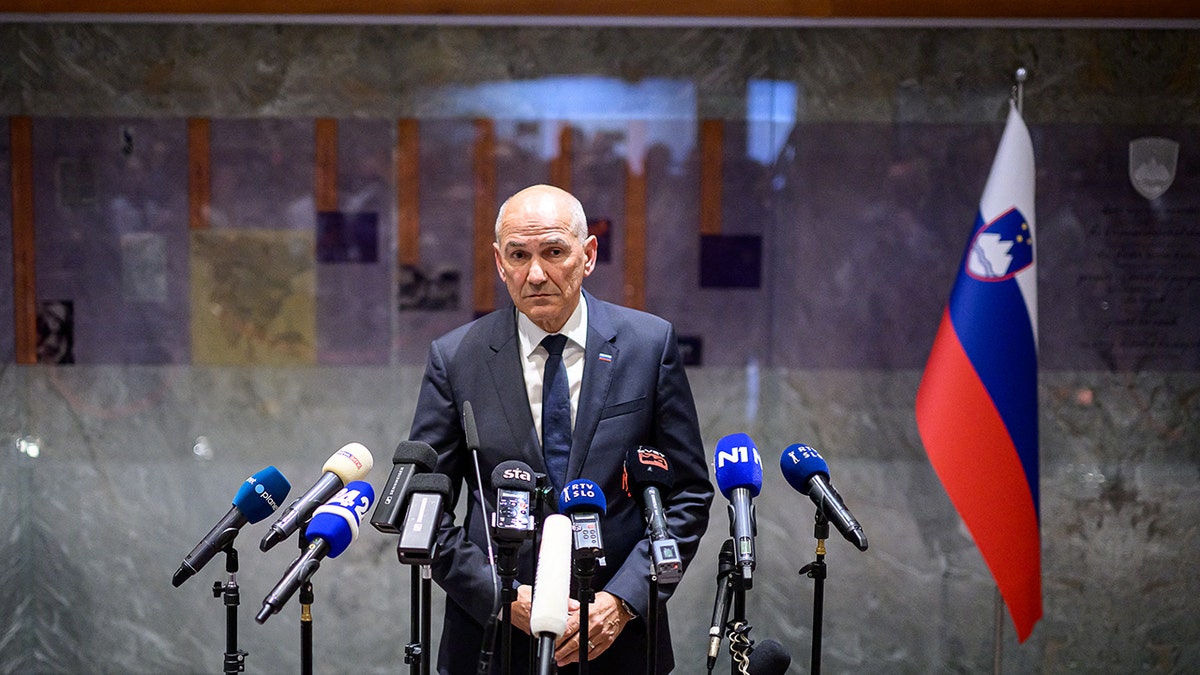
Right-wing Slovenian Democratic Party (SDS) leader Janez Janša addresses the media after his investiture vote as Slovenia’s Prime Minister at the National Assembly in Ljubljana on May 22, 2026. (Jure Makovec / AFP via Getty Images)
The Slovenian prime minister said he was surprised by the extent to which Gaza dominated speeches at the opening of the General Assembly. By comparison, Ukraine — a conflict far closer to Slovenia’s borders — received significantly less attention, he said.
For Slovenia and other European nations, Janša said, Russia’s invasion of Ukraine poses a direct and immediate security danger. He added that there is still no clear sign Moscow is ready to negotiate an end to the war.
Janša said the U.N. was created to help prevent conflicts of this kind and should not permit its agenda to become dominated by events in one part of the world.
He also cited the persecution of Christians in Nigeria and other humanitarian crises, saying the international body must acknowledge that countries face different security threats and humanitarian needs.
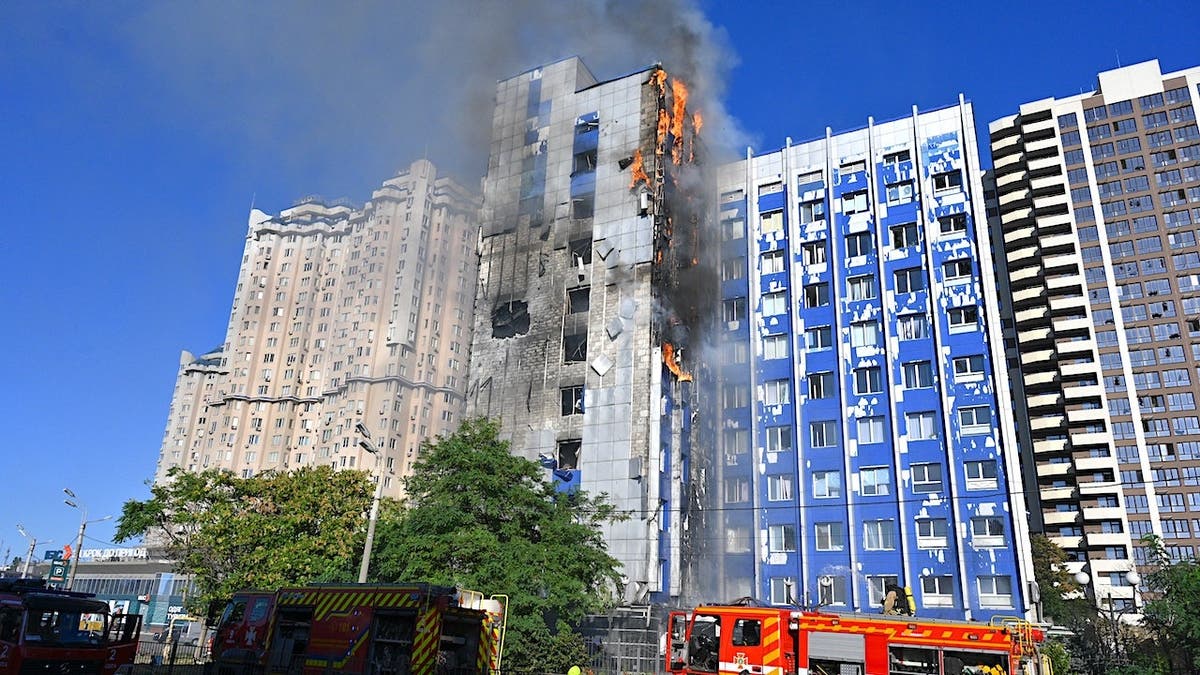
An office building burns following a Russian drone attack in central Odesa, Ukraine, on Friday, Sept. 18, 2026. (Michael Shtekel/AP)
Janša said he plans to address the issue in his own speech to the General Assembly on Thursday.
His remarks come as Slovenia makes a notable adjustment to its foreign policy, particularly in its relationship with Israel.
During the previous administration led by Prime Minister Robert Golob, Slovenia recognized Palestinian statehood in June 2024 and introduced an arms embargo on Israel in July 2025. That government said the measures were intended to protect Palestinian civilians and uphold international law.
After returning to power, Janša has moved to deepen Slovenia’s ties with Israel, signaling a departure from the previous government’s more critical stance toward the country.
Earlier this month, Israel opened its first resident embassy in Slovenia, and Israeli Foreign Minister Gideon Sa’ar traveled to the country for discussions on expanding political and economic ties. The two governments also signed a cooperation program covering education, science, culture, youth and sports through 2030.
Janša characterized the policy as a restoration of the traditionally strong relationship between Slovenia and Israel, rather than a major diplomatic departure.
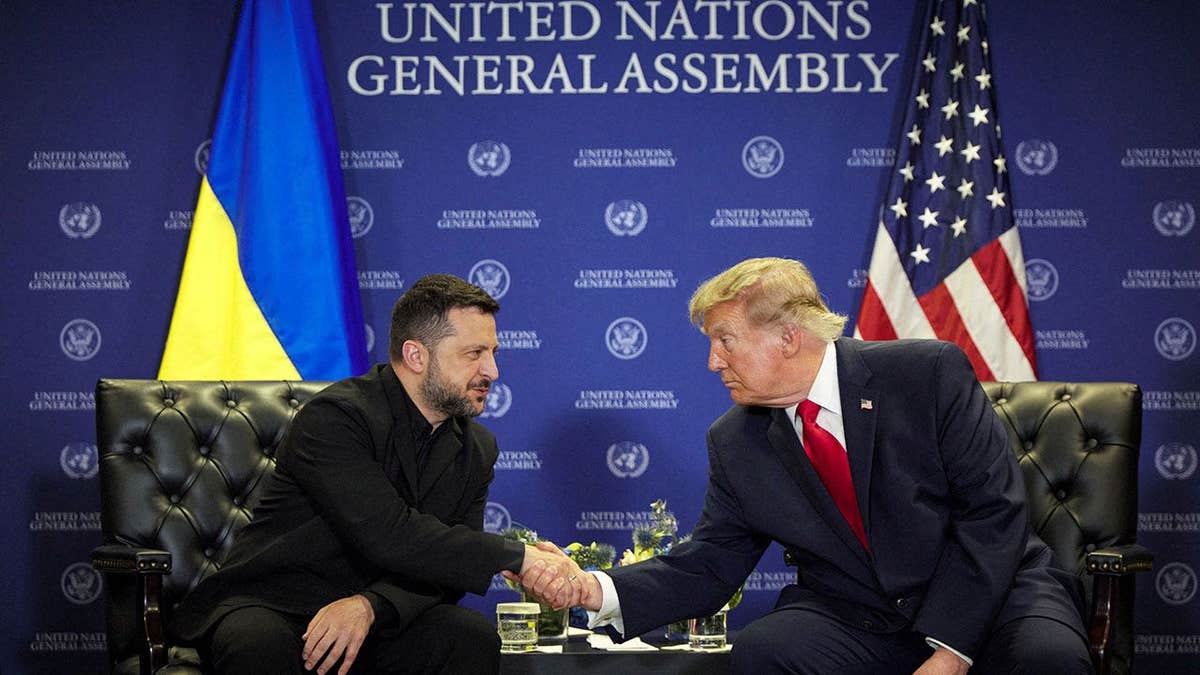
President Donald Trump and Ukraine’s President Volodymyr Zelenskyy shake hands as they meet on the sidelines of the 81st United Nations General Assembly (UNGA) in New York City in this handout released September 22, 2026. (Ukrainian Presidential Press Service/Handout via Reuters)
Janša also criticized European governments that he believes have failed to see the strategic links among Iran, Russia, the war in Ukraine and conflicts in the Middle East.
He said he has supported the Iranian opposition for decades and argued that a lasting peace in the Middle East will remain out of reach without political change in Tehran.
Janša accused some European governments of applying contradictory standards by backing Ukraine while adopting policies toward Iran that, in his view, do not sufficiently consider Tehran’s ties to Moscow. He cited Ireland and Spain, as well as Slovenia under its previous government before this year’s change in leadership.
Janša further suggested that some European leaders have highlighted the Palestinian issue to shift public attention away from domestic economic and political difficulties, especially as elections approach.
The prime minister’s visit to New York also provided an opportunity to strengthen Slovenia’s relationship with Washington, a relationship that carries a personal dimension because of the country’s most prominent American connection: First Lady Melania Trump.
Born in Slovenia in 1970, Melania Trump grew up in the town of Sevnica before moving to the United States and becoming the nation’s second foreign-born first lady.
The prime minister praised Melania Trump’s work on initiatives for children, describing her role in the White House as a source of pride for many Slovenians. He said his wife met the first lady for the first time on Tuesday and that he also spoke briefly with President Trump.

U.S. President Donald Trump and first lady Melania Trump arrive for the 80th session of the U.N. General Assembly (UNGA) on September 23, 2025 in New York City. (Photo by Alexi J. Rosenfeld/Getty Images)
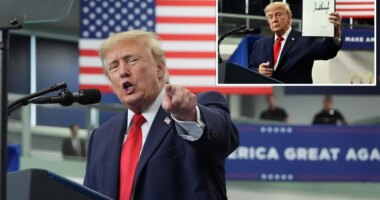
According to Janša, he invited Trump to visit Slovenia and received a positive response. “He promised he’ll come,” Janša told News Outlet.