
Volunteers working with Spencer Pratt say they found widespread ballot activity on Skid Row, even though relatively few residents there appear to have actually cast votes in the Los Angeles mayoral contest.
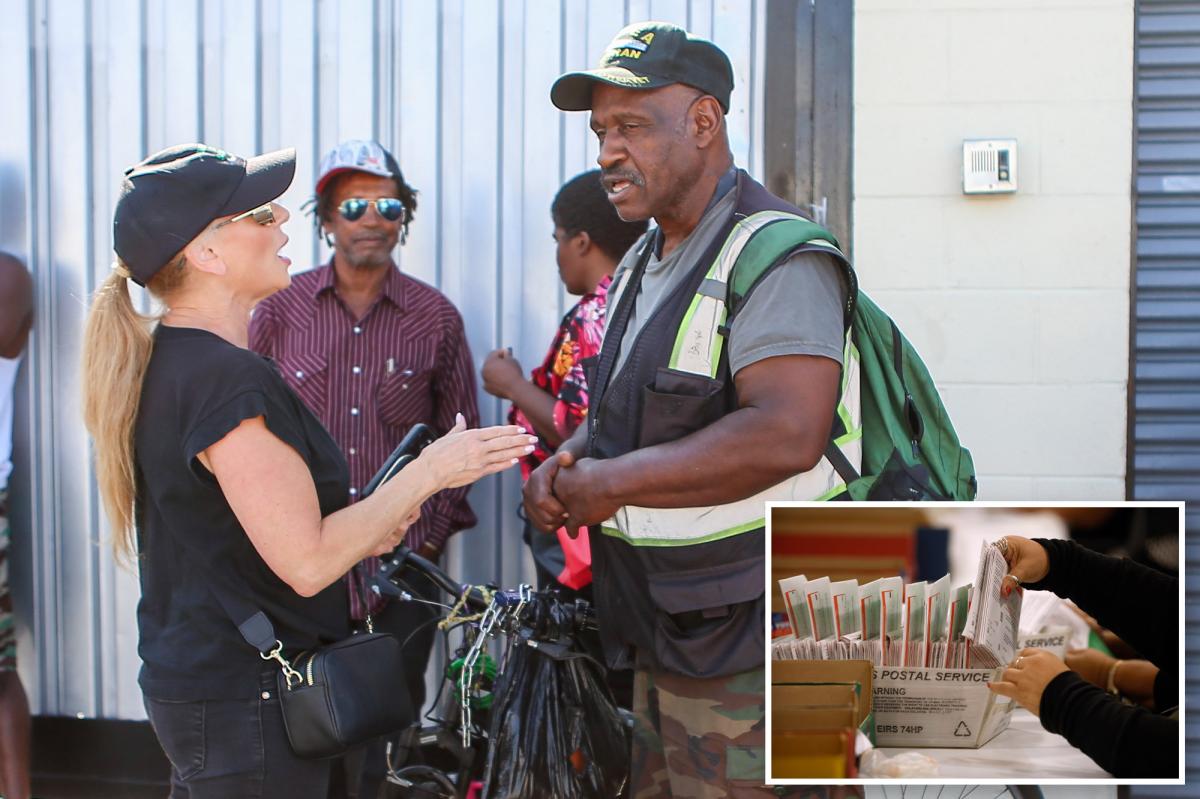
On Sunday, The California Post accompanied four members of the so-called “Pratt Pack” as they spent several hours canvassing the struggling neighborhood.
During their visit, the group spoke with dozens of residents about voter registration, mailed ballots, and the petition circulators who for years have operated in the area encouraging people to participate in elections.
The effort came one week after Pratt was knocked out of the mayoral race, following Karen Bass’s victory and a large wave of mail-in ballots for Nithya Raman that sharply widened her lead over him.
Susan Collins, a former California State Senate candidate who joined the Pratt Pack on Sunday, told The Post: “What we’re finding is a lot of people being registered to vote, a lot of ballots being sent out, and nobody actually voted.”
A separate investigation by The California Post also found thousands of voter registrations.
A review of public records identified more than 7,600 registered voters linked to shelters, supportive housing projects, addiction treatment centers and social service agencies, including 1,160 registrations connected to the Midnight Mission in Skid Row.
One longtime local told volunteers on Sunday he personally knew the Marina del Rey woman recently charged by federal prosecutors with paying homeless people to register to vote.
Brenda Lee Brown Armstrong, known as “Anika,” was charged in May with paying another person to register to vote.
According to federal prosecutors, Armstrong worked for years as a paid petition circulator collecting signatures for California ballot measures and has agreed to plead guilty.
“She was right at this corner. This was her area,” Thadeus Brown told volunteers. Brown claimed people were routinely offered money or cigarettes to sign forms.
“She’d give them $3 to $5. Some of the cheap people give them $2 and a cigarette,” he alleged. But Brown’s account echoed a theme volunteers said surfaced again and again throughout the day: residents remembered registering to vote.
They remembered petition gatherers. What many didn’t remember was actually casting a ballot.
The volunteers moved through tents, shelters, service centers and sidewalk encampments, interviewing people residents about their experiences with the drives.
“A lot of people never voted,” Brown said. “They did register, but they just wanted the names.”
For Collins, who has spent years raising concerns about ballot collection practices, the most striking part of Sunday’s visit was hearing the same story repeated block after block.
“So what I’ve been hearing from a lot of people is that they registered to vote,” Collins said. “I have not found anybody that has actually voted.”
“The big question now is what happened to all those ballots,” Collins said. “People remember getting them. They don’t remember voting. So where did the ballots go?”
Ann Juliano, who was visiting Skid Row for the first time, described the experience as eye-opening and said it strengthened her determination to stay involved rather than watch from afar.
“It was really intense,” Juliano said. “We saw a guy chasing another guy with a shovel and attacking him.”
Juliano said she came to Skid Row looking for answers, convinced there was more to the election story than voters were being told.
“I guess being here is part of trying to figure out what happened. The numbers just don’t make sense. That’s why I’m digging deeper instead of sitting on the sidelines.”
“One thing I would like to say is that I think this election has forever changed Los Angeles,” she said. “At least that’s my hope, that people will feel empowered to keep talking about the truth and keep looking for the truth.”