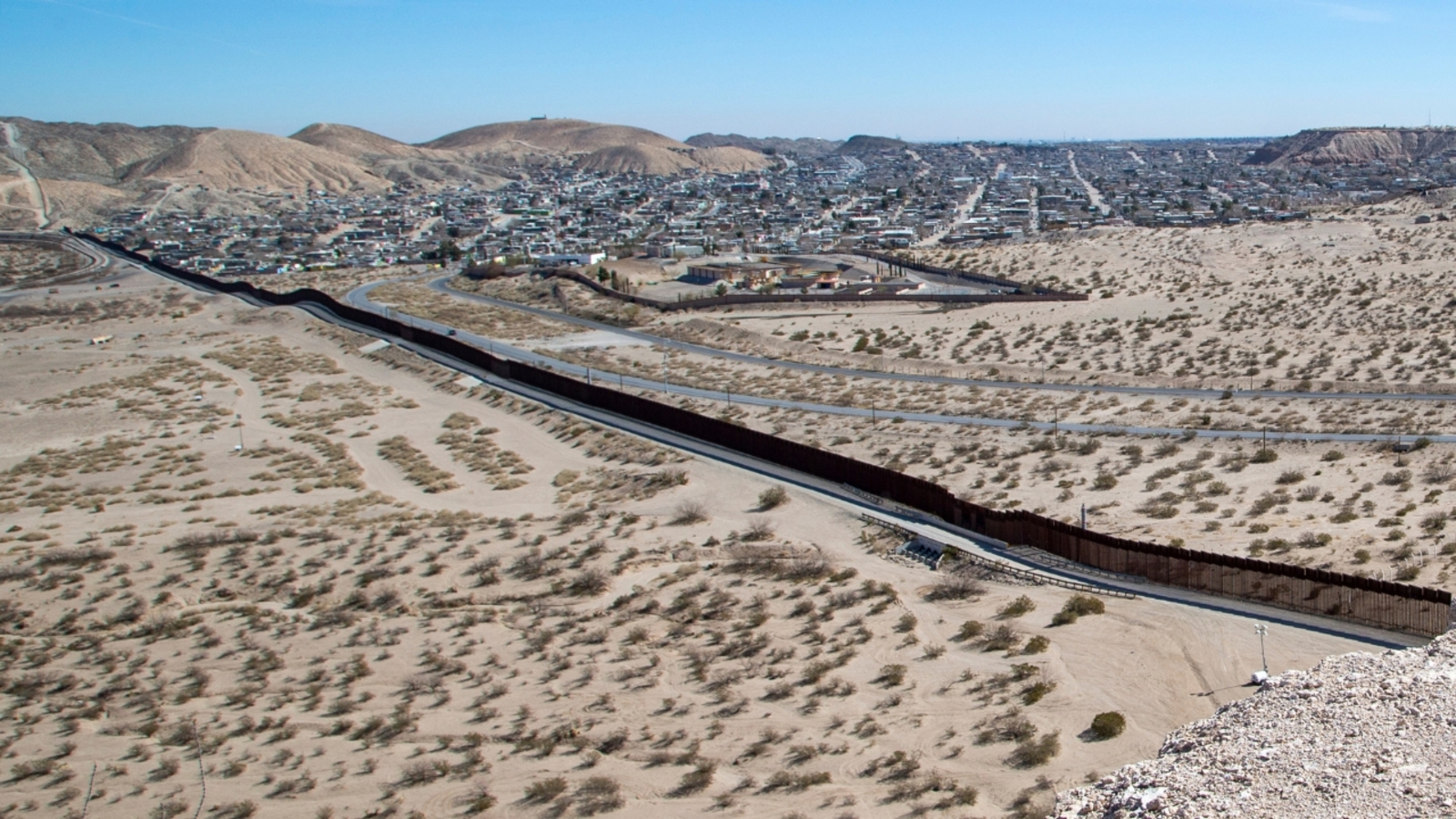

WASHINGTON — The Supreme Court on Thursday opened the door for the Trump administration to possibly reinstate an immigration practice that was previously used to turn away asylum seekers at the U.S.-Mexico border.
In a 6-3 ruling, the justices set aside a lower court order that had blocked the system, known as “metering,” which capped how many migrants could request asylum each day. The approach began during the Obama administration and was later broadened during President Donald Trump’s first term.
Immigrant rights groups argued that the policy fueled a humanitarian emergency, leaving thousands of migrants stranded in dangerous, makeshift camps while they waited for a chance to be processed. Trump officials defended the measure as a necessary response to rising numbers of asylum seekers at the southern border.
Metering is not currently being used, although the government has put other limits on asylum access in place.
The administration told the court that metering remains an important enforcement tool and noted that presidents from both parties have relied on it. Federal lawyers said migrants who were turned away could return at another time, even though waitlists stretched into the thousands when the policy was previously active.
The dispute is among several major immigration cases before the court this term, including Trump’s effort to restrict birthright citizenship and his administration’s attempt to remove temporary legal protections for migrants escaping instability and armed conflict.
Federal law requires that migrants who reach the United States be allowed to seek asylum and undergo screening to determine whether they fear persecution in their home countries.
The Justice Department countered that migrants stopped by authorities at the border have not legally entered the country, meaning immigration officers are not obligated to accept their asylum applications.
The court’s conservative majority agreed. “A guest does not arrive in a house when he knocks on the front door,” Justice Samuel Alito wrote.
But attorneys for people seeking asylum say the law has long meant anyone arriving at a port of entry should be screened, and blocking arrivals disregards the nation’s ideals.
READ MORE: Inside the College Facing Explosive Allegations of a Campus Antisemitism Crisis
Justice Sonia Sotomayor dissented from the bench, saying that the majority’s opinion “regrettably and tragically extinguishes the light of the torch of the Statue of Liberty.”
In an unusual exchange, Alito voiced a response after she finished speaking. He expressed surprise that she’d read her dissent out loud and defended his opinion by pointing out that the policy had been used during two presidential administrations. “I won’t add anything more to that,” Alito said.
Metering was first used under President Barack Obama when large numbers of Haitians appeared at the main crossing to San Diego from Tijuana, Mexico. It was expanded to all border crossings from Mexico during Trump’s first term in the White House.
It ended in 2020 when the government introduced greater restrictions during the coronavirus pandemic, and President Joe Biden formally rescinded it in 2021.
The same year, a California-based federal judge found that metering violated the asylum seekers’ rights and the law requiring screening. A divided appeals court panel affirmed the ruling but nearly half of judges on the full San Francisco-based court voted to rehear it, a strong signal that might have caught the attention of the Supreme Court.
U.S. law allows people seeking refuge to apply for asylum once they are on American soil, regardless of whether they came legally. To qualify for asylum, they must show a fear of persecution in their homeland for specific reasons, like race, religion, nationality, membership in a particular social group or political opinion.
People who are eventually granted asylum can’t be deported. They can legally work, bring in immediate family, apply for legal residency and seek citizenship.
___
Associated Press writer Fatima Hussein contributed to this story.
Copyright © 2026 by The Associated Press. All Rights Reserved.