
Share this @internewscast.com

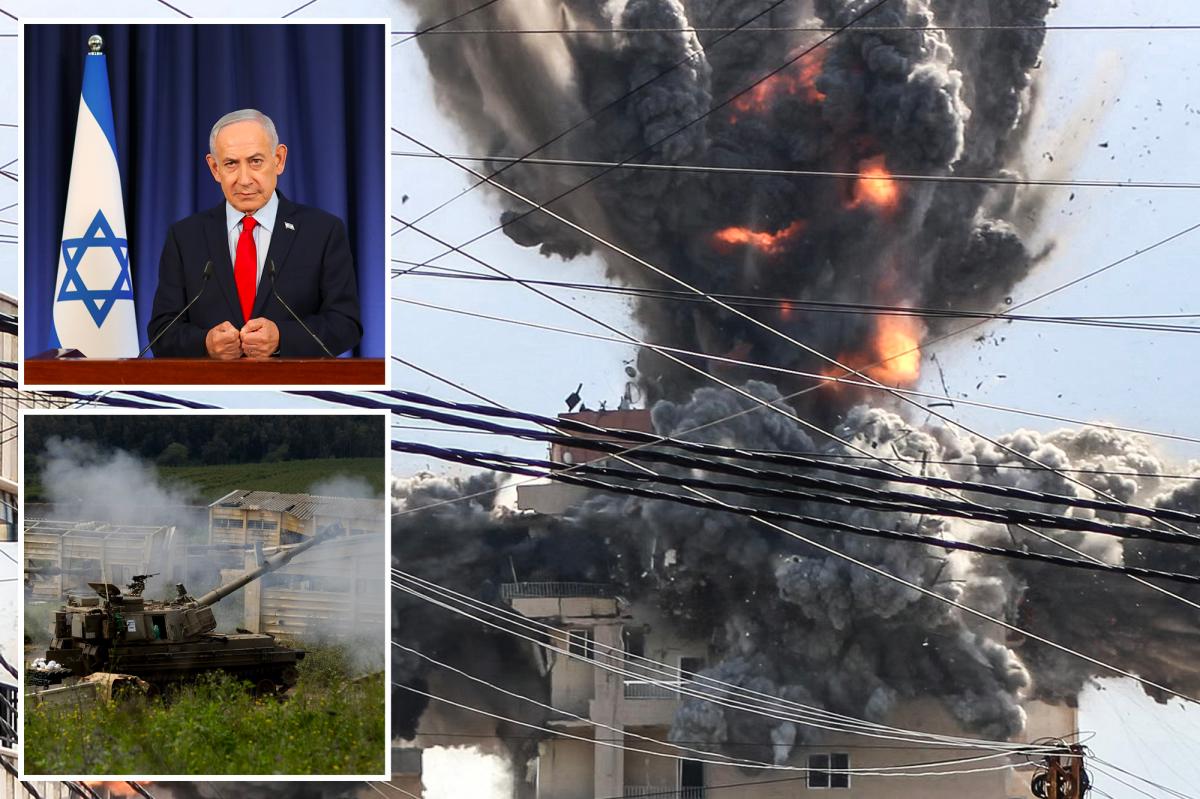
President Trump has urged Israeli Prime Minister Benjamin Netanyahu to adopt a more restrained approach following recent military strikes in Lebanon. These strikes pose a threat to the fragile cease-fire with Iran, with Israel now poised to enter negotiations with Beirut in the coming week.
On Wednesday, Trump reached out to Netanyahu, emphasizing the importance of fostering a cooperative spirit ahead of the crucial U.S.-Iran discussions scheduled to commence on Saturday in Pakistan.
“I spoke with Bibi, and he’s going to tone it down. I just feel that we need to approach this situation a little more quietly,” Trump shared with NBC regarding his conversation with the Israeli leader.
Echoing the President’s sentiments, Vice President JD Vance addressed reporters in Hungary, confirming that Israel had agreed to scale back its military actions. This decision followed an intense bombing campaign on Wednesday, which resulted in over 250 casualties in Lebanon within a mere ten minutes.
Both the United States and Israel have consistently maintained that Israel’s conflict with Hezbollah, an Iran-supported militant group operating out of Lebanon, falls outside the recent two-week cease-fire agreement. However, in response to Trump’s appeal, Netanyahu expressed Israel’s readiness to engage in cease-fire discussions.
“Given Lebanon’s repeated appeals for direct negotiations with Israel, I have instructed the cabinet to commence these talks with Lebanon as soon as possible,” Netanyahu announced in a formal statement.
The talks would center on “disarming” Hezbollah and establishing renewed peace between Israel and Lebanon, Netanyahu added.
The meeting is expected to begin next week in Washington, with the US side led by Michel Issa, the American ambassador to Lebanon, according to Axios.
It comes after Israel’s military issued a fresh evacuation order on Thursday for southern Beirut, including for areas that have yet to be hit during the war.
“The Defense Army continues its operations and strikes against military infrastructure belonging to the terrorist Hezbollah in various parts of the Southern Suburbs,” Israel Defense Forces Arabic spokesman Avichay Adraee wrote on X.
“Out of concern for your safety, you must evacuate immediately,” he added.
The warning triggered a mass exodus, with roads snarled by civilians trying to flee the conflict zone. Israel’s evacuation warnings have often been followed by airstrikes.
Iran has slammed Israel’s actions in Lebanon as a clear violation of the two-week cease-fire agreement, with Iranian parliament speaker Mohammad Bagher Ghalibaf warning of retaliatory action if the fighting continues.
“Ceasefire violations carry explicit and STRONG responses,” Ghalibaf said in a statement.
Iran’s Deputy Foreign Minister Saeed Khatibzadeh claimed Wednesday’s attack would have pushed the Islamic Republic to resume the war if not for mediators in Pakistan, who agreed that Lebanon is included in the cease-fire agreement.
“Iran was on the verge of responding to the cease-fire violation last night,” he said, according to Mizan, the Iranian judiciary’s official news agency.
“Pakistan intervened and conveyed messages indicating that the United States would control Israel,” Khatibzadeh added.
German Chancellor Friedrich Merz told reporters in Berlin that he and other European leaders have also been pushing Netanyahu to end the attacks in Lebanon, saying the conflict with Hezbollah could “cause the peace process as a whole to fail.”
The tension in Lebanon comes as US and Iranian delegates look to meet in Islamabad this week for diplomatic talks aimed at ending the war.