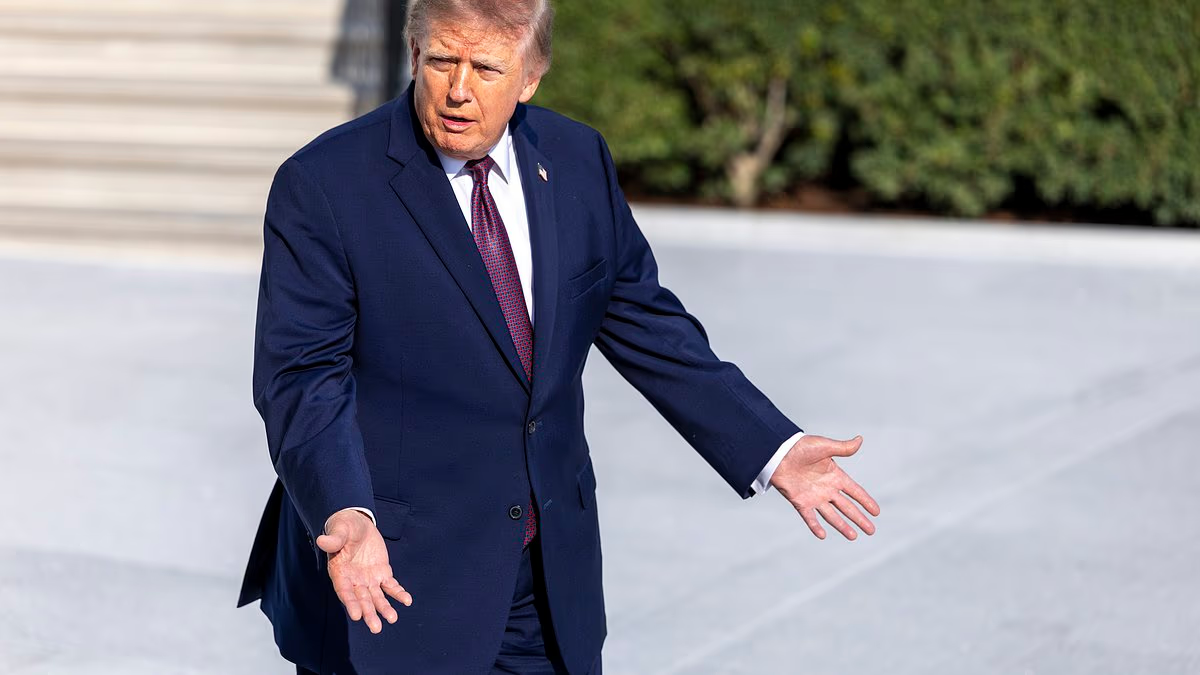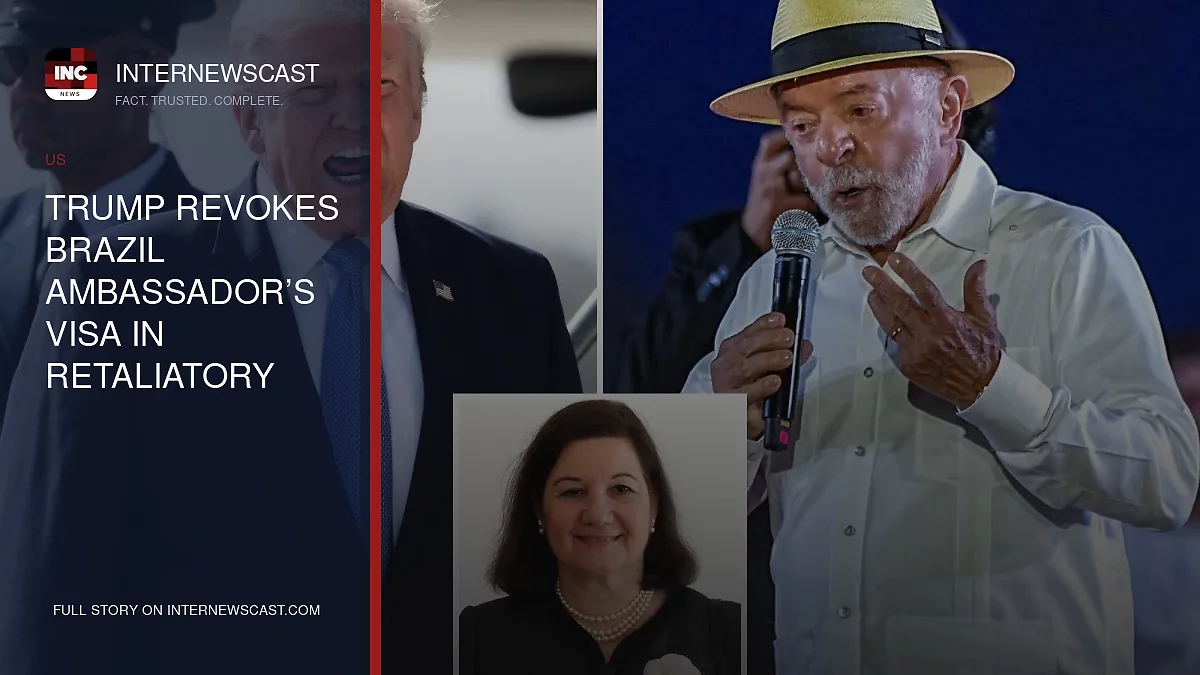

The Trump administration has revoked the visa of Brazil’s ambassador to the United States, escalating a diplomatic dispute with Brasilia after Brazil refused visas last month to two American diplomats who planned to travel ahead of upcoming elections. U.S. officials also linked the move to Brazil’s delay in approving President Donald Trump’s nominee for ambassador in Brasilia.
The State Department described the visa revocation as a reciprocal measure in response to Brazil’s actions. Officials said Washington had postponed the step several times to give Brazilian President Luiz Inácio Lula da Silva an opportunity to change course, but that no such move came. They added that the decision could be reversed quickly if Brazil takes what the U.S. considers appropriate action, including accepting Trump’s ambassadorial pick.
Trump’s relationship with Lula’s government has long been tense, with the two sides clashing over a range of policies, especially in the Western Hemisphere on issues involving Venezuela and Cuba. The friction has also been fueled by Trump’s support for Jair Bolsonaro, Lula’s successor during his first term and later predecessor, who is now under house arrest, as well as Bolsonaro’s son Flavio, Lula’s chief rival in the October election.
Although her visa has been revoked, Brazil’s ambassador, Maria Luiza Ribeiro Viotti, is not being expelled from the United States, according to a State Department official. The official, like others who discussed the sensitive diplomatic matter, spoke on condition of anonymity. Viotti previously held a senior position at the United Nations.
She could be permitted to return to her official duties if Brazil agrees to Trump’s selection of former Florida House Speaker Danny Perez as U.S. ambassador to Brazil. Perez was nominated in June, and the official said Brazil had indicated it would not move forward on the appointment until after the October election.
Beyond the delay over Perez, Brazil last month denied visas to Riley Barnes, the assistant secretary of state for democracy, human rights and labor, and one of his senior aides. The denial followed reports suggesting the two U.S. officials intended to criticize Lula or Brazil’s election process during the trip.
The State Department rejected those claims, saying Barnes and his aide had planned a July 27-30 visit to Brasilia to meet with government officials, religious leaders and other figures to discuss election integrity, religious freedom and freedom of expression.
The department called the planned visit routine and said that “any insinuation of a ‘ploy’ to undermine a democratic nation’s election is a baseless lie.”
Brazil’s government did not immediately respond to a request for comment from The Associated Press about the revocation of the ambassador’s visa, but last week a top Brazilian diplomat told journalists the government was expecting a response from the U.S.
The diplomat also mentioned the U.S. government had triggered the proceedings to send Perez to Brasilia before seeking Brazil’s approval, which is different from standard diplomatic procedure. The diplomat spoke on condition of anonymity due to lack of authorization to discuss the matter publicly.
Lula will face Sen. Flávio Bolsonaro, whose father once served as Brazil’s president and whose family has many ties with the Trump administration, in the Oct. 4 polls. The administration has numerous issues with Lula and his policies and has also hosted the younger Bolsonaro, who is seeking to carry on his father’s conservative governance.
Sen. Bolsonaro and his brother, Eduardo, visited U.S. officials in Washington, including Trump, in late May. Shortly afterward, the Trump administration classified Brazil’s biggest drug-trafficking groups — First Command Capital and Red Command — as foreign terrorist organizations, a move Lula opposes.
The Trump administration also imposed an up to 37.5% tariff hike on thousands of Brazilian exports, which came into force Friday. The U.S. government claims the South American nation has unfair competition practices and fails to stop forced labor practices — both accusations rejected by the Lula administration as an attempt to sway the election to Sen. Bolsonaro.
Jair Bolsonaro has for years fed concerns about the country’s electronic voting system, without providing any evidence for his claims. He is now serving a 27-year prison sentence at home for an attempted coup. He has long insisted that the machines, used for a quarter-century, are prone to fraud.
His son, Sen. Bolsonaro, has recently repeated some of these claims, although he steered clear of those on Saturday when his Liberal Party confirmed him as a presidential candidate in Sao Paulo.