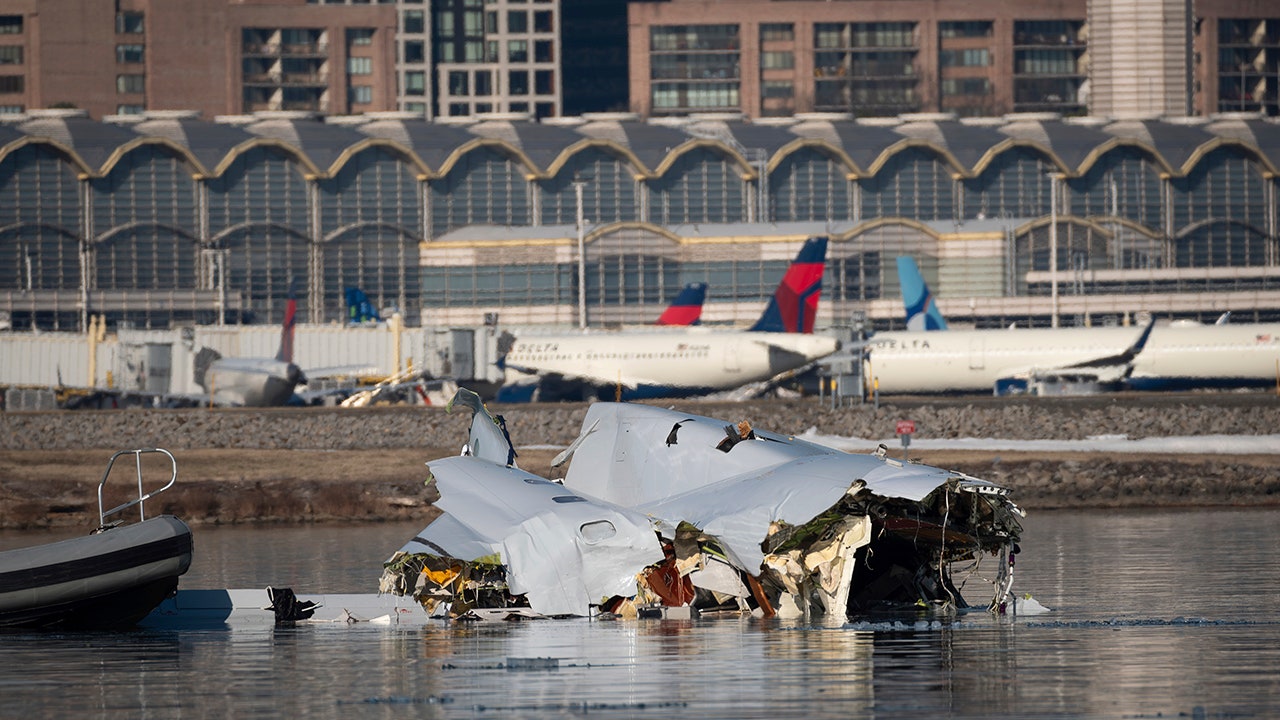

On Tuesday, House lawmakers are poised to cast their votes on a crucial aviation safety bill designed to avert the risk of another tragic midair collision near Washington, D.C.
Dubbed the ALERT Act, this proposed legislation mandates that aircraft operating in congested or regulated airspace must be equipped with advanced systems that enhance pilots’ ability to accurately track nearby aircraft, including planes and helicopters. Safety experts have long advocated for such technology, asserting it as a vital measure to forestall potentially disastrous collisions.
In addition to mandating this technology, the bill proposes widespread implementation of new collision-prevention systems across the U.S. aircraft fleet. It also outlines plans to revamp helicopter routes in the vicinity of major airports and calls for the Federal Aviation Administration to revise its air traffic control procedures and training programs.
This legislative initiative is a response to the tragic events of January 29, 2025, when an American Airlines jet and a U.S. Army Black Hawk helicopter collided near Reagan National Airport, resulting in the loss of 67 lives. This catastrophe stands as the deadliest U.S. plane crash in over 20 years.
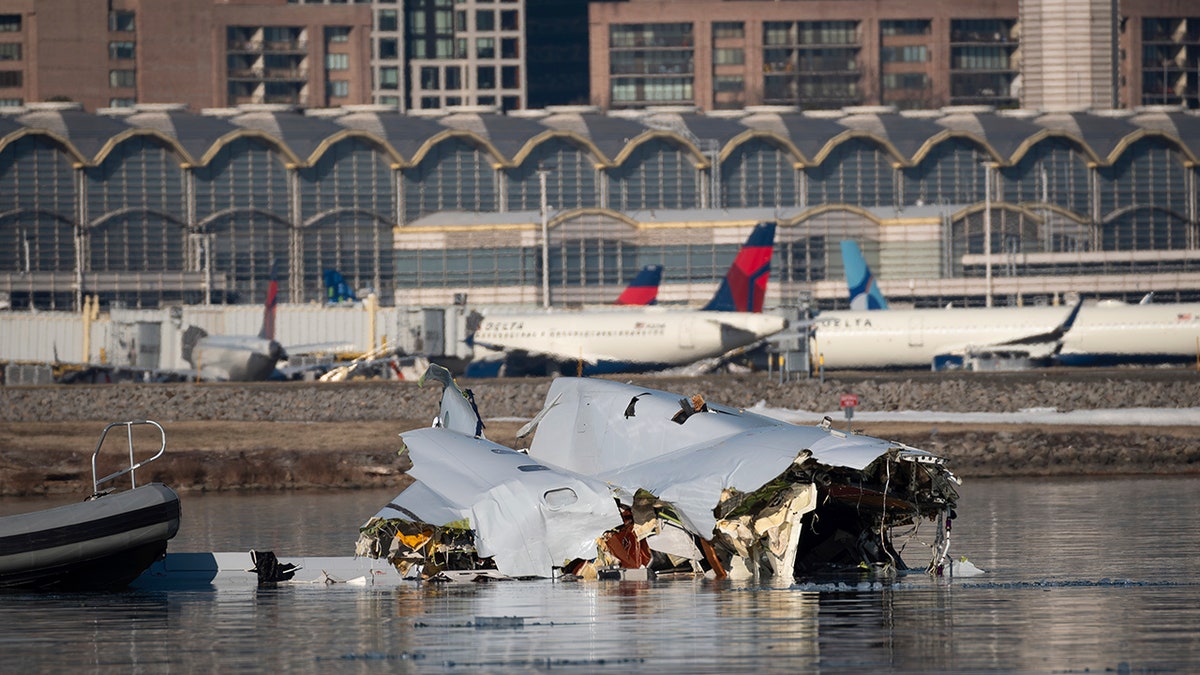
In the aftermath of this tragedy, debris was seen scattered in the Potomac River close to Ronald Reagan Washington National Airport on January 30, as captured by Brandon Giles of the U.S. Coast Guard.
Recent weeks have seen lawmakers make revisions to the bill after initial criticisms from federal safety officials. The updated version, having garnered unanimous support from two key committees, is now ready for deliberation on the House floor.
“The bipartisan ALERT Act is a comprehensive package that addresses the probable cause, contributing factors and responds to all 50 safety recommendations that were issued by the NTSB,” Rep. Sam Graves, R-Mo., said during a March 26 House Transportation and Infrastructure Committee markup, per Roll Call. Graves and Rep. Rick Larsen, D-Wash., co-sponsored the bill.
Graves said lawmakers “worked diligently with the NTSB to refine and improve the legislation” after earlier concerns that the bill did not go far enough.
Federal investigators said safety concernssafety concerns went unaddressed for years before the collision.
The National Transportation Safety Board has said longstanding safety concerns went unaddressed in the years leading up to the crash.
The agency has recommended expanded aircraft-tracking technology since at least 2008, warning that gaps in how planes and helicopters detect one another in crowded airspace posed a serious risk. Investigators said such systems could have prevented the collision if both aircraft had them installed and activated.
The collision exposed broader weaknesses in how military and civilian aircraft operate in shared airspace, especially near major airports with heavy traffic.
At the time of the crash, the Army helicopter was not broadcasting its location data, in line with military policies designed to limit visibility during some operations. But the flight was a routine training mission, not a sensitive operation, raising questions about whether those exemptions should apply more broadly.
The House bill seeks to address some of those concerns by requiring aircraft to use Automatic Dependent Surveillance-Broadcast In, or ADS-B In, technology, which allows pilots to receive real-time location data on nearby aircraft. Most aircraft already use ADS-B Out systems that broadcast their own position.
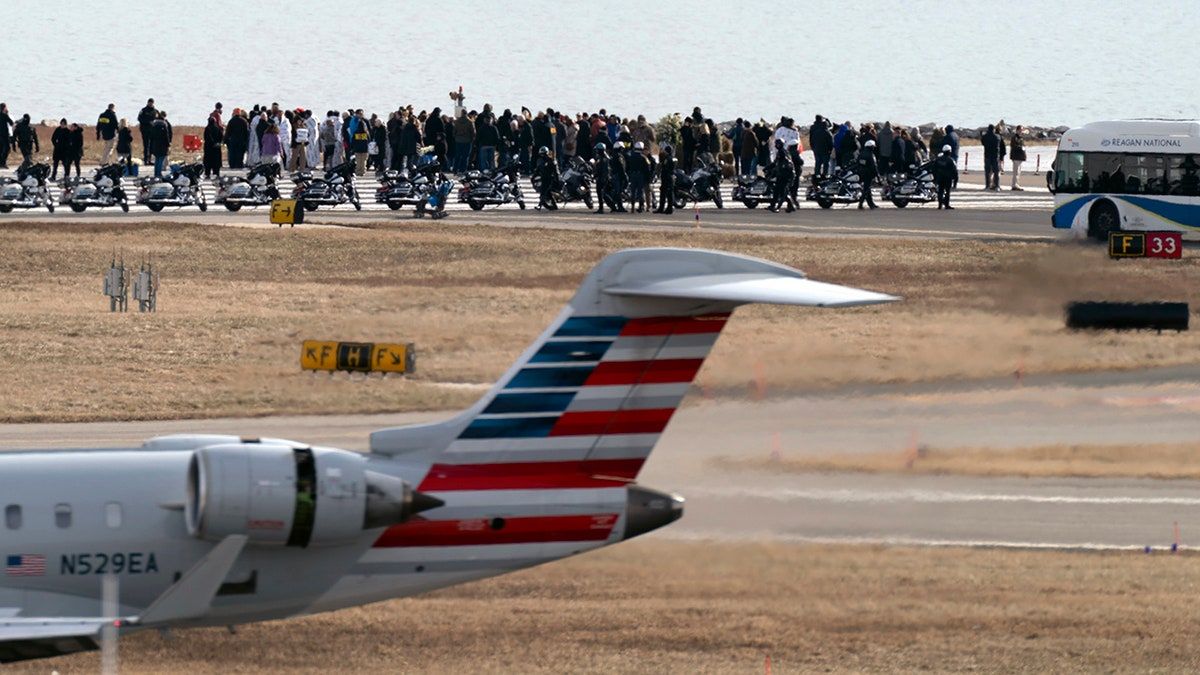
An American Airlines jet passes as family members of the victims of a midair collision between an American Airlines jet and an Army helicopter stand at the end of runway 33 near the wreckage site in the Potomac River at Ronald Reagan Washington National Airport, on Sunday, Feb. 2, in Arlington, Va. (Jose Luis Magana/AP)
Still, critics say the legislation may not go far enough.
In a joint statement, Senate Commerce Committee Chairman Ted Cruz, R-Texas, and ranking member Maria Cantwell, D-Wash., said the House bill “falls short on a strong and clear requirement for common-sense situational awareness technology recommended by the NTSB 18 times.”
The senators pointed to a separate proposal known as the ROTOR Act, which would impose stricter requirements by mandating ADS-B In technology across aircraft, including military flights. The bill passed the Senate unanimously in December but fell short of the threshold needed to advance in the House.
“Any legislation that is expected to pass both the House and the Senate will have to apply the strongest ADS-B n safety standards to all aircraft, civil and military,” Cruz and Cantwell said.
Families of the victims have also pushed lawmakers to strengthen the bill, including by setting firm deadlines for new safety measures and requiring all aircraft — including military helicopters on routine flights — to broadcast their positions.
“Recommendations without firm deadlines and clear mandates become recommendations without results,” the Families of Flight 5342 said in a statement.
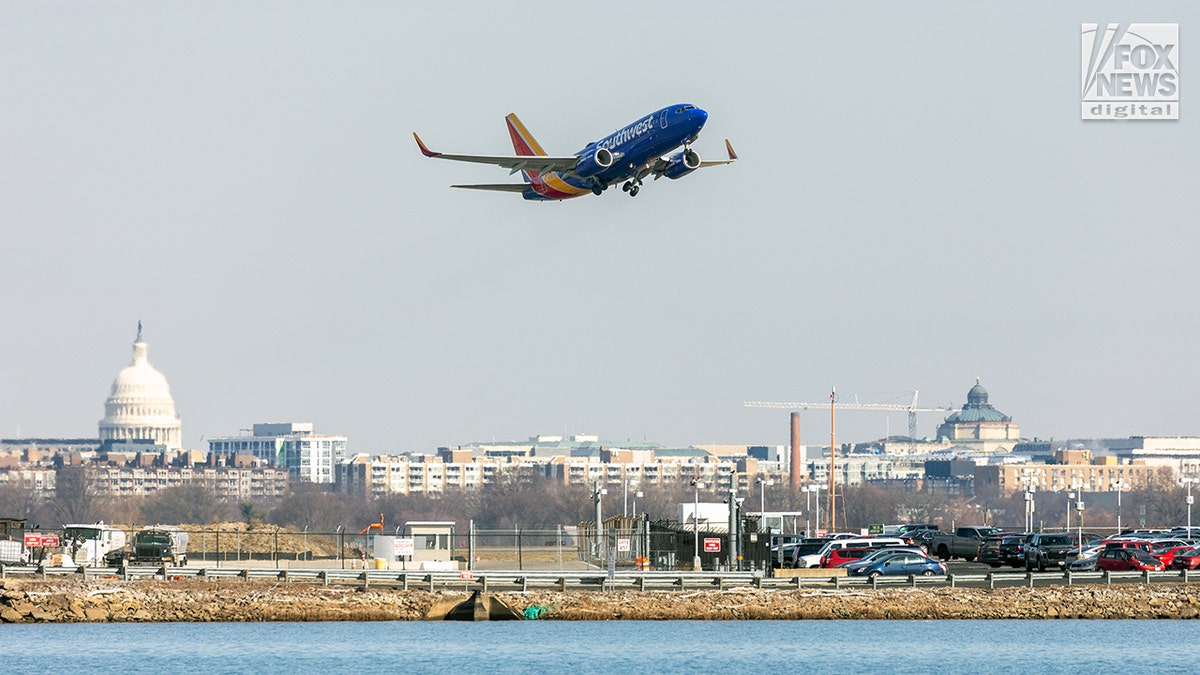
Southwest aircraft takes off from Reagan National Airport as flights resume on Thursday, January 30, 2025. Flights were held following the fatal crash of an American Airlines flight and a U.S. Army Black Hawk helicopter last night. (Leigh Green for Fox News Digital)
The group added that “a clear ADS-B In mandate that fully meets the NTSB’s own recommendations must be part of any bill that becomes law.”
Fox News Digital has reached out to Graves and Larsen for comment.