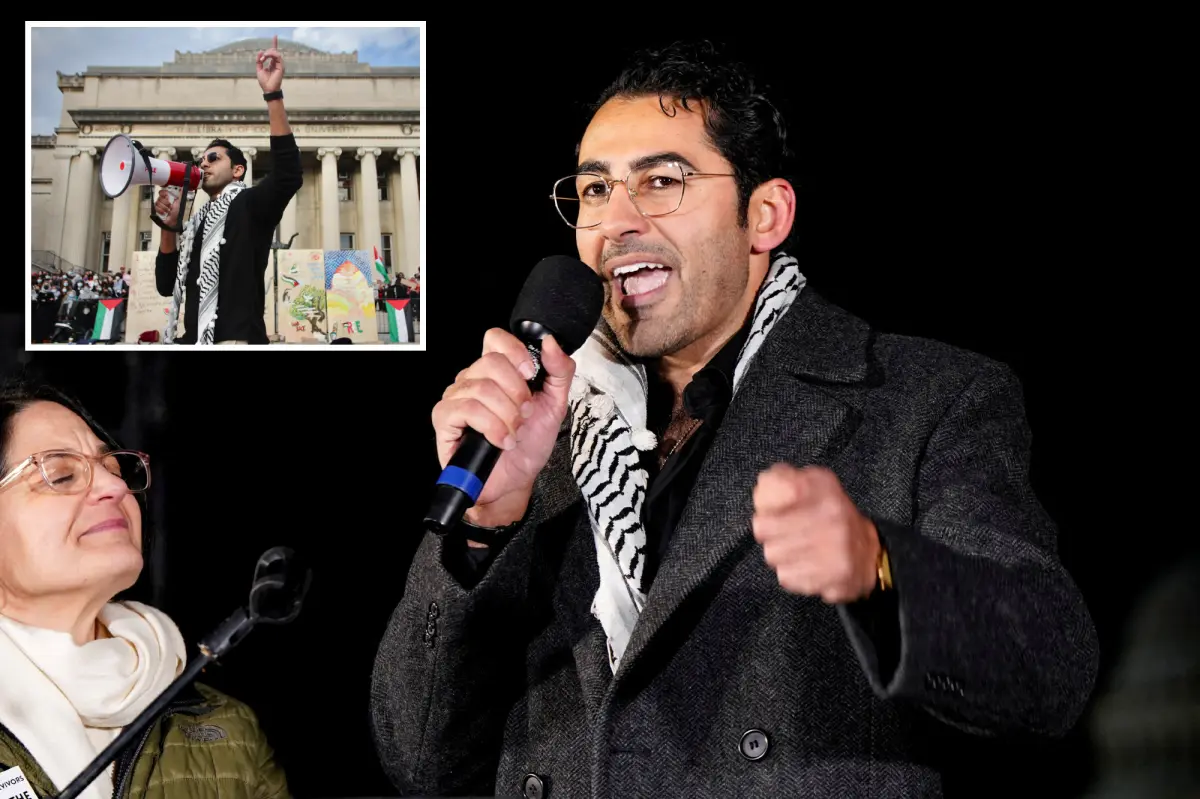

NEW YORK, July 21 – A U.S. appeals court on Tuesday threw out a 2025 order requiring the Trump administration to release pro-Palestinian advocate Mohsen Mahdawi from immigration detention, ruling that the lower court did not have the authority to take up his case.
Mahdawi, 35, was among several non-citizen students placed in deportation proceedings last year after joining protests against Israel’s military campaign in Gaza. Their arrests triggered legal challenges that put Republican President Donald Trump’s immigration enforcement agenda in direct tension with First Amendment free speech protections under the U.S. Constitution.
The ruling by a three-judge panel of the Manhattan-based 2nd U.S. Circuit Court of Appeals did not endorse the Trump administration’s broader effort to deport non-citizens who are lawfully in the United States on the grounds that their presence conflicts with U.S. foreign policy. Civil rights groups have argued that such a policy threatens constitutionally protected speech.
Still, combined with a separate decision earlier this year involving pro-Palestinian advocate Mahmoud Khalil, Tuesday’s outcome may make it harder for non-citizens held in immigration detention to swiftly obtain release by arguing that their First Amendment rights have been violated.
DECISION HINGES ON JURISDICTION
Mahdawi, a Columbia University student born in the West Bank, was arrested in April 2025 when he arrived for an interview tied to his U.S. citizenship application. Two weeks later, U.S. District Judge Geoffrey Crawford in Vermont ordered him freed on bond, finding that Mahdawi had the same First Amendment free speech protections as U.S. citizens.
The 2nd Circuit panel reversed that decision, saying Crawford lacked jurisdiction because Mahdawi’s case should first have proceeded through immigration court. The appeals court did not direct authorities to take Mahdawi back into custody.
U.S. immigration courts, which handle deportation cases, operate under the Justice Department. Federal district courts such as Crawford’s, by contrast, are independent of the executive branch and typically consider constitutional claims.
The panel included two judges appointed by Trump in his first term and a third appointed by Republican President George W. Bush. Neither the Justice Department, which represents the federal government in court, nor the Department of Homeland Security, which handles immigration enforcement, immediately responded to requests for comment.
A spokesperson for the American Civil Liberties Union, which is representing Mahdawi, had no immediate comment.
SIMILAR RULING IN KHALIL’S CASE
Earlier this year, the Philadelphia-based 3rd U.S. Circuit Court of Appeals reached a similar conclusion in the case of Khalil, a Columbia University graduate who spent more than 100 days in immigration detention before his release on bond by a federal judge in New Jersey. Khalil has asked the U.S. Supreme Court to review the divided 3rd Circuit’s conclusion that his claims should have been heard through an appeal of a removal order from an immigration court.
Both Khalil and Mahdawi were authorized to be in the United States, and neither has been charged with a crime.