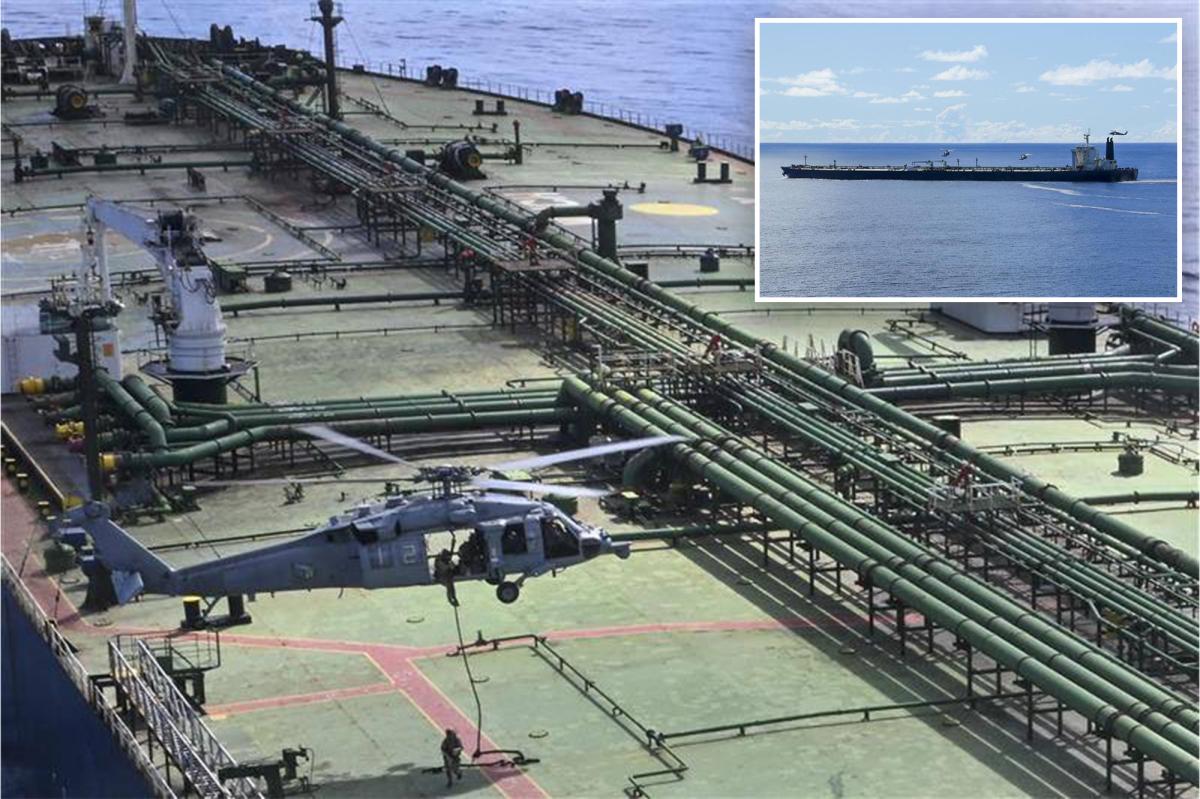

The U.S. military has successfully intercepted a tanker under the Guyanese flag, which was carrying Iranian oil in the Indian Ocean, according to an announcement by the Department of Defense on Thursday.
In a display of transparency, the Pentagon shared video footage of the operation on social media, providing images of U.S. soldiers aboard the vessel named the Majestic X.
Previously known as the Phonix, the Majestic X had been blacklisted by the U.S. Treasury Department in 2024 for its involvement in smuggling Iranian crude oil, breaching U.S. sanctions against Iran.


Maritime tracking information revealed that the Majestic X was navigating the Indian Ocean, situated between Sri Lanka and Indonesia. This location was notably close to where the U.S. had earlier seized another oil tanker, the Tifani, earlier in the week. The Majestic X was reportedly en route to Zhoushan, China.
The Pentagon reiterated its commitment on the social media platform X, stating, “We will persist with global maritime enforcement actions to dismantle illicit networks and intercept vessels that provide material support to Iran, regardless of their operational areas.”
Further emphasizing their stance, the Department of Defense declared, “International waters should not serve as a refuge for sanctioned individuals. Our department will continue to prevent unauthorized actors and their vessels from operating freely in maritime spaces.”
Thursday’s announcement comes one day after Iran fired on three cargo ships in the Strait of Hormuz, capturing two of them.
Follow The Post’s latest coverage on the blocked Strait of Hormuz and its lasting effects
White House press secretary Karoline Leavitt told Fox News Wednesday afternoon that Iran’s seizure of those ships didn’t violate terms of an ongoing cease-fire because, as she put it, “these were not US or Israeli ships, these were two international vessels.”
There was no immediate response from Iran on the news of Thursday’s seizure.
Since the start of Operation Epic Fury Feb. 28, more than 30 ships have come under attack in the waters of the Persian Gulf, the Strait of Hormuz and the Gulf of Oman. The threat of attack, rising insurance premiums and other fears have all but stopped traffic from moving through the strait, through which 20% of all crude oil and natural gas traded passes.
The cease-fire, implemented April 8 and extended indefinitely by President Trump on Tuesday, has been strained by dueling American attacks on Iranian ships and those by Iran on commercial vessels.
A second round of negotiations meant to take place in Islamabad, Pakistan, earlier this week did not happen and it is unclear when or whether further talks will be held.