
I was six when I first traveled to the United States. As a child growing up in Venezuela, I found nearly everything about America astonishing—the airport technology, the vast highways, and the shiny new cars. I told my friends it felt as though I had stepped into the future.
Yet the place that made the strongest impression on me was not a landmark or theme park. It was the supermarket.
The aisles were packed with bright labels and products I had never encountered. Then I saw Oreos, a familiar treat—but even that came with a surprise. There were countless Oreo varieties I had never imagined. Such abundance is extraordinary by the standards of human history and stands as one of the remarkable results of free-market competition.
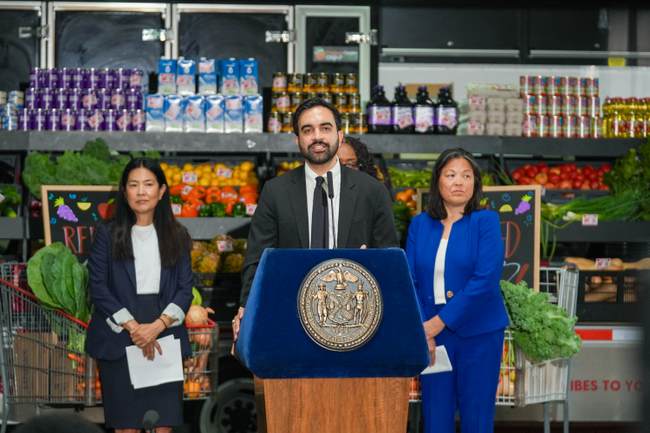
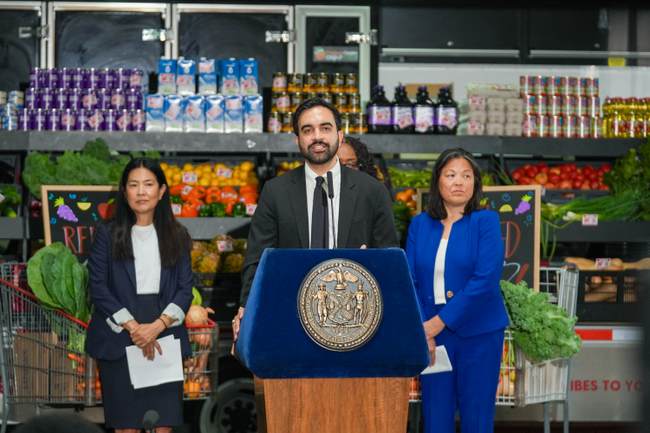
Mayor Zohran Mamdani’s New York City administration now wants to take the city in the opposite direction. Officials plan to establish five publicly owned grocery stores before the end of his first term, backed by $70 million in taxpayer funds. The stores are expected to offer discounts of as much as 30 percent on produce, meat, and selected household staples. Although private companies would operate the locations, City Hall would own them, determine prices, and finance the operation with public money.
The proposed East Harlem location alone is expected to cost taxpayers $30 million. Grocery industry leaders say a standard 15,000-square-foot supermarket can generally be built for under $10 million. Even an expensive gourmet market in Manhattan, according to the president of the National Supermarket Association, would not normally approach the city’s projected price.
A government discount does not magically reduce the underlying cost of food. Farmers still have to grow it, drivers still have to transport it, and workers still have to stock it. If the price on the shelf is lower than the cost of providing the product, taxpayers make up the difference. The expense has not disappeared; it has simply been shifted.
Private grocery businesses in New York are now taking the city to court over the proposal.
The National Supermarket Association, which represents hundreds of independent grocers, has joined two stores in Harlem and the Bronx in a federal antitrust lawsuit. The plaintiffs argue that the planned municipal markets would engage in predatory pricing.
Antitrust enforcement can sometimes treat a profitable private company as though success itself were suspicious. But a more credible concern arises when the government enters a marketplace with financial advantages no ordinary business can duplicate.
The legal challenge may face an unusual obstacle. Traditional predatory-pricing law generally assumes that a business will eventually raise prices to recover losses. A city government does not face that same requirement. It can continue operating at a loss and cover the deficit with tax revenue, potentially for years. That makes a government-backed competitor fundamentally different from a private one.
Most grocery stores survive on net profit margins of roughly 1 to 3 percent. Consider the position of an independent grocer who spends years saving, securing permits, renting space, and hiring staff—only to discover that City Hall plans to open a subsidized competitor nearby. One of the businesses challenging the plan is located just a block from a proposed city store. The new rival would have access to public funds, meaning the private grocer could effectively be compelled through taxation to help finance the competition threatening his livelihood. That is more than a difficult business environment; it raises a serious question of basic fairness.
YOU MIGHT ALSO LIKE: Rob and Michele Reiner’s Trust Funds Son Nick’s Murder Defense
Supporters point out that five stores would be relatively few compared with New York City’s approximately 1,000 full-service supermarkets. But a taxpayer-subsidized market does not need to drive every grocer out of business to create damage. It only needs to take enough customers from nearby stores to push already narrow margins into the red.
Venezuela offers a cautionary example. State-run grocery chains, including Abastos Bicentenario, were created in part from supermarkets taken over from private owners. Rather than producing greater abundance, they became associated with empty shelves, long queues, and rationing. Over time, the government also connected access to subsidized food with political allegiance through the “Carnet de la Patria” identification system. When the state controls the food supply, it can gain the power to decide not only what people receive, but who is considered worthy of receiving it.
New York is not Venezuela, and five city-owned supermarkets will not transform it overnight. Still, placing government at the center of grocery retail risks wasting public resources, enlarging the state’s role, and weakening the private businesses that already serve New Yorkers.
A private grocer that wastes money or provides poor service risks losing customers, capital, and eventually the entire business. Those consequences create pressure to perform. A government-run store may face the same operational failures without bearing the same financial consequences.
Economist Milton Friedman, who won the Nobel Prize, famously explained that the least careful way to spend money is to use someone else’s money for someone else. In that situation, there is little reason to minimize costs or pay close attention to the quality of the result. That concern applies to these proposed markets. The officials managing them will not personally absorb the cost of overruns or poor performance; taxpayers will. The projected $30 million price tag for one store already illustrates the risks of spending public money without the discipline faced by a private owner.
New Yorkers have every reason to be concerned about the price of groceries. But independent grocers, many of whom earn only a few cents on each dollar of sales, are not the main cause of the problem. Inflation, taxes, regulations, and other government-imposed costs make it more expensive to operate a store and put upward pressure on prices. City Hall should begin by reducing those burdens instead of becoming a grocery operator itself.
As a child, I was amazed by American supermarkets because every product represented a vast network of voluntary cooperation. Farmers, manufacturers, truckers, investors, retailers, and entrepreneurs all played a role in responding to the choices of millions of consumers.
If Mayor Mamdani’s plan moves forward, however, New York’s grocery system could begin to look less like the abundance that amazed me and more like the government-controlled food outlets I remember from Venezuela.
Franklin Camargo is a Venezuelan-born PragerU personality, host of “Man on the Street,” and co-author of After Socialism, Freedom.
Editor’s Note: New York City is now facing the consequences of Mayor Zohran Mamdani’s socialist takeover.
Help us continue to report on his radical policies and expose the Democrats who support him. Join RedState VIP and use promo code FIGHT to receive 60% off your membership.