
As the U.S. and Iran gear up for another round of discussions this week regarding Iran’s controversial nuclear weapons program, experts assert that the Trump administration made the right decision in stepping back from previous agreements.
Following a day of intense negotiations in Pakistan, Vice President JD Vance’s team decided to terminate the talks, a move that specialists in the field have applauded.
“The U.S. delegation made a prudent decision to withdraw when it became evident that Iran was unwilling to meet essential U.S. nuclear requirements. By retaining enriched uranium and its enrichment capabilities, Tehran has a clear path to developing nuclear weapons,” Andrea Stricker, deputy director of the Foundation for Defense of Democracies’ nonproliferation program, commented to Fox News Digital.
The primary contention between the U.S. and Iran centers on Tehran’s ambition to enrich uranium, a critical component for creating nuclear weapons.
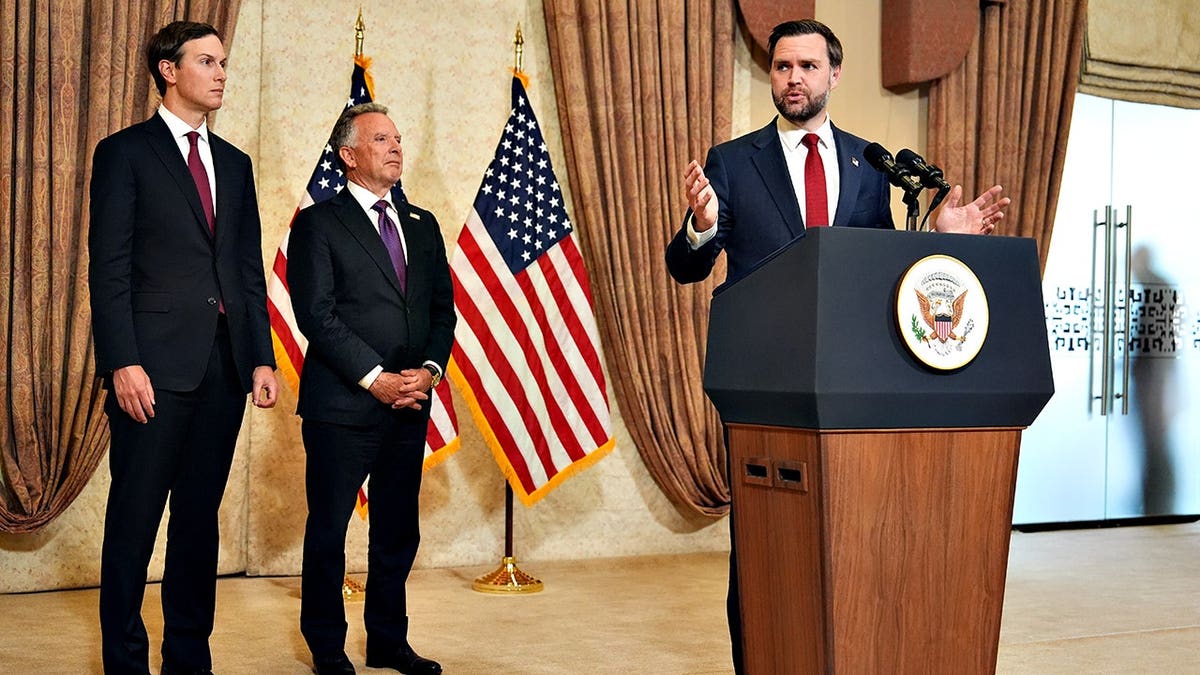
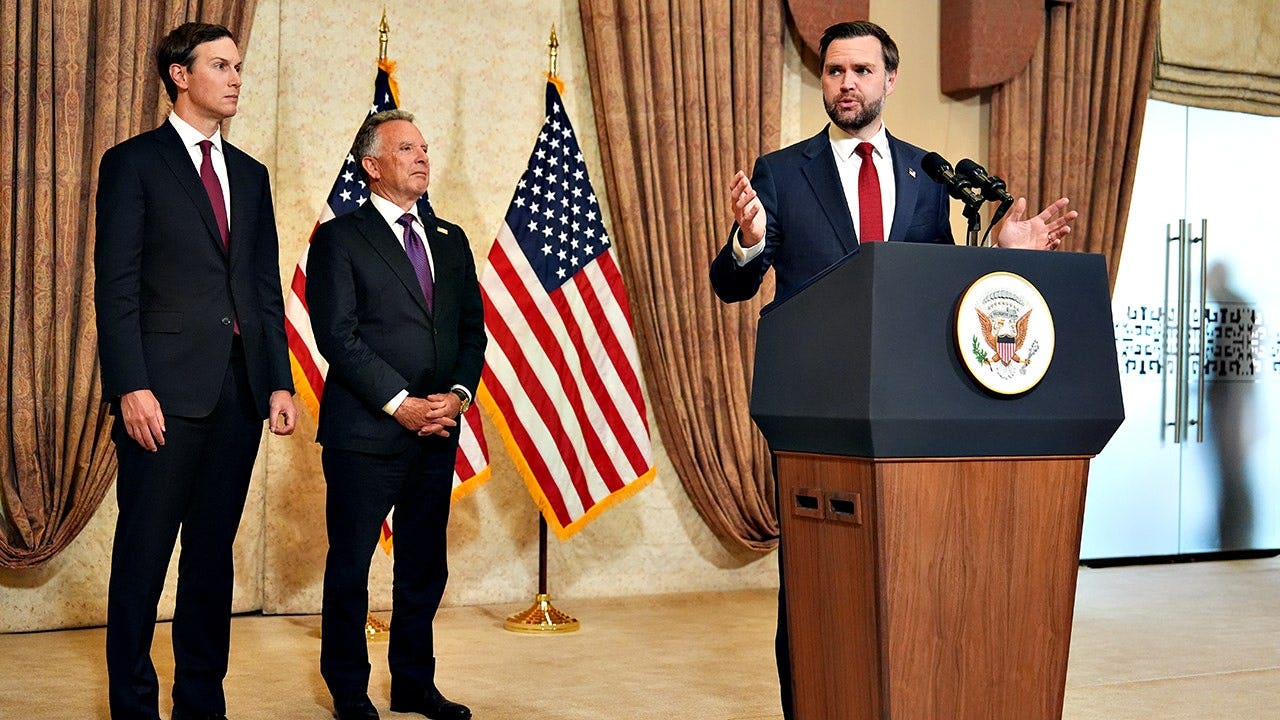
During a press briefing in Islamabad, Pakistan, on April 12, 2026, Vice President JD Vance addressed the media after discussions with representatives from Pakistan and Iran. Also present were Jared Kushner and Steve Witkoff, special envoy for peace missions, who listened intently during the session. (Jacquelyn Martin/AP)
Back in 2018, President Donald Trump opted to exit the nuclear agreement forged by President Barack Obama with Iran, arguing that the Joint Comprehensive Plan of Action, the agreement’s official title, allowed Iran to pursue atomic weaponry.
When asked what a good nuclear agreement would look like, Stricker said, “A good deal requires the regime to not only turn over its nuclear fuel, dismantle key facilities, and commit to a permanent ban on enrichment, but to cooperate with an IAEA investigation that fully and completely accounts for and dismantles Iran’s nuclear weapons-relevant facilities, equipment, documentation, centrifuges and related production capabilities.”
Stricker acknowledged that the process could take several years, but noted that “the IAEA is well-equipped for this mission and has experience dismantling nuclear weapons programs in Iraq, Libya and South Africa. Anything less and Iran will likely cheat on its commitments and reconstitute a breakout pathway.”
Sen. Lindsey Graham said Monday he opposes a reported proposal by the U.S. for a 20-year ban on Iran’s uranium enrichment under a potential deal.
“I appreciate President Donald Trump’s resolve to end the Iranian conflict peacefully and through diplomacy. However, we have to remember who we’re dealing with in Iran: terrorists, liars, and cheaters,” Graham posted on X.
“If this reporting is accurate, the idea that we would agree to a moratorium on enrichment rather than a ban on enrichment would be a mistake in my view,” he said.
“Would we agree to a moratorium for al Qaeda to enrich? No.”
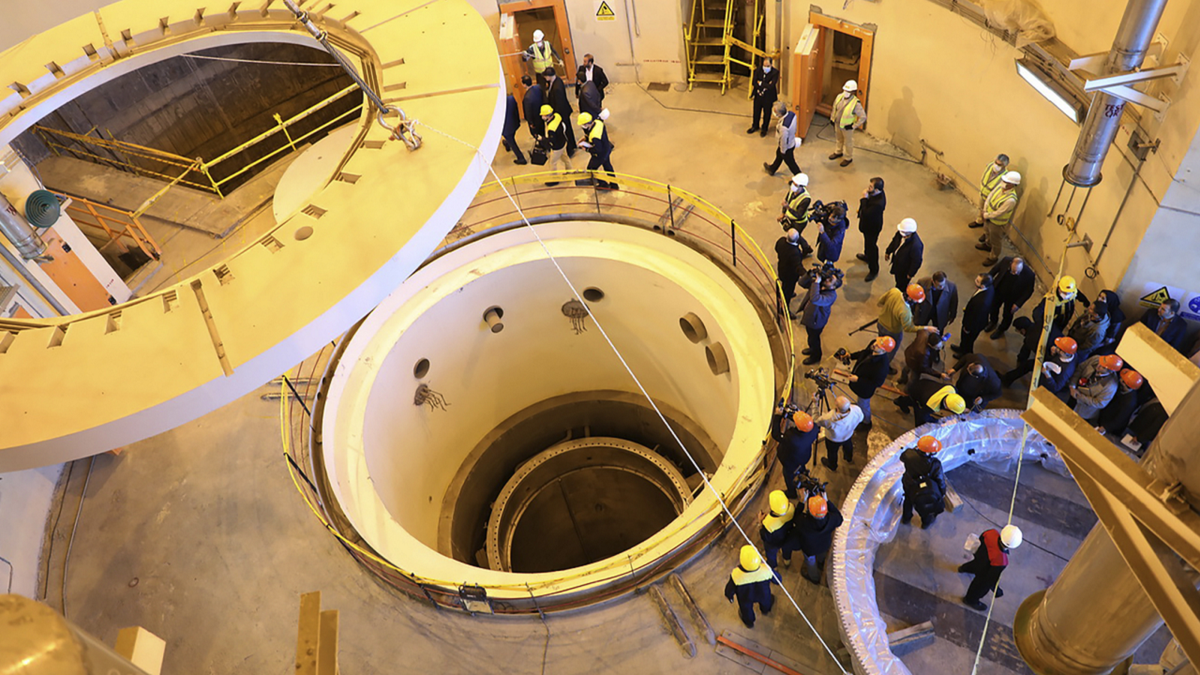
In this photo released by the Atomic Energy Organization of Iran, technicians work at the Arak heavy water reactor’s secondary circuit, as officials and media visit the site, near Arak, 150 miles southwest of the capital of Tehran, in December 2019. (Atomic Energy Organization of Iran/AP)
A regional official from the Mideast confirmed to Fox News Digital that a 20-year moratorium on enriched uranium was made by the U.S. and rejected by the Islamic Republic.
David Albright, a physicist who is the founder and president of the Institute for Science and International Security in Washington, D.C., praised the U.S. decision to end the talks in Pakistan. Writing on his X account, which is closely followed by Iran watchers, he stated: “The U.S. was Right to Walk Away in Islamabad.”
Albright told Fox News Digital the move by the U.S. negotiators “makes it clear that this is not negotiating for negotiating’s sake. And leaving threw Iran on the defensive, signaling it as the losing state in the war. Moreover, the Iranians would not have shifted their positions in any significant way. They usually have no flexibility. But Iran wanted to have negotiations continue in order to try to tie the hands of the U.S. and Israel, while trying to portray themselves as victors. Now, Iran has to decide whether to accept the U.S. offer or risk war resuming.”
He added that a good nuclear deal for the U.S. would mean “no enrichment and no stocks of HEU [Highly Enriched Uranium] and LEU [Low Enriched Uranium]; Iran cooperating with the inspectors and verifiably ending its nuclear weapons program and providing a complete nuclear declaration, something it has never done.”
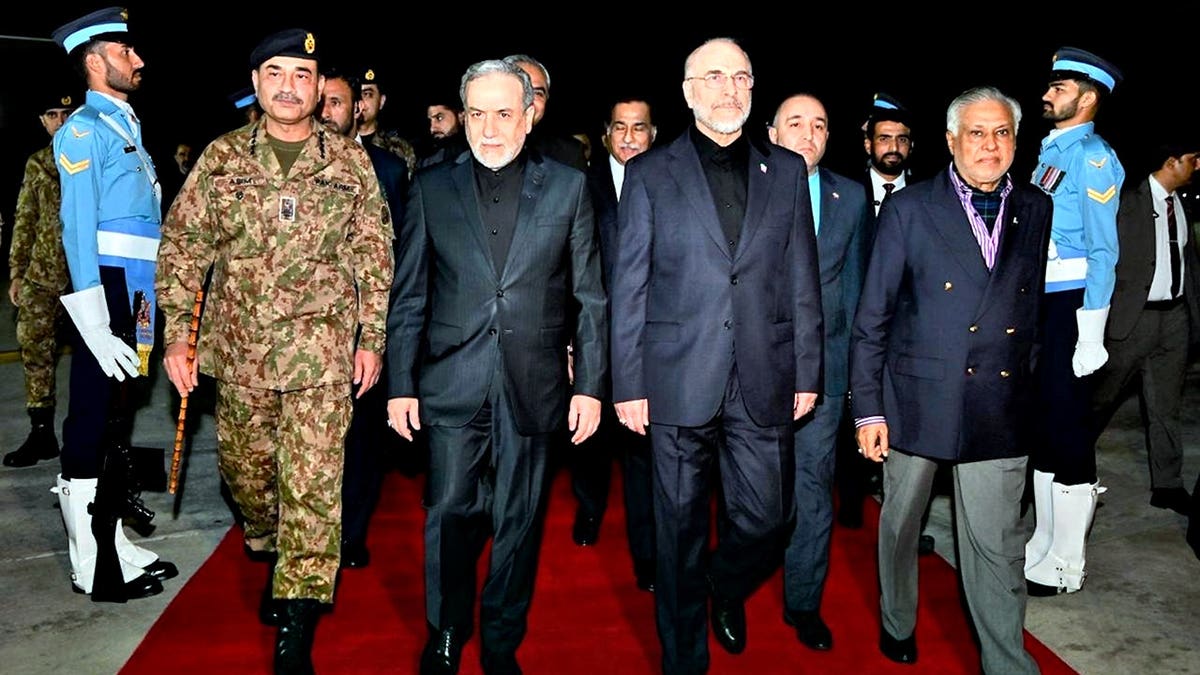
Iran’s Parliament Speaker Mohammad Bagher Qalibaf and Foreign Minister Abbas Araghchi were greeted by Pakistan Foreign Minister Ishaq Dar and Army Chief Field Marshal Gen. Asim Munir upon their arrival at Nur Khan airbase in Rawalpindi, Pakistan, on April 11, 2026. (Pakistan Ministry of Foreign Affairs/AP)
Albright continued that “If Iran signals willingness to accept the U.S. position, meeting again makes sense.
“Iran has absolutely no need to enrich. Its only civil need is for a small amount of 20% enriched for its small research reactor, the Tehran Research Reactor, and it has enough 20% enriched uranium in fuel or nearly made into fuel stored in Iran and in Russia under JCPOA [Joint Comprehensive Plan of Action] arrangements for 20 years.”
He concluded, “To be flip, and paraphrase Abbie Hoffman, I have the right to yell theater in a crowded fire, but I don’t. Iran’s emphasis on its right to enrich is as irrelevant and beside the point.”