
A woman was injured but survived after plunging about 1,500 feet down California’s Mount Shasta on Sunday, authorities said.
The 31-year-old climber was trying to make her way up the mountain — a stratovolcano that has the second-tallest summit in the Cascade Range — according to the U.S. Forest Service. Officials said she was part of a three-person group of inexperienced climbers near the 13,000-foot level when she fell.
The woman was believed to have fractured her ankle and sustained other injuries typical of a major fall, the Forest Service said. Despite the ordeal, rescuers found her conscious, alert and “in good spirits.” Her name has not been released.
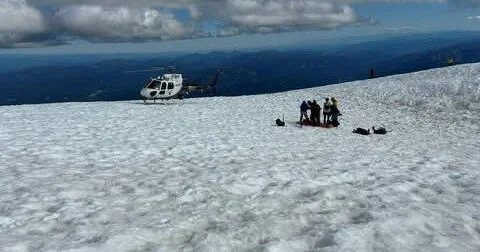
The search-and-rescue response began around noon Sunday and included three Forest Service climbing rangers along with California Highway Patrol personnel. Cloud cover complicated the first helicopter search, officials said, forcing one ranger to climb part of the mountain on foot to reach the injured woman. A member of her climbing group helped carry rescue gear, and a fourth climber who came upon the scene also stepped in to assist.
The California Highway Patrol was able to safely airlift the woman off the mountain at about 5:30 p.m. She was later transported to Mercy Medical Center Mount Shasta for treatment, the Forest Service said.
In a statement, the agency said the incident is “an important reminder that Mount Shasta is a high-altitude mountaineering environment, not a hike,” adding that even seasoned climbers may face fast-changing weather, steep snow and ice, rockfall and dangerous fall hazards.
MORE STORY: Unmasking the Church: Hugh Jackman's Faith and Emily Watson's Chilling Accusations
Officials also urged anyone considering a summit attempt to “be honest about your experience and physical conditioning” before heading up the mountain.
The woman and her group were climbing Mount Shasta via Avalanche Gulch, a route that “is steep and rigorous requiring crampons, a mountain axe, helmet, and basic snow travel skills,” according to the Mount Shasta Avalanche Center. The route involves a 7,000-foot vertical climb and includes “steep snow and ice, rock fall, and weather extremes,” the center said.