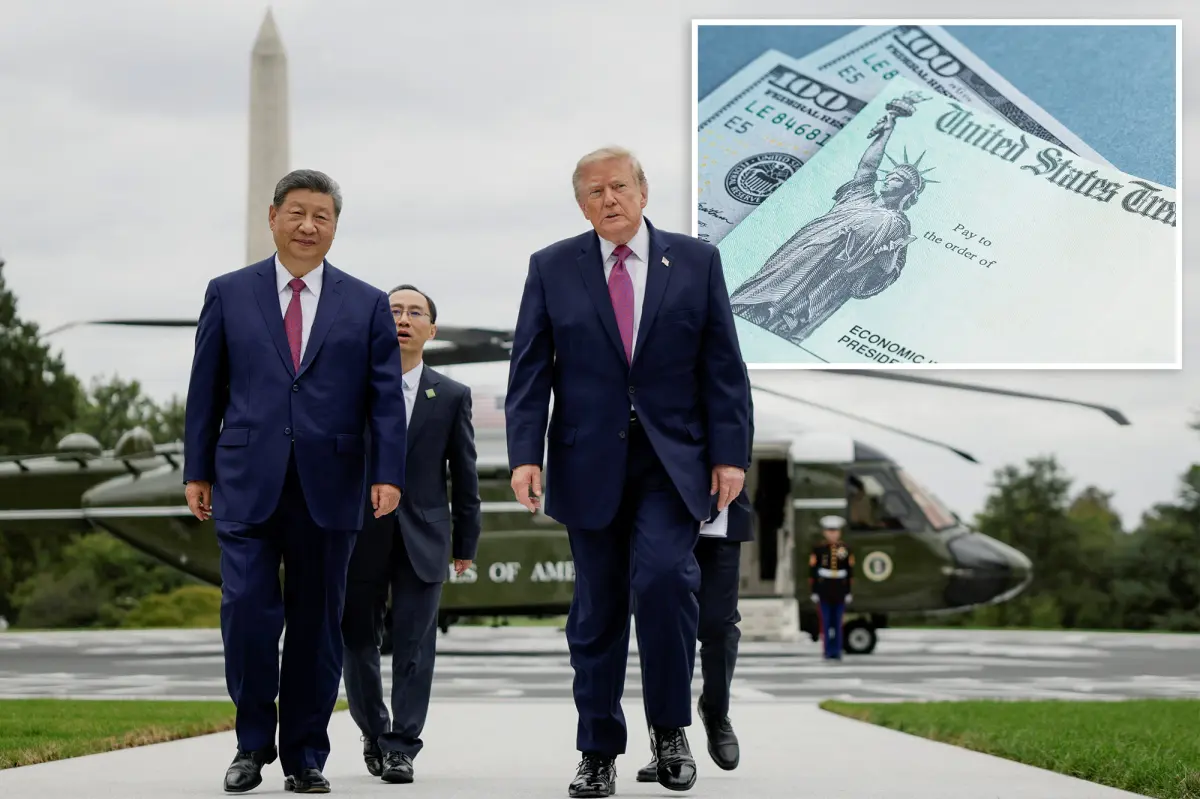

China may be routing billions of dollars in US government debt through Canadian banks, creating the impression that Beijing is reducing its exposure to the United States while still helping finance Washington’s soaring deficits, according to Wall Street analysts.
The speculation is based on US Treasury data showing that Canada’s reported holdings of US government debt and federally backed mortgage securities have climbed to nearly $600 billion—more than four times the level recorded five years ago, Bloomberg reported.
Over the same period, China’s reported holdings of US Treasuries have dropped by about half, reaching $618 billion.
The widening gap has raised questions about whether China has genuinely sold large amounts of US debt—or simply shifted the location where those assets are held.
US Treasury statistics identify the country where a bond is held, but they do not always disclose the ultimate owner of the investment.
For years, China has ranked among the largest foreign creditors of the United States, investing the dollars earned through its vast export economy in US government securities.
If Chinese investments were transferred to a Canadian bank acting as custodian, US records could classify those holdings as Canadian rather than Chinese.
That would make China’s exposure to US markets appear to be falling, even if Beijing had not actually sold the securities.
“The story here is that China has been much better at hiding its dollars than it’s been about getting out of the dollar,” Brad Setser, a former US Treasury official who studies global capital flows, told Bloomberg.
Mortgage-backed securities offer one of the clearest signs of a possible shift. These investments are linked to US home loans and guaranteed by federal housing agencies.
SEE ALSO: Meghan Markle Leaves Engagement Ring at Home During Nottingham Visit
According to US Treasury figures cited by Bloomberg, Canada’s reported holdings of the securities have surged to approximately $162 billion, up from around $21 billion in mid-2021.
By comparison, China’s reported holdings of similar mortgage bonds have declined by nearly 50% since the start of 2024.
Vitaliy Liberman, a mortgage-debt specialist at DoubleLine, told Bloomberg that conversations with Wall Street contacts pointed to China as one possible explanation for Canada’s sharp increase.
A separate group of 12 mortgage investors and strategists said they were not aware of Canadian buyers acquiring US mortgage-backed securities on anything close to that scale.
Such an arrangement would allow Beijing to look less reliant on the US dollar while preserving investments that could be difficult to replace in the market.
China’s trade surplus has topped $1 trillion, generating a vast pool of dollars that must be invested.
A large-scale sale of US bonds could depress the value of China’s remaining holdings. Converting those dollars into yuan, meanwhile, could push up the Chinese currency and make the country’s exports more expensive.
There is no direct evidence, however, that China is behind Canada’s buying surge. Some analysts say Canadian hedge funds may account for at least part of the increase.
“I’m not quite comfortable saying clearly this is all China,” Alex Etra, a senior macro strategist at Vanda Research, told Bloomberg.
China’s foreign-exchange regulator did not comment to Bloomberg. Canada’s banking regulator likewise said it does not discuss individual client activity.
The Post has sought comment from the Treasury Department as well as the Chinese and Canadian governments.


