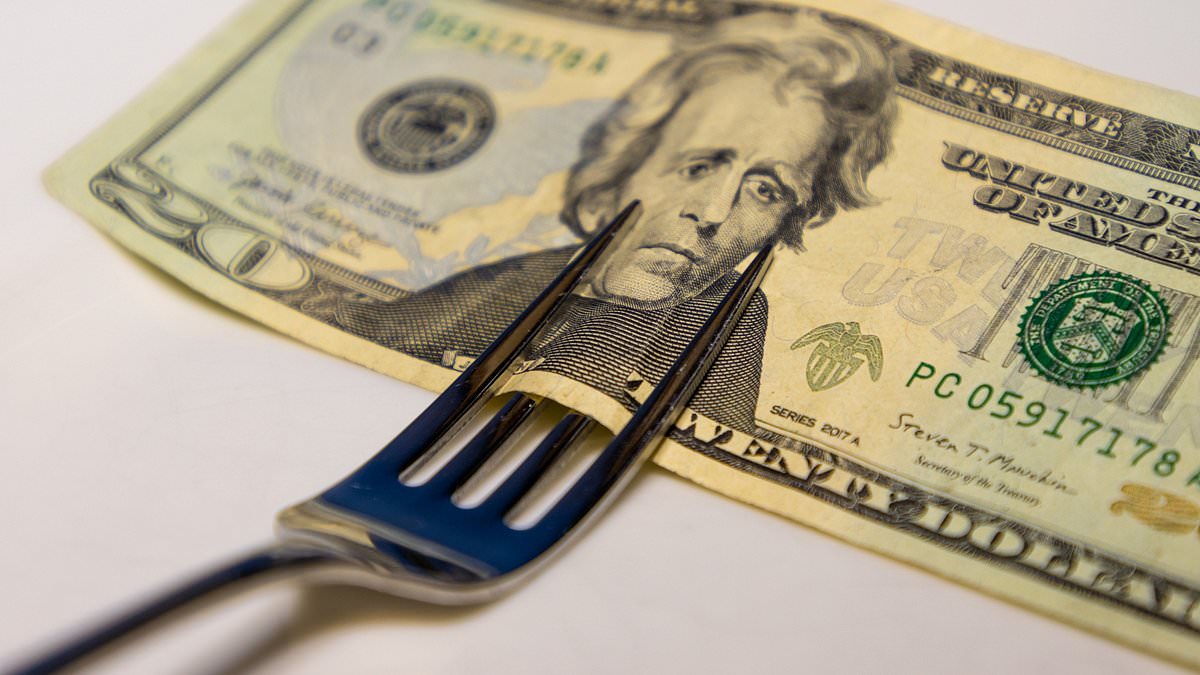

For travelers, understanding the nuances of tipping can be one of the most perplexing aspects of international travel, with each country having its own set of expectations.
In many regions, gratuities are a crucial part of an employee’s earnings, contrasting sharply with countries like Japan and Vietnam, where tipping is uncommon and may even be viewed as impolite.
In other destinations, tipping guidelines are ambiguous, which can lead to awkward or tense moments when tourists settle bills or use services such as hotels, dining establishments, and cabs.
The United States is a prime example of a nation where tipping is deeply ingrained, with service workers largely dependent on these extra earnings, and patrons typically expected to add 20 to 25 percent to their total.
However, after years of being prompted to tip in places ranging from cafes to automated checkouts, a growing number of Americans seem to be experiencing tipping fatigue.
According to a recent survey by Popmenu, 78 percent of Americans feel that tipping culture has become excessive, with nearly half admitting they’ve reduced their tipping habits this year due to financial constraints.
As customers begin to push back against tipping in the US, travellers heading abroad should remember that in many destinations, gratuities are still very much expected.
Here are nine popular hotspots where tipping is expected – and how much to tip in each.
United States
The United States has long been known for its tipping culture. Tourists dining in restaurants are often expected to pay up to 25 per cent gratuity
USA’s tipping culture is among the most deep-rooted in the world, with restaurant servers earning as little as $2.13 (£1.59) an hour before tips.
At sit-down restaurants, diners can expect to pay a 20 to 25 per cent gratuity, while those visiting bars should leave around $1 (£0.75) per drink or 20 per cent on cocktails.
In coffee shops and at takeaway counters, tip jars are a common sight.
Puzzlingly, even customers using unmanned, self-service kiosks at airports, cafés and supermarkets can expect to see digital prompts to leave tips of up to 20 per cent whilst paying for food and drink.
Because tips make up a significant portion of workers’ income, many Americans view them as an essential part of the bill rather than an optional extra.
However, there appears to be a growing backlash against what many consumers see as relentless requests for extra money on top of already rising prices.
According to Popmenu’s survey of 1,000 adults, 44 percent of consumers say they are tipping less this year than they were in 2025, and 35 percent of respondents say they have reduced tips when dining out.
Canada
Visitors heading to Canada should expect to leave a tip of between 15 and 20 per cent in restaurants, diners and cafés (pictured: Montreal)
Canada’s tipping culture closely follows that of the US, with gratuity rarely included in the bill.
From Toronto’s high-end restaurants to Montreal’s cosy bistros, diners are expected to leave between 15 and 20 per cent, with around 18 per cent considered the ideal amount for good service.
In Quebec especially, leaving a restaurant without tipping is often considered rude.
Bartenders in Canada generally receive about $1 (£0.75) per drink, and tipping hotel staff, taxi drivers and hairdressers is also common.
3. Mexico
Tipping is an important source of income for service workers across Mexico, with many typically earning around $5 (£3.70) to $15 (£11.20) each day before tips.
In restaurants, diners are generally expected to leave between 15 and 20 per cent of the bill, especially in areas like Cancun, Tulum and Cabo San Lucas that are popular with international visitors.
Hotel staff, tour guides and drivers also commonly receive small gratuities.
4. Croatia
Tipping is standard practice in restaurants across Croatia, where 10 per cent is generally considered the minimum for good service.
While service charges are not usually included, tips are an important source of income for hospitality workers and larger gratuities are always welcomed.
In bars and cafés, customers typically round up the bill or leave a small amount of euros in cash.
5. Albania
Tips are customary in Albania (pictured), where locals call the practice ‘bakshish’
Known locally as ‘bakshish’, tipping is widely expected across Albania and has become increasingly common as tourism has grown.
Although not mandatory, tipping is viewed as a sign of appreciation for good service, and around 10 per cent is customary in restaurants.
Porters, tour guides, drivers and hotel staff also generally expect a gratuity – sometimes in the form of duty-free alcohol, though this can potentially offend devout Muslims, who make up 59 per cent of the country’s population.
6. Egypt
Tipping is firmly embedded in the culture across much of North Africa.
In Egypt, where tipping is known as ‘backsheesh’, visitors are often expected to tip for a wide range of services.
Restaurant bills may include a service charge of around 12 per cent, but leaving an additional 10 per cent is still considered polite.
7. Morocco
In Morocco, tipping hotel staff, drivers and guides is also customary.
A gratuity of 10 per cent is the norm in higher-end restaurants, while smaller amounts are accepted in cafés and smaller eateries.
In some instances, it’s typical for customers to round up to the nearest whole number from the bill’s total and leave it as a tip, which is often paid directly to the server.

North Africa has one of the most deep-rooted tipping cultures in the world – where visitors are generally expected to leave a 10 to 12 per cent tip in places like Morocco and Egypt (pictured)
8. South Africa
Tipping is the norm in South Africa, especially in restaurants, hotels and on safari tours.
Some establishments are known to automatically add a 10 per cent service charge to the bill, so it’s worth checking before paying.
Diners otherwise tend to leave between 10 and 20 per cent depending on the quality of service, while safari guides and trackers are also commonly tipped.
9. United Arab Emirates
Despite service charges now commonly included in restaurant bills, tipping remains widely expected across the UAE.
Leaving between 10 and 15 per cent for good service is standard in restaurants, while hotel staff, taxi drivers and valet attendants also commonly receive small gratuities.
In major tourist hubs like Dubai and Abu Dhabi, tipping culture is particularly well established.


