

Donald Trump is moving toward a new tariff blitz that could hit dozens of U.S. trading partners within days, despite private warnings from advisers that another trade war may unsettle the economy before the midterm elections. On Monday, the president imposed a 50 percent levy on a broad range of Canadian goods, following 25 percent duties on Brazilian imports just days earlier. According to the Financial Times, officials have prepared options for Trump to expand the campaign to many more countries as his across-the-board 10 percent global tariff is due to expire Friday. Senior administration figures have urged him behind closed doors to avoid escalating disputes and to preserve trade agreements Washington reached in 2025 to lower tariff rates, the FT reported. The political stakes are rising: Democrats lead Republicans by nine points on the generic midterm ballot, 50 percent to 41 percent, in a Daily Mail/JL Partners poll conducted this month, as Trump’s economic approval shows signs of weakening.
Expected to Target 60 Countries

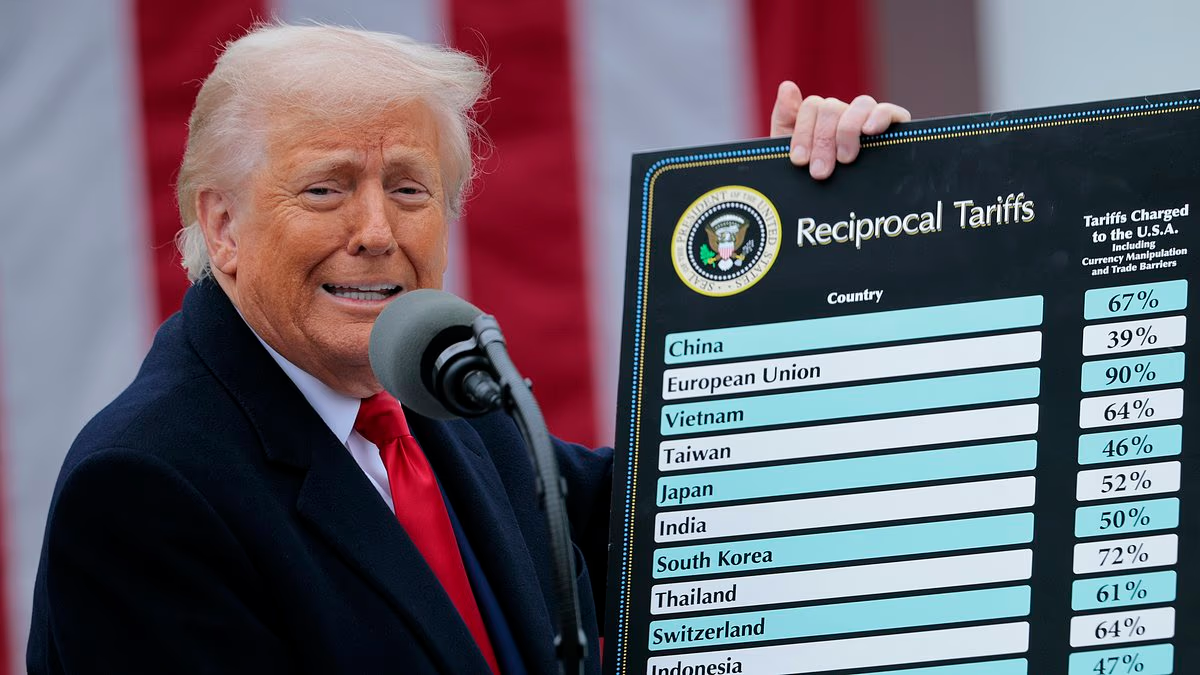
The coming round of duties is expected to cover about 60 countries, with tariff rates ranging from 10 percent to 12.5 percent. Officials are expected to justify the move through a U.S. investigation into forced labor practices, an approach trade authorities first raised in June. A separate inquiry into excess manufacturing capacity has also drawn in a wide group of economies, including the European Union, China, Japan, India, Mexico, South Korea, Vietnam, Taiwan, Switzerland, Norway, Singapore, Thailand, Malaysia, Indonesia, Cambodia and Bangladesh. While the immediate tariffs are likely to remain close to the current 10 percent baseline, the administration is pursuing additional investigations that could pave the way for much higher duties later. The strategy underscores how the White House is relying on a patchwork of trade procedures after the Supreme Court struck down Trump’s sweeping “Liberation Day” tariffs announced in April 2025.

Those reciprocal tariffs were replaced in February by the 10 percent global tariff system now nearing its expiration date. By invoking forced labor rules, Trump can avoid using the emergency powers rejected by the justices. The renewed trade offensive also comes as tensions with Iran intensify, sending shockwaves through global energy markets and raising fears of a broader regional conflict. The turmoil is already being felt by American consumers, with Brent crude climbing above $90 a barrel and gasoline prices rising back above $4 a gallon this week. At the same time, annual inflation is running near 3.3 percent, according to the Cleveland Fed’s latest nowcast.
Officials Reportedly Urged Negotiations

Voter concern over the economy is deepening. More than half of respondents in the Daily Mail poll rated Trump’s handling of the economy as poor, and a similar share said economic conditions are getting worse. U.S. trade negotiators have already watered down some of the administration’s toughest tariff measures, securing exemptions for key consumer staples such as beef and coffee while easing duties on steel and aluminum products. Following recent investigations into critical minerals and aircraft parts, officials recommended that Washington negotiate with trading partners instead of immediately resorting to new tariffs, the FT reported. The White House has been contacted for comment.


