
This year’s honorees are reinventing nuclear reactors, pioneering solar panel recycling, and even fighting global warming by cutting cow burps.
By Jesse Steinmetz, Igor Bosilkovski and Chris Helman
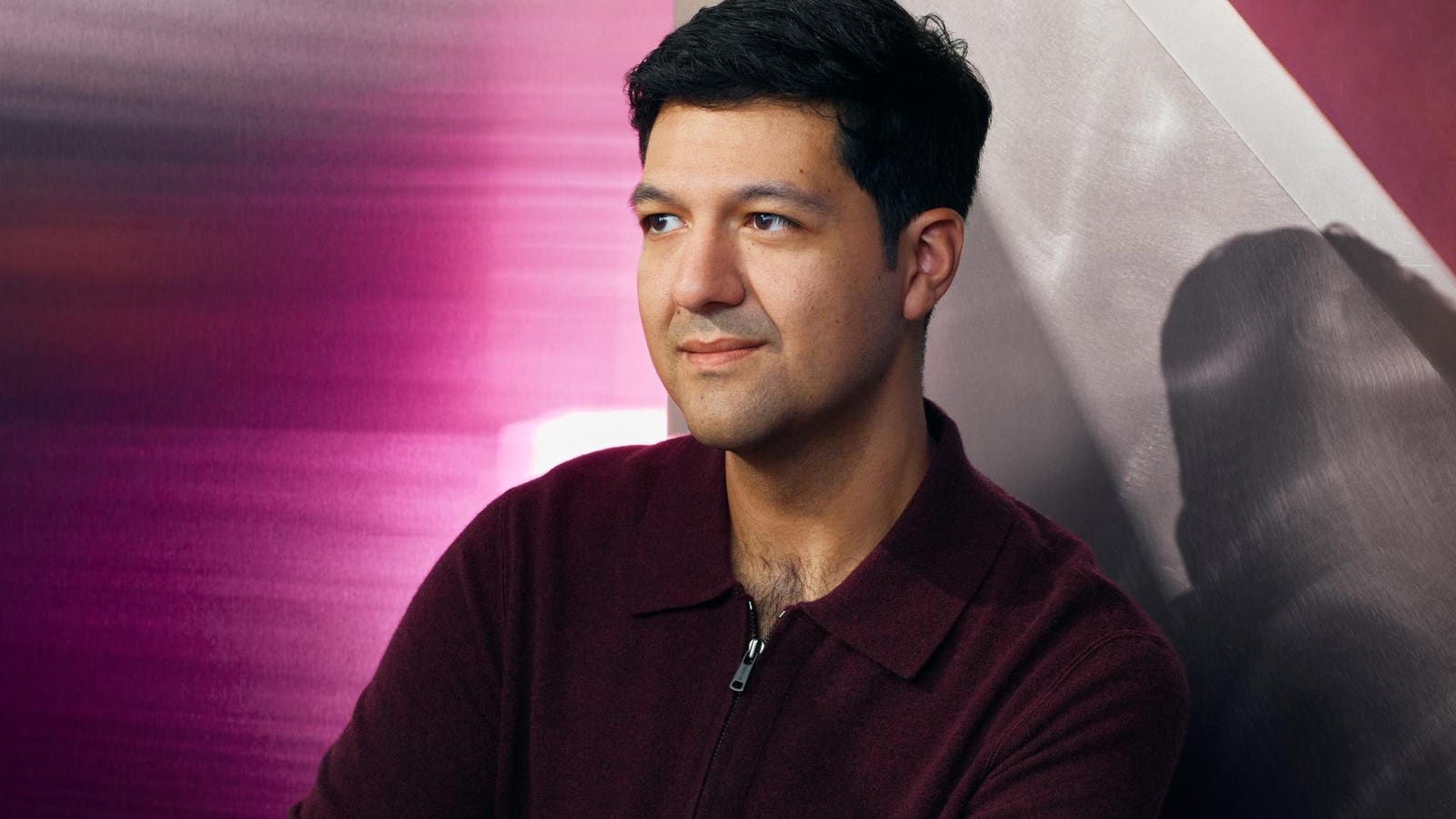
For hundreds of years, small-scale gold miners have relied on the use of mercury, a highly toxic substance, to extract minuscule gold particles from crushed ore. When not properly controlled, this process can cause severe environmental damage. Eric Herrera, the co-founder and CEO of Maverick Metals based in San Francisco, proposes a more sustainable technique for extracting precious metals. His innovative approach not only benefits miners but also has a significantly lower environmental impact. Instead of creating expansive mines to retrieve ore, Herrera’s method involves drilling into ore-rich locations and injecting a unique mixture of proteins. These proteins dissolve the minerals, allowing them to be extracted in liquid form for easy refinement.
“What we end up with is a solution containing critical elements, which we then separate,” explains Herrera.
Herrera admits that the concept initially seemed strange to him. The breakthrough came during a 2022 expedition with the Explorers Club to the Arctic Circle, where he discovered iron-eating bacteria. These bacteria survive by releasing chemicals that dissolve the minerals around natural iron ore deposits, allowing them to absorb the iron left behind.
“I didn’t create the protein,” says the 27-year-old former U.S. Navy medical scientist. “I discovered it in nature and adapted it for industrial use.”
Herrera, a first-generation Mexican-American and a neuroscience graduate from Washington & Lee University, successfully raised $19 million in seed funding. The round was led by Olive Tree Capital, with participation from Y Combinator.
Herrera is among this year’s Forbes 30 Under 30 energy pioneers, a list that spotlights founders and trailblazers aged 29 or younger as of December 31, 2025, who have not previously appeared on a U.S., Europe, or Asia 30 Under 30 list. Nominees were reviewed by a panel of expert judges, including Urvi Parekh, Head of Global Energy at Meta; Val Miftahkov, founder and CEO of ZeroAvia; Ann Bluntzer Pullin, Executive Director of the Hamm Institute for Energy at Oklahoma State University; and Christopher Hopper, a 2017 Under 30 alum and cofounder of Aurora Solar.
The biggest fundraiser of the 2026 Energy & Green Tech cohort is 26-year-old Isaiah Taylor, whose grandfather worked on the Manhattan Project. His company, Valar Atomics has designed a small-sized (100 kilowatts) nuclear reactor and recently closed a $130 million funding round, with investors including Palmer Luckey, Palantir CTO Shyam Sankar, and Lockheed Martin board member John Donovan, bringing total investment in the venture to over $150 million.
Taylor, a high school dropout and father of four, has broken ground in Utah on what will be its first working reactor: a factory-built, liquid-sodium nuclear reactor with a pure graphite core, fueled by meltdown-resistant, enriched uranium pellets, easily deployed in multiples — perfect for power-hungry data centers. Taylor named it Ward 250 after his grandpa Ward Schaap and in honor of America’s upcoming 250th birthday.
The Department of Energy selected Valar this year for a streamlined reactor permitting process aiming to prove out at least three new small-modular reactor designs by July 4, 2026. Taylor is already ahead of schedule; in November tests at Los Alamos National Laboratory, Valar’s first reactor core achieved “cold criticality” (that is, a fission chain reaction but without electricity generation) for the first time. By Independence Day he expects to have a fully working reactor.
A more pie-in-the-sky nuclear venture led by one of this year’s finalists is Fuse, founded by JC Btaiche, 25, which has built something he calls a fusion driver — a device that creates a high-voltage 1 terawatt pulse. This is highly useful, especially to makers of satellites or weapons systems who want to test the simulated effects of lightning or radiation emissions on equipment. The idea is that Btaiche’s fusion driver can also be used to help initiate nuclear fusion reactions. Though that’s likely a decade or more off. A native of Lebanon, Btaiche skipped college to launch Fuse at age 19. He’s so far attracted an advisory board consisting of former Pentagon and CIA officials, employees including former scientists for Iran’s nuclear program, and $65 million in venture capital funding.
In time, nuclear power may offer endless amounts of scalable zero-carbon power. Until then we can squeeze more out of the existing power grid with software from the likes of Thomas Vadora, 26, cofounder of Splight. Their software tells grid operators and generators exactly how much electricity to send and when, making it easier to mix in wind and solar power while keeping up with the massive appetite of AI data centers. A computer science grad from Argentina and the University of Toronto, Vadora has steered Splight to raise $26 million in four years, with backing from investors including Pine Cove Capital, the family office of George P. Bush (Jeb Bush’s son).
We love green energy, but even wind and solar power often aren’t totally clean. When giant fiberglass turbine blades need to be replaced the old ones usually get buried in the earth. Solar voltaic panels can last for 20 years, but with innards full of potentially valuable and toxic materials, it’s best not to stick them in a landfill. Vickie Wen, 24, and Chao Hu, 25, were inspired to intercept those old PV panels; they’ve cofounded Reverse Energy Solutions and raised $4 million to build a mobile solar panel dismantling system that can recover 80% of useful material and turn an environmental headache into a profitable solution.
Rounding out our finalists is 28-year-old Daria Balatsky, who aims to control cow burps. The CTO of Alga Biosciences, Balatsky researches dietary supplements that can be added to the feed of bovine ruminants, and has raised $8 million from the likes of Day One Ventures and Y Combinator. It’s no joke, according to UC Davis, every year a single dairy cow belches 220 pounds of greenhouse gas methane. After experimenting on cow diets, they think they can cut burps and farts by 97%.
Ah, the sweet smell of a green future.
This year’s list was edited by Igor Bosilkovski, Jesse Steinmetz and Chris Helman. For a link to our complete Energy & Green Tech list, click here, and for full 30 Under 30 coverage, click here.