
Eight months ago, former President Donald Trump aimed to fundamentally disrupt Iran’s nuclear ambitions by launching an assault on its clandestine nuclear facilities.
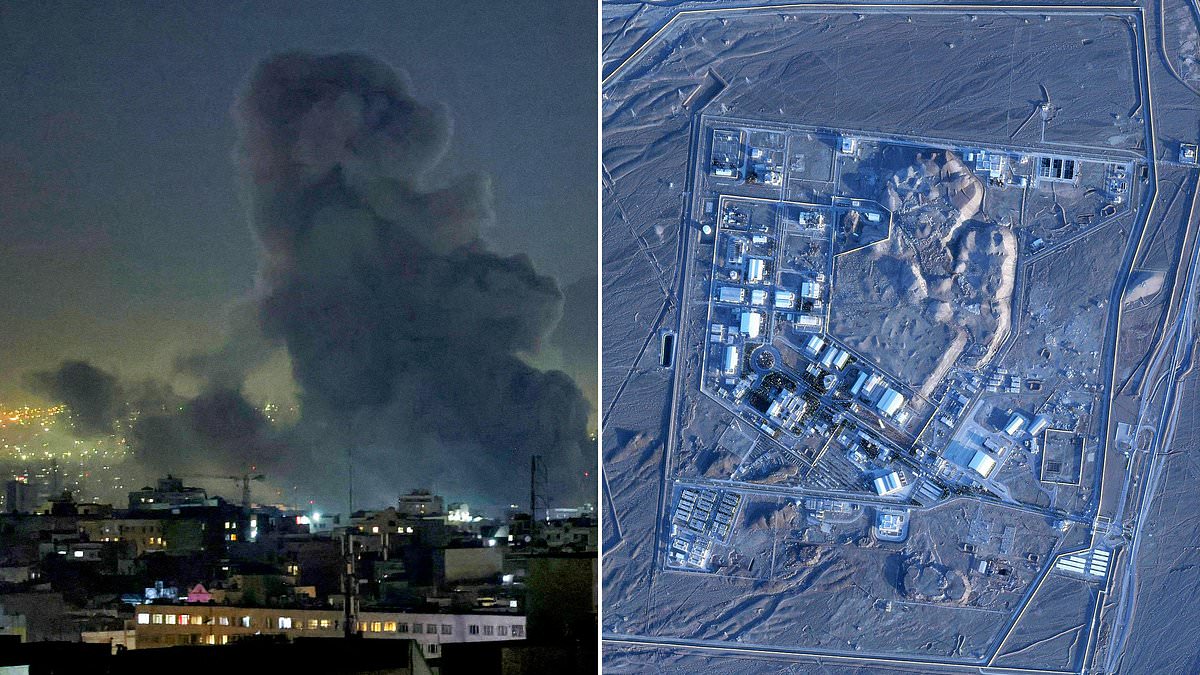
Initially, as smoke billowed from critical sites like Fordow, Natanz, and Isfahan, there was a glimmer of hope within the international community that the nuclear threat posed by Iran had been significantly diminished.
Subsequent attacks have shifted focus from widespread infrastructure damage to precise missions targeting Iranian leaders and missile sites. Despite these efforts, it has become evident that while Iran’s nuclear program was significantly disrupted, its core technical capabilities have shown remarkable resilience.
Intelligence gathered in the aftermath of the initial strikes revealed that Iran was quietly but determinedly working to rebuild its nuclear program, contradicting Trump’s claims of its complete destruction.
Reports by the Daily Mail uncovered that as early as September 2025, Iran was frantically relocating sophisticated industrial equipment, known as ‘chillers,’ back into fortified underground locations. These chillers are crucial for cooling uranium.
Iran had been enriching uranium to a 60 percent purity level, a mere technical step away from the 90 percent required for weapons-grade material, making it the only non-nuclear-armed state to reach such a level.
Senior officials had grown increasingly brazen in hinting the Islamic Republic might seek the bomb – even as their diplomats cited the Supreme Leader’s religious edict against building one.
Andrea Stricker, Deputy Director and Research Fellow at the Foundation for Defense of Democracies, is unsparing in her assessment. ‘Iran was about six months from being able to fabricate a crude nuclear device,’ she says. ‘The strikes in June created major bottlenecks in the regime’s capability to build nuclear weapons.’

This satellite image from Planet Labs PBC shows Iran’s Natanz nuclear enrichment site on Jan. 28, 2026

This file photo released November 5, 2019, by the Atomic Energy Organisation of Iran, shows centrifuge machines in the Natanz uranium enrichment facility in central Iran

For a brief window, as smoke cleared over the Islamic Republic’s major sites of Fordow, Natanz and Isfahan, there were hopes inside the international community the threat had been largely eliminated
Yet one prize escaped the bombardment entirely.
Recent activity has centred on a possible new enrichment site near Natanz, known as Pickaxe Mountain, about one mile from Natanz and a three–hour drive from the capital — and it represents Iran’s next generation of defiance: a fortress built specifically to withstand the very munitions that decimated the rest of its nuclear map.
There is no indication that US or Israeli forces struck Pickaxe Mountain during its wave of attacks this weekend.
‘The site is more deeply buried than Fordow and may require bunker–buster strikes or commando raids to destroy,’ Stricker warns.
Eventually, failed negotiations triggered a second wave of military action dubbed Operation Epic Fury, launched early Saturday morning.
Jason Brodsky, Policy Director at United Against Nuclear Iran, says the new campaign became inevitable after Washington detected Iran moving to reconstitute its enrichment programme.
‘Its domestic enrichment program has been effectively suspended after Operation Midnight Hammer,’ Brodsky explains. ‘However, the regime still maintains the ability to rebuild, and the US. detected it preparing to do exactly that — which provides a pathway to nuclear weapons. President Trump had warned the Iranian regime against doing so. It went ahead anyway.’
A critical and telling shift in the current campaign has been the targeting of the programme’s architects.
While the opening phases focused on broad military infrastructure, strategy has pivoted toward decapitating the nuclear leadership.

‘Iran has paid a very heavy price for its peaceful nuclear programme and for uranium enrichment,’ Abbas Araghchi told a forum in Tehran earlier this month

Iran’s former president Hassan Rouhani is seen inspecting nuclear facility components in 2021

Satellite imagery shows repair and reconstruction activity at the Natanz nuclear complex months after reported June 2025 airstrikes
Israel reportedly assassinated three senior officials connected to the program — among them Ali Shamkhani, top security adviser to Supreme Leader Ali Khamenei— along with two others who worked at SPND, the headquarters of Iran’s nuclear weapons effort.
But experts are clear: as long as key facilities remain standing, the threat is not finished. Pickaxe Mountain looms large.
‘It’s a key facility that remained untouched during Operation Midnight Hammer,’ says Brodsky. ‘I would not be surprised to see it on the target list this time. It represents the regime’s last major hope for a hardened, undetectable enrichment capability operating outside the reach of conventional air power.’
Stricker warns that as the regime begins to fray under the pressure of Operation Epic Fury, enormous responsibilities will fall to the coalition.
‘It will be imperative for the US to ensure security of Iran’s nuclear materials, sites and radioactive sources against theft or threats to local and regional populations,’ she says.