
Working-age households could be around £1,000 worse off over the next two years as high energy costs and tax increases squeeze disposable incomes, a leading think-tank has warned.
The Resolution Foundation issued the bleak forecast as it assessed the economic pressures facing families across Britain.
Ruth Curtice, the foundation’s chief executive, described Chancellor John Healey’s Budget as “scattergun”. She said the package included a £100 energy-bill reduction for households in lower council tax bands.
But she cautioned that even households receiving support, alongside the continued suspension of the 5 per cent VAT charge on electricity, would still pay more next year than they did during the energy crisis of 2022.
Ms Curtice said the Chancellor had done “little to address the sharp challenges facing Britain”, adding that the available help had been spread “too thinly”.

The Resolution Foundation warned that working-age households face a bleak outlook for disposable incomes

Ruth Curtice described John Healey’s Budget as “scattergun” after it offered £100 off energy bills for homes in lower council tax bands
The Resolution Foundation, often viewed as sympathetic to Labour, based its calculations on data from the Department for Work and Pensions rather than the Real Household Disposable Income measure used by the Treasury’s independent fiscal watchdog, the Office for Budget Responsibility.
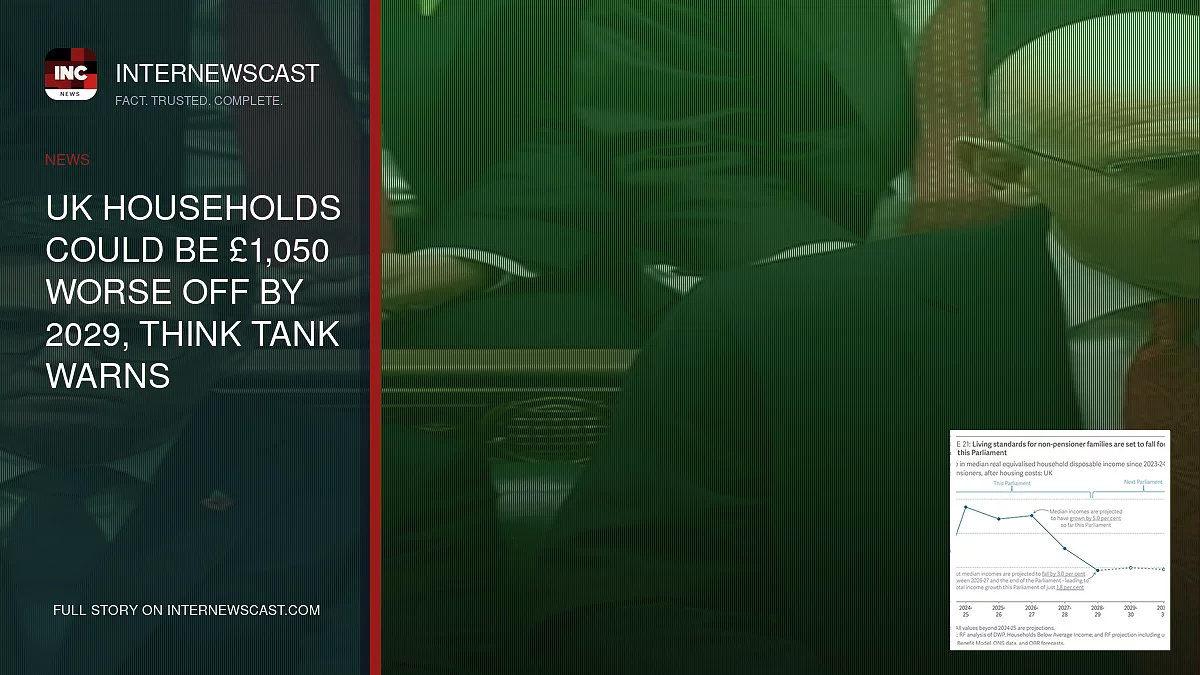
The think-tank projected that median real incomes for non-pensioners would increase by only 1.8 per cent during the current Parliament.
In today’s prices, that amounts to a cumulative gain of about £600.
However, researchers said the improvement had already taken place, with the outlook from this point described as “dire”.
“We project that the typical non-pensioner household will have experienced real income growth of 5 per cent between 2023-24 and 2026-27,” the report said.
“But their incomes are expected to fall by 3 per cent between 2026-27 and 2028-29, equivalent to a drop in annual household disposable income of £1,050, measured in 2026-27 prices, over this period.
“This poor outlook reflects falling real wages, a rising tax burden and housing costs increasing faster than inflation.”
Responding to the Budget, Ms Curtice said: “Against a difficult backdrop of global economic turmoil, the Chancellor delivered a scattergun Budget that did little to tackle the serious challenges facing Britain.
“Cost-of-living support is being spread far too thinly, leaving even families who receive help facing higher energy bills than during the last energy price shock.”
She added: “More broadly, this Parliament is increasingly taking the shape of two very different halves, something yesterday’s Budget did little to change.
“The first half has brought higher living standards, steady economic growth and additional funding for public services, all financed through substantial tax increases. Yet none of that was enough to prevent dramatic mid-term changes in Downing Street.
FIND OUT MORE: Nashville Condo Market Faces One of America’s Biggest Crashes
“The new occupants will hope for greater political success in the second half, but the task could be difficult if disposable incomes are forecast to fall by around £1,000.
“A much more decisive change of direction may be required, and the Government has not made clear how it will balance its public service ambitions against household incomes. Next year, those choices will inevitably become more difficult.”
The OBR offered its own assessment of the outlook for households in the forecasts published alongside the Budget yesterday.
The independent watchdog forecast no real-earnings growth in 2027 or 2028. Under its central projection, growth would recover to only 0.5 per cent a year by 2030.
One factor is the expectation that businesses will gradually pass Labour’s National Insurance increases on to employees instead of absorbing the cost through lower profits.
The outlook was also poor for real household disposable income per person, a measure specifically targeted by Sir Keir Starmer.
It tracks the money left after accounting for taxes, benefits and the impact of inflation.
The OBR said wage growth and increased benefits this year would be outweighed by “higher prices and taxes on income and wealth”.
The inflation surge linked to the Iran war was expected to suppress real wage growth while pushing up nominal pay.
“The latter then weighs on RHDI because frozen income tax thresholds increase the degree to which effective tax rates rise as nominal earnings increase,” the watchdog said.
The OBR expects lower energy prices to support a partial recovery in real household disposable income per person, which it forecasts will rise by an average of 0.75 per cent a year through to 2030-31.
Even so, the measure is still expected to be lower by that point than the OBR predicted in March.
The watchdog said the figures continued a “historically weak” trend that began after the 2008 financial crisis.
“This slowed significantly in the aftermath of the financial crisis, due to lower growth in productivity and real wages,” the report said.
“Growth reached a historic low over the ten years to 2025-26, averaging just ¼ per cent a year, and we expect it to fall further in the near term.
“By 2029-30, our central forecast sees growth over the previous ten years averaging less than 0.1 per cent a year.
“As a result, 10 years after the pandemic began, real household disposable income per person would be just 1 per cent above its pre-pandemic level.”
David Miles of the OBR told a briefing: “It’s a pretty grim picture. If you go back to just before Covid, there is virtually no growth in real household disposable income per person.”


