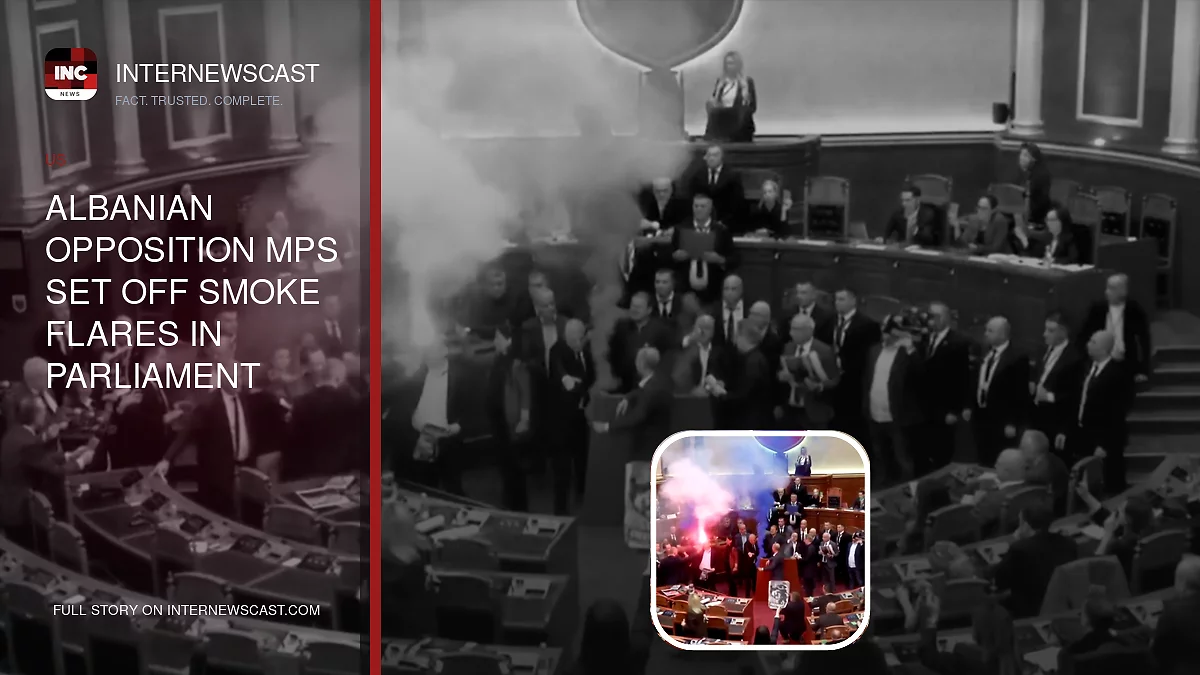

Albania’s opposition lawmakers disrupted Thursday’s parliamentary proceedings by igniting flares that sent blue and colored smoke through the chamber, intensifying a political crisis fueled by weeks of student-led protests against the government.
Democratic Party members also prevented lawmakers from reaching the podium as parliament considered a bill concerning the country’s central bank, Reuters reported.
During remarks that were cut short when his microphone was switched off, opposition leader Sali Berisha accused governing lawmakers of criminal conduct and said they—not young protesters—deserved to face tear gas, rubber bullets and physical harm.
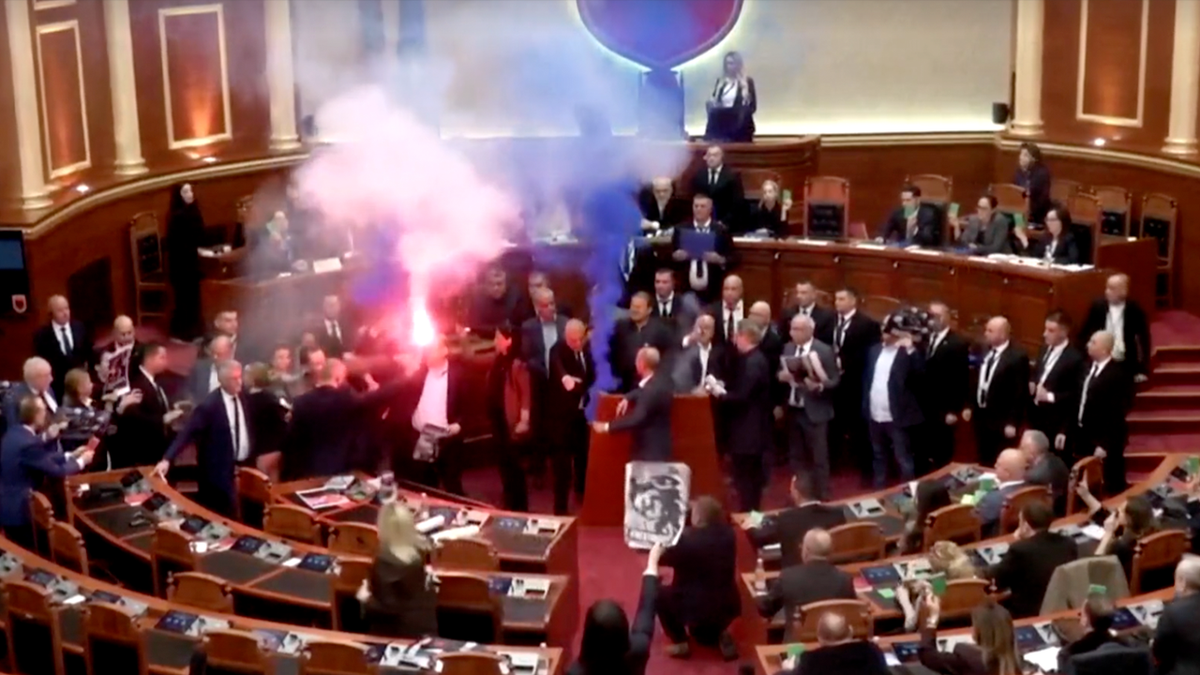
Albanian opposition lawmakers set off flares during a parliamentary session as anti-government protests continued across the country. (Reuters)
As the session descended into disorder, opposition lawmakers gathered around Berisha with blue flares, the Democratic Party’s signature color. Some also held photographs showing protesters who were reportedly injured by police rubber bullets.
The demonstrations, led largely by students, have swept Albania in recent weeks. Protesters are calling for Prime Minister Edi Rama to resign, citing alleged corruption, inadequate funding for education, high unemployment and limited economic prospects.
EXPLORE MORE: Family of Teen Killed in Jacksonville Apartment Shooting Files Wrongful Death Lawsuit
The movement began on Oct. 13 and soon escalated, with clashes between protesters and police as government buildings were set ablaze. Demonstrators also confronted riot police outside the ruling Socialist Party’s headquarters in Tirana, where officers had been deployed to protect the building.
The unrest has subsequently spread to multiple cities throughout Albania.
Rama, who has led the country since 2013 and won a fourth term last year, has blamed what he called “foreign hands” opposed to Albania’s membership in the European Union. He also alleged that outside actors were exploiting the demonstrations and said they reflected organized crime rather than a genuine student movement.
The government has responded with tougher penalties aimed at curbing violence. Under the new measures, people who take part in a protest that becomes violent could face fines of up to $6,000, even if they did not personally engage in violent acts.
Another protest has been planned for Saturday.