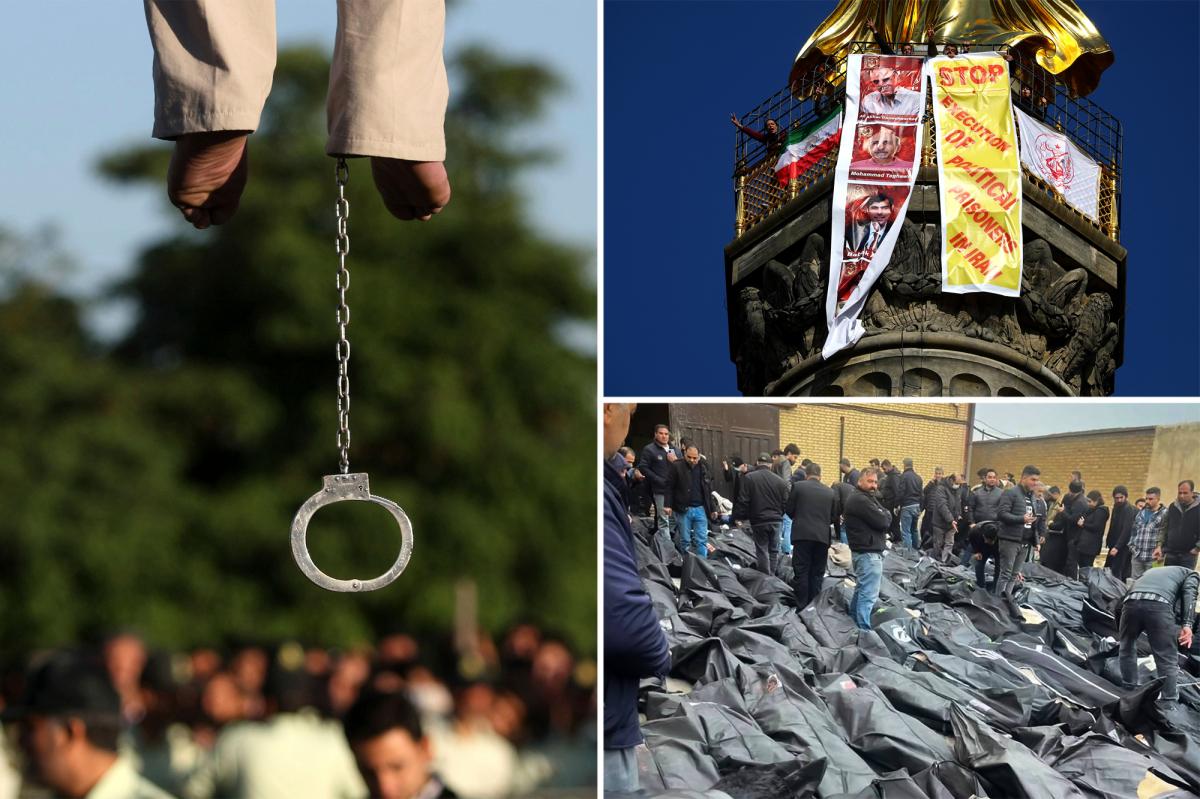


Last year, Iran witnessed a surge in executions, with over 1,600 individuals put to death, reaching a peak not observed since the conclusion of the Iran-Iraq war in 1989.
This alarming statistic was highlighted in a collaborative report by Iran Human Rights and Together Against the Death Penalty. The report estimated that in 2025, Iran executed at least four people each day.
The total count of executions in Iran last year stood at 1,639, the highest since the post-war executions in 1989, which saw approximately 1,700 political prisoners put to death, as noted by the report.
The report does not specify the number of executions carried out publicly.
A significant portion of these executions were for drug offenses or murder, with both categories seeing an increase compared to 2024. Executions for drug-related crimes rose by 58%, while those for murder, which almost invariably result in execution, increased by an astounding 79%.
Additionally, at least 57 individuals, including two protesters, were sentenced to death for vague accusations such as “waging war against God” and “corruption on Earth,” according to the report.
At least 48 women were also killed, setting another 20-year record, according to the report.
A bulk of the death sentences were handed down by the Revolutionary Courts “after grossly unfair trials and without due process,” the report said.
The nonprofits noted that those in marginalized groups, including ethnic and religious minorities, were “disproportionately represented among those executed.”
The report does not account for the slew of executions that have been ordered since January’s nationwide revolt and the start of the war with Israel and the US.
State media has already confirmed at least 14 executions by the brutal regime this year, though the Norwegian-based Hengaw Organization for Human Rights reported evidence of as many as 160 hangings since January.
Seven of the known hangings linked to protest activity took place after Operation Epic Fury launched in late February. Six other victims were convicted of membership with the exiled opposition group Mujahideen-e Khalq (MEK), and one was accused of spying for Israel, the report said.
Separately, upwards of 7,000 protestors were slaughtered in the streets during the height of the winter revolution, according to the US-based Human Rights Activists News Agency, though thousands more are still under investigation
Just last week, Iran’s hardline chief justice demanded all death penalty cases of “agents and affiliates of the enemy” — which includes protesters — be expedited.