

A North Carolina mother accused of killing her young son is preparing to pursue an insanity defense, a legal strategy that has quickly invited comparisons to the closely watched Lindsay Clancy case and renewed debate over how often such defenses may appear in high-profile criminal trials.
Andrea Faust, 41, faces charges of murder and attempted murder in connection with the Feb. 12 death of her 3-year-old son and the alleged attempted killing of her 2-year-old son at the family’s home in Durham, North Carolina.
Court filings show Faust’s defense team has formally notified the court that it plans to argue she is not guilty by reason of insanity, while also raising a diminished capacity defense, according to WRAL.
The case has inevitably been linked to Clancy’s ongoing trial in Massachusetts. Retired Massachusetts Superior Court Judge Jack Lu told the outlet he believes similar legal arguments could become more common as Clancy’s case brings national attention to postpartum mental health issues and their role in criminal proceedings.
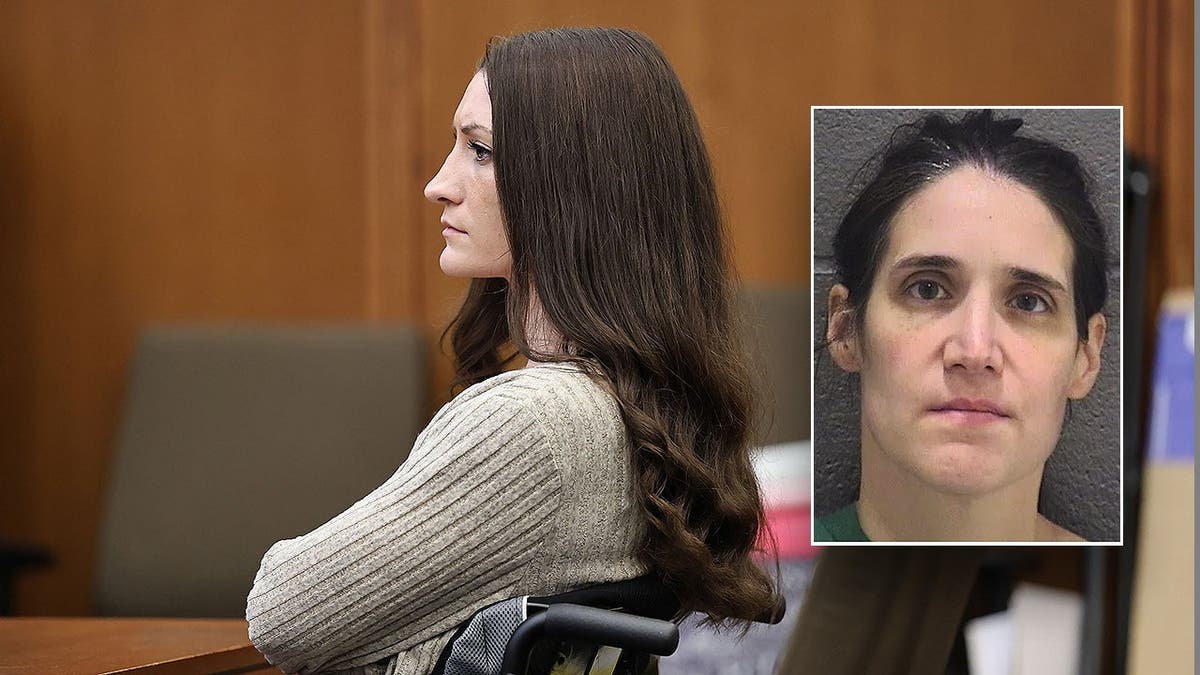
Andrea Faust, 41, is accused of murder and attempted murder following the Feb. 12 death of her 3-year-old son and the injury of her 23-month-old child. The North Carolina case has prompted comparisons to the Lindsay Clancy case in Massachusetts. (Pool, Durham County Jail)
Clancy has pleaded not guilty by reason of lack of criminal responsibility in the 2023 deaths of her three children. Her attorneys have argued she was suffering from postpartum psychosis, while prosecutors contend she knew what she was doing and acted with intent.
Jurors in Clancy’s trial wrapped up a second day of deliberations Friday without reaching a decision. They are scheduled to return Monday morning to resume working toward a verdict.
In Faust’s case, the notice filed by her attorneys does not by itself prove she was legally insane or that her mental capacity was diminished at the time. Her lawyer, Nicole Galinsky, told the local news outlet that a defense expert determined Faust was unable to understand right from wrong during the alleged crimes.
“Andrea and Lindsay’s cases are eerily similar, though not entirely the same,” Galinsky told News Outlet.
Galinsky noted that Faust was not suffering from postpartum psychosis.
“However, both women were known to be loving, doting, responsible mothers who were worried about and caring for their children up until the very second they decided to kill them,” Galinsky said, adding that Faust and Clancy were both struggling with similar issues, including hallucinations, hospitalizations and mental health.
“Neither woman did this out of the blue,” Galinsky said in an email. “Both were struggling enormously with their mental health. But, like most women and almost all moms, they were just trying to get through each day, care for their children, be a good mom/wife/employee. Both were seeking help from doctors who weren’t really taking their concerns seriously.
“Both of these cases highlight the failure in our society to take women and mothers seriously when it comes to their mental health. Both of these women advocated for themselves countless times and—for what? It got them nowhere.
“I am hopeful that our case will demonstrate how to properly treat and rehabilitate a woman living her own worst nightmare. Lindsay Clancy was not given that luxury.”

Lindsay Clancy is charged with murdering her three children, 5-year-old Cora, 3-year-old Dawson and 7-month-old Callan. (Lindsay Marie Clancy Facebook)
Lu said society and the legal system have not fully understood the effects postpartum mental illness can have on behavior and criminal responsibility.
“Most of the time, these criminal responsibility, insanity, mental health defenses are unsuccessful,” Lu told News Outlet.

Lindsay Clancy attends her murder trial at Plymouth Superior Court in Plymouth on July 29, 2026. Lindsay and Patrick Clancy with two of their three children in this undated photo. (Lindsay Marie Clancy/ Facebook; David L. Ryan/Pool)
Although he is not a mental-health expert, Lu said the Clancy trial has challenged and changed his own understanding of what a person might experience.
“I had no real understanding of what a person like Ms. Clancy was going through until this trial,” he said.
Faust was found incapable of proceeding to trial in March after court records documented serious concerns about her mental health and safety, according to WRAL.
Central Regional Hospital later found her capable of proceeding as of May 21. Her attorney said another evaluation would examine her mental state at the time of the alleged offenses.

Defendant Lindsay Clancy on Monday, Aug. 3, 2026, the fifth day of testimony at Plymouth Superior Court for her murder trial. Clancy is charged with three counts of murder in connection with the death of her three young children in 2023 at their Duxbury home. Clancy says she was suffering from postpartum psychosis and is not criminally responsible. (Greg Derr/Pool/The Patriot Ledger)
Lu said mental-health defenses should receive more serious consideration because they can explain behavior and reduce moral culpability. But allegations involving children create an especially difficult path with jurors, he said.
“These cases should have legs,” Lu said, “but unfortunately society and juries don’t give them much credence.”