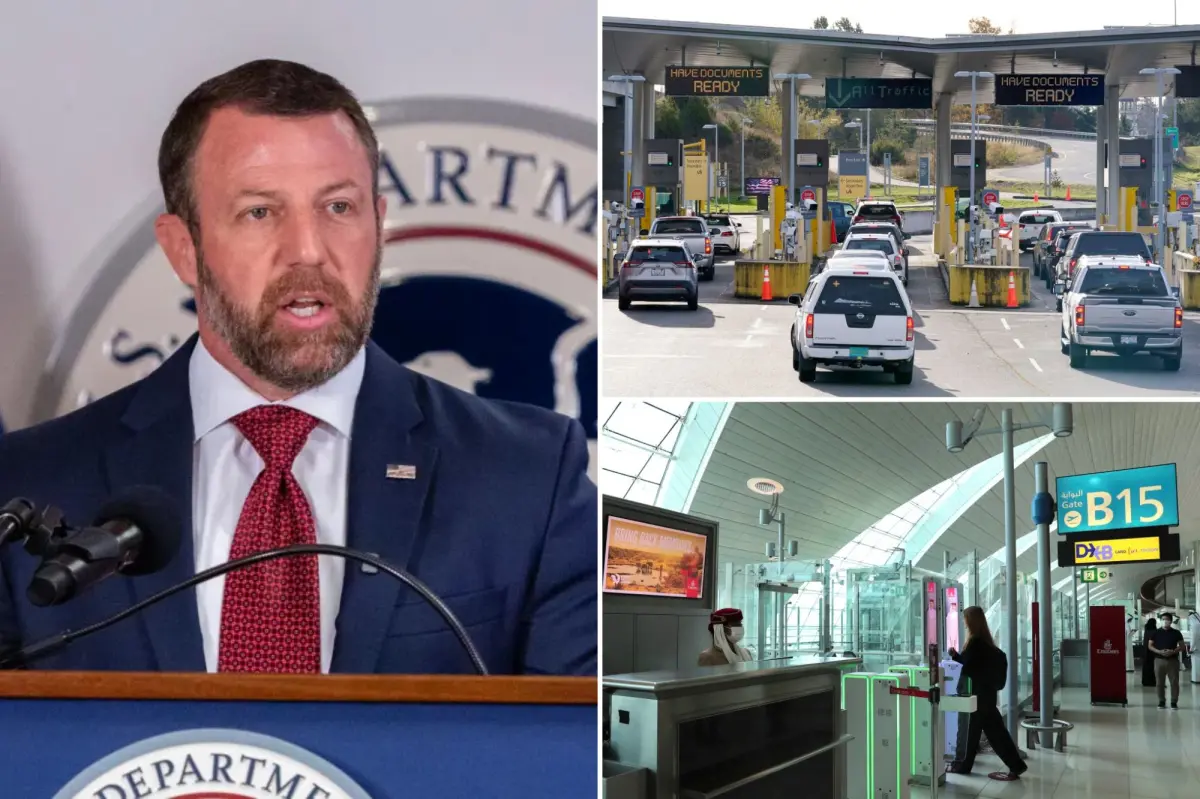
NEW YORK — Homeland Security Secretary Markwayne Mullin said Tuesday that DHS is moving to expand biometric screening at the border, including facial recognition checks, after officials found that roughly half of migrants with criminal histories falsely deny their records when questioned by border agents.
Mullin’s remarks to The Post came in response to a House Intelligence Committee report warning that a key border-security recommendation from the 9/11 Commission’s landmark 2004 findings remains unfulfilled as the 25th anniversary of the attacks nears.
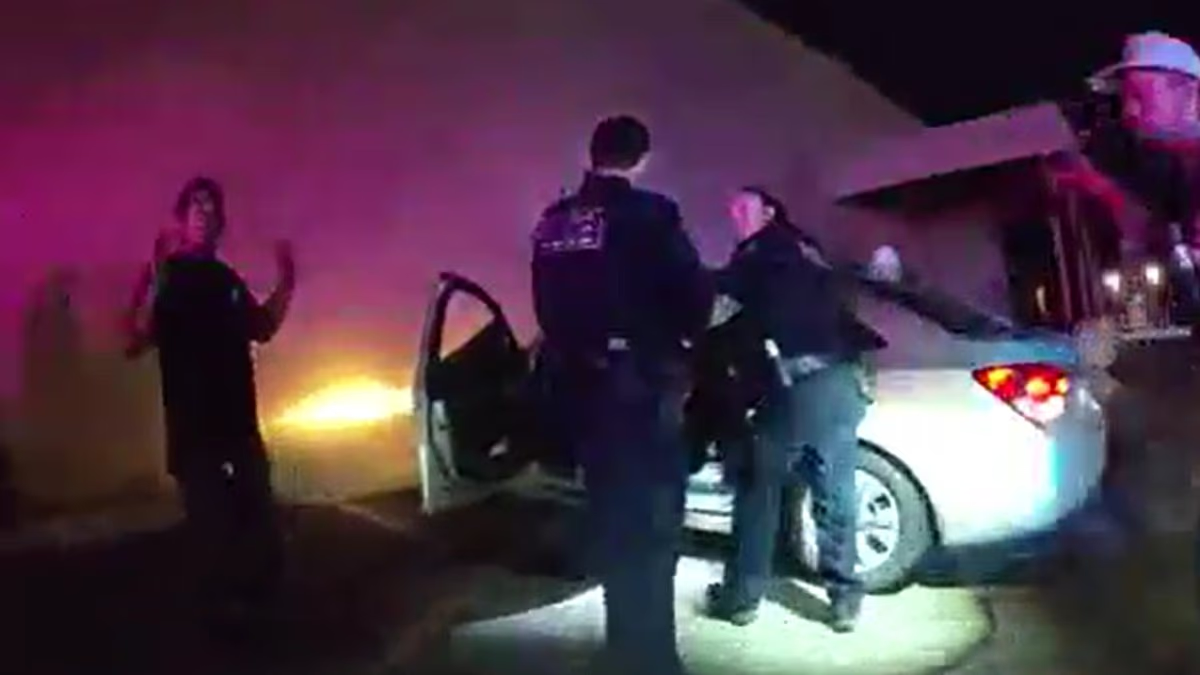
“We are trying to get biometrics out there as fast as we can,” Mullin said while in New York City promoting DHS’s “Operation Rotten Apple,” a recent enforcement push that quietly led to the arrests of 2,200 illegal migrants across New York state over the past month, including convicted murderers, rapists and drug traffickers.
“Keep in mind, I’d say close to 50% of the individuals that say they don’t have any type of criminal record and we do biometrics on them, we find individuals like this individual that had rape charges from Germany. Because they come here and they give false names,” Mullin said.
“Under the Biden Administration they didn’t do any of these checks. They didn’t check to see if the person is really who they said they were. They just wrote down whatever name they gave them. And paroled them into the station at a pace of I think roughly 96% of the individuals who came across our country and are in our country illegally under the Biden administration.
“When we do biometrics we find all kinds of stuff.”
The House Intelligence Committee urged federal officials to deploy border inspection booths capable of verifying biometric identifiers — including faces, irises and fingerprints — for foreign nationals entering the United States. The panel cited systems already used at checkpoints in Europe’s Schengen Area as a potential model.
The report also singled out America’s land borders as a major vulnerability, noting that facial scanning and related biometric checks remain especially limited for travelers entering from Canada or Mexico.
Although passengers arriving by air now have their faces scanned upon entry, airports do not currently scan all outbound passengers’ faces, making it more difficult to verify that someone left the country.
Citizens of 42 countries can enter the US without a visa under the Visa Waiver Program, but are supposed to disclose their criminal histories before entering.
More than two decades ago, the 9/11 Commission called for authorities to “quickly complete a biometric entry-exit screening system” after reviewing evidence that at least two — and possibly eight — of the 19 jihadist hijackers had phony or manipulated passports.
Mullin said the rollout was hampered by a 76-day funding lapse for the department this year, which followed a 43-day partial government shutdown late last year.
“Keep in mind we were still shut down 76 straight days and we were shut down four times in a year. That’s hard to roll out what we want,” the DHS secretary said.
“But we got a great relationship obviously with our committees in the Senate and the House that have oversight over us. They want to see it out there. We want to see it out there.”