
Washington — In an extraordinary move, the Justice Department on Wednesday filed a judicial misconduct complaint against every federal district judge in Minnesota except one. The action followed interviews that most of the judges gave to the New York Times about the government’s handling of cases during an immigration enforcement campaign earlier this year. spoke with the New York Times
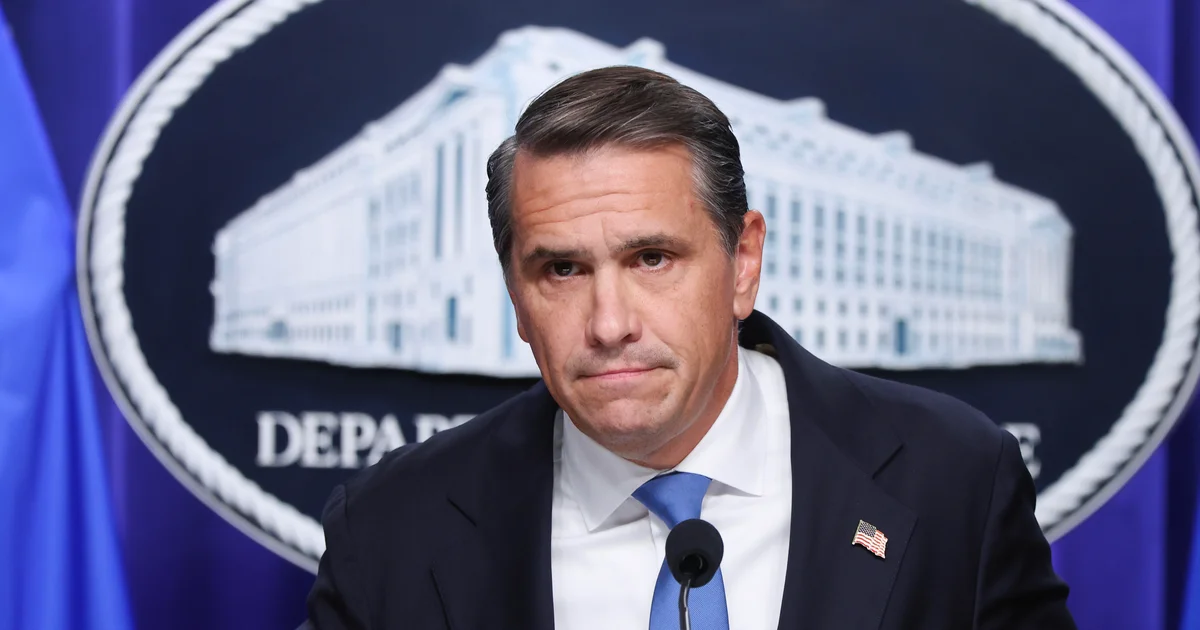
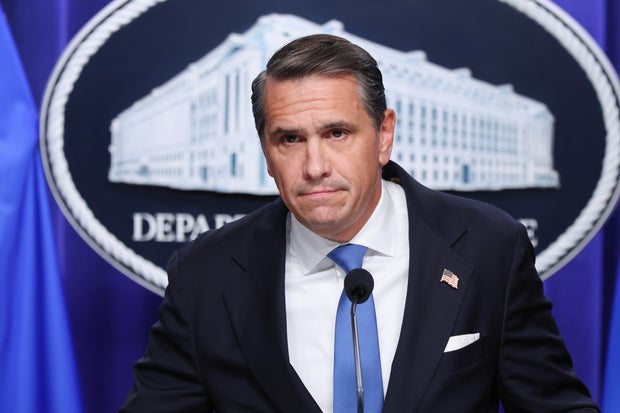
Attorney General Todd Blanche announced the complaint at a news conference, saying it had been submitted to the U.S. Court of Appeals for the 8th Circuit. He also disclosed that Minnesota prosecutors had secured an indictment against 10 noncitizens accused of illegally voting in earlier elections.
“Like every other party before a court, we are entitled to a judge who is fair and impartial,” Blanche said. “We have no choice but to act.”
Anna Moneymaker / Getty Images
The complaint centers on a New York Times article published earlier this month under the headline “Trump’s Minnesota Surge Threatened Democracy, Judge Warns.” Judge Patrick Schiltz gave the newspaper a 90-minute interview in which he described what he characterized as repeated violations of court orders by the Trump administration. The report said six of Minnesota’s seven federal judges spoke with Times journalists about the government’s immigration crackdown, known as Operation Metro Surge.
President George W. Bush appointed Schiltz to the federal bench. Before that, he served as a law clerk to Supreme Court Justice Antonin Scalia.
The misconduct filing identifies Schiltz and Judge John Tunheim, an appointee of President Bill Clinton, along with unnamed judges on the U.S. District Court for the District of Minnesota. Tunheim disputed the administration’s description of those targeted in the operation as the “worst of the worst.”
“In my view, they were not arresting people who were dangerous criminals on the street,” Tunheim told the Times.
The Justice Department called the conduct of Schiltz and Tunheim “particularly egregious,” accusing both judges of “flagrantly” violating the Code of Judicial Conduct through comments it described as improper and unethical.
Acting Deputy Attorney General Trent McCotter and Associate Attorney General Stanley Woodward signed the complaint.
The officials singled out Schiltz’s remarks as “overly political,” arguing that they involved issues pending before him or before an appeals court. They described Tunheim’s statement as “less verbose,” but said it was “equally unethical.”
“If there is a ‘grave threat to the rule of law,’ it is judges who repeatedly and brazenly overstep their authority and then mount a partisan press campaign—including criticism of the government for seeking an emergency appeal after a judge declined to rule on a search warrant request,” McCotter and Woodward wrote.
The Justice Department asked the 8th Circuit to require Schiltz and Tunheim to recuse themselves from cases involving the Department of Homeland Security. It also urged the appeals court to investigate what it called the “improper conduct” of Minnesota judges who allegedly “covet publicity” instead of focusing on their role in deciding legal disputes.
The Judicial Conference, the federal judiciary’s policymaking body, released an advisory opinion in February addressing judges’ public statements and civic participation. The guidance says judicial ethics allow judges to discuss the independence of the courts and to defend the rule of law broadly, including explaining why those principles are central to American government.
The conference also said its Committee on Codes of Conduct recognizes that, in some situations, judges may appropriately and carefully defend fellow judges against illegitimate attacks that threaten judicial independence or the rule of law, even when those attacks do not amount to persecution.
RELATED: NHS Refused Ambulance Despite Life-Threatening Emergency, Patient Says
Responding to the complaint, Schiltz said in a statement that legal-ethics specialists had confirmed he remained within the rules governing federal judges when he spoke with the New York Times. Pointing to the Judicial Conference guidance permitting judges to address “core judicial matters,” including judicial independence and the rule of law, Schiltz said, “that is exactly what I did.”
A spokesperson for the federal district court said the Minnesota judges acted within the authority described by the Judicial Conference and stayed “well within” the ethical standards governing the federal judiciary.
The Trump administration began Operation Metro Surge in December 2025, sending more than 3,000 immigration officers and other authorities to Minnesota as part of its broader enforcement drive. Border czar Tom Homan said in February that the operation was ending and that the number of federal immigration personnel in the state would be reduced.
The intensified immigration enforcement effort was accompanied by violent confrontations involving federal agents and protesters. Two people, Renee Good and Alex Pretti, were killed in Minnesota in January, prompting renewed scrutiny of tactics used by Immigration and Customs Enforcement and Customs and Border Protection.
Minnesota’s federal courts were soon flooded with petitions from migrants contesting their detention and seeking release. In two unusual orders involving an Ecuadorian man, Schiltz accused the administration of ignoring “dozens” of judicial directives. He said he had identified 96 court orders across 74 cases that ICE had failed to follow.
“ICE is not a law unto itself,” Schiltz wrote in one order issued Jan. 28.
In another, from two days earlier, Schiltz said the Trump administration “decided to send thousands of agents to Minnesota to detain aliens without making any provision for dealing with the hundreds of habeas petitions and other lawsuits that were sure to result” and said “the court’s patience is at an end.”
Tensions between the Trump administration and federal judges have escalated amid a slew of decisions against the federal government on a host of issues, including immigration. Mr. Trump and senior members of his administration have attacked federal judges on social media, calling them “radical left judges” and “activists.”
A former top Justice Department official filed a judicial misconduct complaint against Chief Judge James Boasberg, who sits on the district court in Washington, D.C., last year because of comments he allegedly made during a closed-door meeting of judges.
But the complaint was dismissed in December after the Justice Department failed to provide “sufficient evidence” about the alleged statement, according to a decision from Jeffrey Sutton, the chief judge of the U.S. Court of the Appeals for the 6th Circuit. The complaint was transferred from the federal appeals court in Washington to the 6th Circuit because of concerns of potential recusals.
The Justice Department also filed a misconduct complaint against Judge Ana Reyes, who sits on the same court as Boasberg, because of comments she made during a hearing in a case involving Mr. Trump’s plan to bar transgender people from serving in the military. The administration accused Reyes of “hostile and egregious misconduct.”
Jacob Rosen
contributed to this report.