
Washington — The Supreme Court said Monday that it will review whether the federal government can constitutionally enforce a nearly 160-year-old ban on making distilled spirits at home.
The case, Department of Justice v. McNutt, is expected to be argued next year, with a ruling likely by late June or early July.
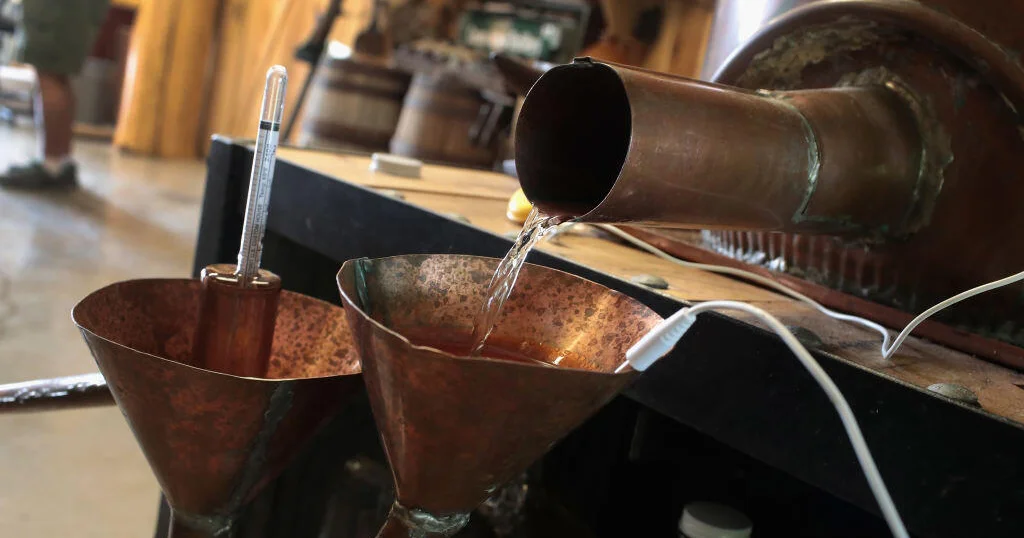
Congress has restricted where liquor may be distilled for more than a century, citing the need to prevent tax evasion. The law at the center of the case, passed in 1868, states that a “person may not produce distilled spirits at home for personal use.” It also makes it a crime to use or possess a still or other distilling equipment in “any dwelling house,” shed, yard or enclosed area.
Those convicted can face fines and as much as five years in prison. Their homes and other property located there may also be seized by the government.
Lawmakers enacted the restrictions after concluding that commercial distillers were widely avoiding liquor taxes. In 1867, the tax on spirits stood at $2 per gallon—more than the product’s market price—and distillers reportedly found it less expensive to bribe revenue officials than to pay the tax, according to a House report. Congress estimated that “at least seven-eights” of all spirits were escaping taxation.
The law that eventually barred home distilling lowered the tax rate and required the duty to be paid before spirits could leave bonded warehouses. It did not create an exception for liquor made solely for personal or family consumption.
The constitutional challenge was filed by the Hobby Distillers Association and one of its members, who wants to make spirits at home. They argued that the ban goes beyond Congress’ specifically listed powers, including its authority to impose taxes. A federal district court agreed and declared the prohibition unconstitutional.
The district court said the 19th-century location rules “criminalize conduct of persons not subject to the tax” without affecting “the product to be taxed.”
The 5th U.S. Circuit Court of Appeals largely upheld that ruling. It concluded that the home-distilling restrictions were not “plainly adapted” to advancing the government’s taxing power because preventing people from making spirits at home also eliminates the possibility of taxing those products.
MUST READ: World’s Best Ski Resorts Revealed, From Royal-Favorite Swiss Slopes to Celebrity US Hotspots
Allowing the government to defend the law, the appeals court warned, could permit Congress to “criminalize nearly any at-home conduct only because it has the possibility of concealing taxable activity.”
Solicitor General D. John Sauer urged the Supreme Court to hear the case, calling the lower court’s decision to invalidate the ban “erroneous.”
In the government’s petition, Sauer said Congress targeted home distilling because operations based in a residence or an attached structure are easier to hide and harder for officials to inspect, allowing distillers to avoid paying the required tax.
The would-be distillers also asked the Supreme Court to resolve the issue. Their attorneys maintain that the ban exceeds Congress’ authority under the Constitution’s Taxation and Necessary and Proper Clauses.
They cautioned in court filings that the government’s theory could create “no limit to the government’s claim of power to criminalize local conduct that might conceal taxable activity.”