Trump says Kim Jong Un could join summit with Putin and Xi Jinping
Sen. Eric Schmitt, R-Mo., joins ‘The Faulkner Focus’ to discuss President Donald Trump’s suggestion that North Korean leader Kim Jong Un could attend his upcoming China summit with Vladimir Putin and Xi Jinping. Schmitt also examines the national security concerns surrounding the alleged Nvidia espionage scandal.
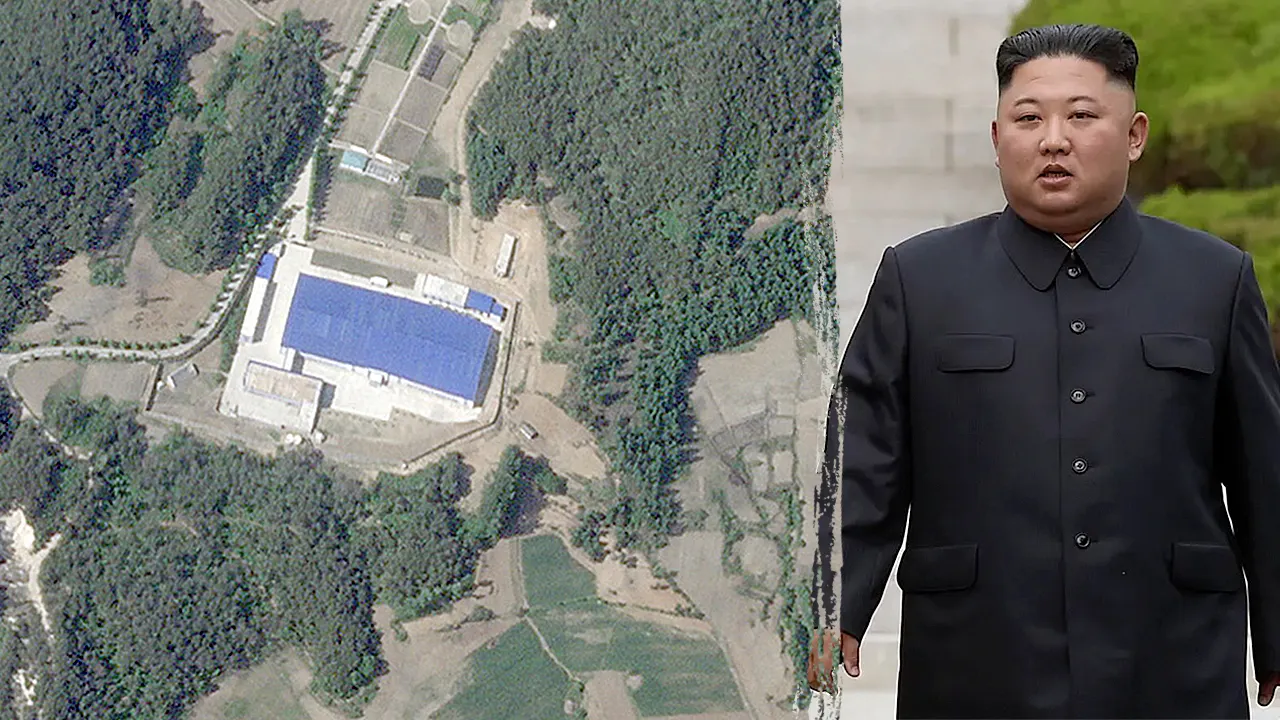
North Korean leader Kim Jong Un is pressing ahead with his country’s nuclear program, including an expansion of a uranium-enrichment facility capable of producing material for nuclear weapons, the United Nations’ atomic watchdog said Wednesday. The agency described Pyongyang’s expanding efforts as a “cause for serious concern.”
International Atomic Energy Agency Director General Rafael Grossi said construction on the latest addition to the Yongbyon nuclear complex began in mid-September and was externally finished by late October. The development has renewed concerns about North Korea’s ability to produce weapons-grade nuclear material.
“The ongoing expansion of the DPRK’s uranium enrichment programme remains a cause for serious concern,” Grossi told the IAEA’s board of governors in Vienna, referring to North Korea by its official name, the Democratic People’s Republic of Korea.

Grossi also cautioned against attacks like the strike on Iran’s Bushehr nuclear plant. (Abdul Saboor / POOL / AFP via Getty Images)
The warning came as President Donald Trump prepared to meet Chinese President Xi Jinping and Russian President Vladimir Putin on Thursday during the Asia-Pacific Economic Cooperation summit in Shenzhen, China. The unprecedented three-way meeting is expected to include discussions about nuclear arms and broader global security issues.
Trump has also raised the prospect of meeting Kim during his China trip, potentially creating another diplomatic opening with the North Korean leader as Pyongyang continues to reject calls to surrender its nuclear arsenal.

North Korea, led by Kim Jong Un, carried out missile launches days before President Donald Trump’s visit to South Korea. (China Daily via Reuters/Korea News Service via AP; Ahn Young-joon/AP; Alex Brandon/AP)
Speaking to reporters as he left the White House Monday, Trump said denuclearization would be one of the subjects discussed with the foreign leaders.
“We’re going to talk about denuclearization – tough subject, because it’s very hard for any of us to say we’ll get rid of our nukes,” Trump said.
He also suggested that Kim might join the talks, though officials have not confirmed any meeting between Trump and the North Korean leader.
“He may come. I don’t know. That’s up to President Xi,” Trump said. He added that he saw a potential path toward progress.
“So that’ll be good. We have a chance to accomplish a lot,” he said.

Putin, Xi and Kim (Getty Images)
The prospect of a meeting drew further attention after Russia’s Interfax news agency quoted Kremlin spokesman Dmitry Peskov as saying Putin could meet Kim if the North Korean leader traveled to China for the summit, Reuters reported.
Trump said Tuesday that Kim wanted to meet with him, adding, “We’ll see what happens.”
North Korea has consistently rejected demands to dismantle its nuclear weapons program. At the same time, international monitors continue to report construction and activity at major nuclear sites.
YOU MAY ALSO READ: Russell Brand’s Ex Says He Made Her Brush Until Her Mouth Bled
Grossi said the IAEA had documented ongoing enrichment at Yongbyon and Kangson, construction of another enrichment facility at Yongbyon and signs that North Korea’s weapons-material production capacity may be expanding.
“Since mid-September 2026, a further extension to the original Yongbyon enrichment facility has been under construction with the new extension externally complete by late-October 2026,” Grossi said.
The agency also found signs that Yongbyon’s 5-megawatt reactor, which can produce plutonium for nuclear weapons, is likely to remain in its seventh irradiation cycle.
A separate light-water reactor at the complex restarted operations at the end of April after a period offline, the agency said.

North Korean leader Kim Jong Un addressed the Ninth Congress of the ruling Workers’ Party in Pyongyang on Feb. 23, 2026. (Korean Central News Agency via REUTERS)
“The continuation and further development of the DPRK’s nuclear programme are clear violations of relevant UN Security Council resolutions and are deeply regrettable,” Grossi said.
IAEA inspectors have not been permitted to enter North Korea since Pyongyang expelled them in 2009.
The agency therefore depends largely on satellite images and other publicly available data to track nuclear developments, restricting its ability to independently confirm what is taking place inside the facilities.
North Korea conducted its first nuclear test in 2006 and carried out five more through 2017. The tests led to successive rounds of U.N. Security Council sanctions aimed at its nuclear and ballistic missile programs.
In September, IAEA member states voiced “growing concern” about heightened nuclear activity in North Korea. Kim’s sister, Kim Yo Jong, rejected the criticism, declaring the country’s status as a nuclear-armed state “absolute” and labeling those who continued to pursue denuclearization “idiots.”

North Korean leader Kim Jong Un poses with President Donald Trump north of the Military Demarcation Line separating North and South Korea at Panmunjom in the Demilitarized Zone on June 30, 2019. (BRENDAN SMIALOWSKI/AFP via Getty Images)
Kim has suggested that any future negotiations with Washington would require the United States to drop its demand for denuclearization and instead recognize North Korea as a nuclear-armed state in talks.
Trump and Kim first met in Singapore in 2018, where they signed a broad declaration promising to work toward denuclearizing the Korean Peninsula.
Their second summit, held in Hanoi in 2019, ended without a deal when discussions stalled over North Korea’s nuclear facilities and its demands for sanctions relief.
The two leaders met again in June 2019 at the Demilitarized Zone between North and South Korea. Trump briefly crossed into North Korean territory during that encounter.
Despite those meetings, the United States and North Korea never reached a verifiable agreement to dismantle Pyongyang’s nuclear weapons program.


