Share this @internewscast.com
At a paint factory tucked away on Sydney’s northern beaches, David Stuart plugs in his electric van.
The silver minivan is part of his electric fleet, efficiently powered by the sun’s energy.
“We are driving five EVs all powered entirely off the roof, and that’s saving us thousands on fuel each year,” he said.
A long-time sustainability enthusiast, Stuart has transformed his operation to run almost entirely on renewable energy. The factory is powered by a 100-kilowatt rooftop solar array, backed by a custom-built battery designed to store excess energy for later use.

“Our large battery is a product of Australian design and craftsmanship. It has the capability to store excess solar energy produced during the day and use it overnight, enabling us to power all our morning production,” explained Stuart.
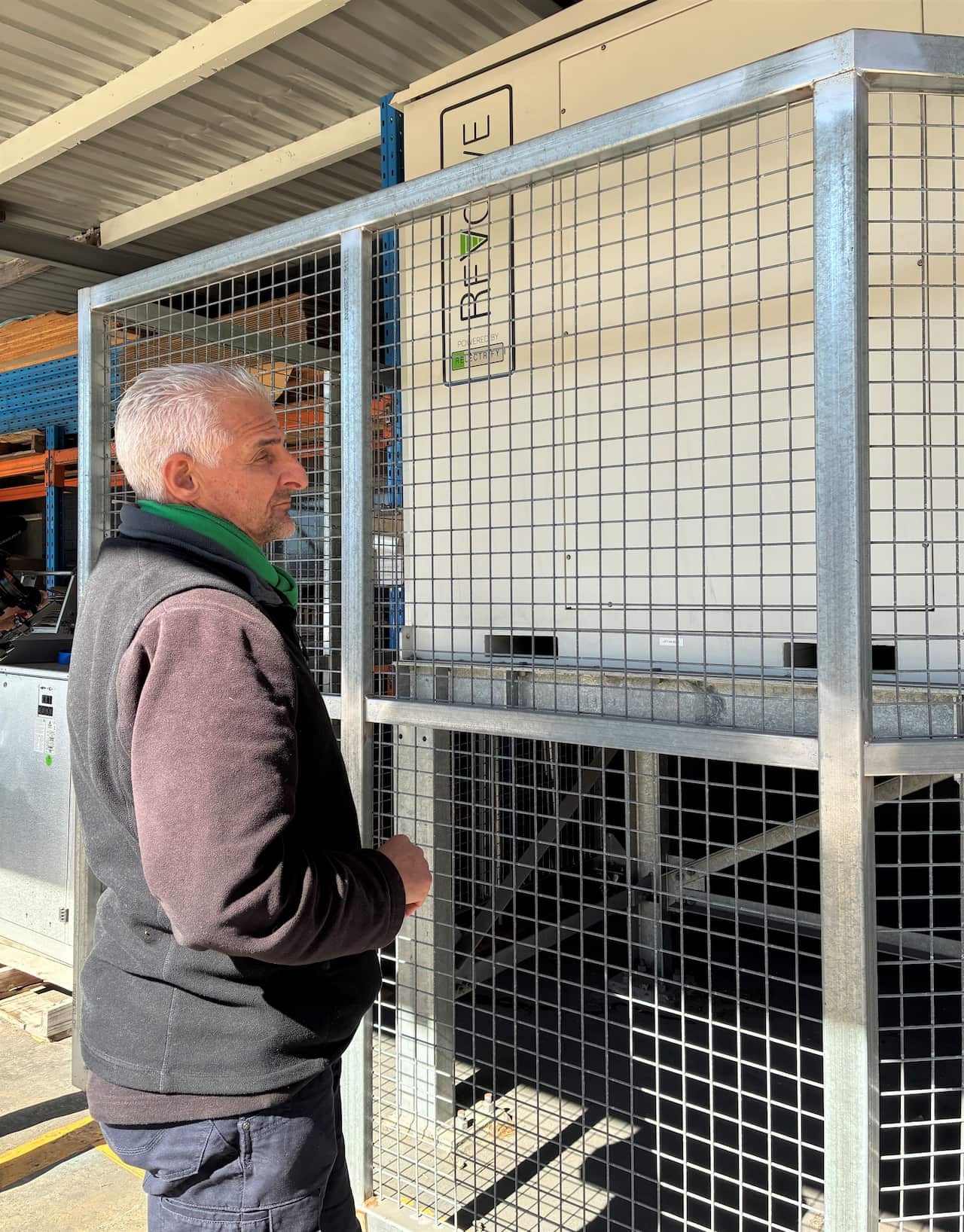
A man in a grey sweater stands next to a wire cage, looking at a battery housed inside.

David Stuart has revolutionized his business operations by shifting almost entirely to renewable energy sources.

This transition has significantly reduced Colormaker Industries’ electricity expenses, saving the paint company thousands of dollars each year and providing a competitive advantage.

Before the solar transformation, Stuart said his factory was spending about $24,000 a year on electricity.
“We took the plunge, we went solar and took a bank loan to do it. That bank loan is now paid off and our power bills are now negative,” he said.

The increase in energy costs has heightened living expenses and intensified calls for greater energy self-sufficiency through renewable energy sources.

“If someone had told me six years ago that we would be at this point now, I would never have believed it,” Stuart remarked.

Electricity remains a significant expense for most small businesses, particularly those in the manufacturing and hospitality sectors.
This week, the Australian Chamber of Commerce and Industry (ACCI) released its Small Business Conditions Report 2025, revealing mounting pressure on Australia’s 2.5 million small business owners.
“Around 44 per cent of those surveyed report high levels of stress,” said ACCI CEO Andrew McKellar, citing rising operating costs as a big source of strain.
“Soaring energy bills have taken a toll on businesses across NSW, Victoria and Queensland, and for many owners, those costs have gone up 200 per cent in recent years,” McKellar said.

A recent report revealed that 28 percent of the 1,100 small business owners surveyed across the nation had considered shutting down in the past year, and 30 percent feared closure within the next 12 months.

Cutting costs with solar and efficiency

Solar power is just one way Stuart has reduced operating expenses.
“We also brought in an energy efficiency engineer. He did an audit of the entire site and found that 26 per cent of our electricity was being used to make compressed air and one third of that was being wasted,” he said.

“So, we bought a new compressor and over 12 months that led to a 23 per cent drop in our energy usage.”
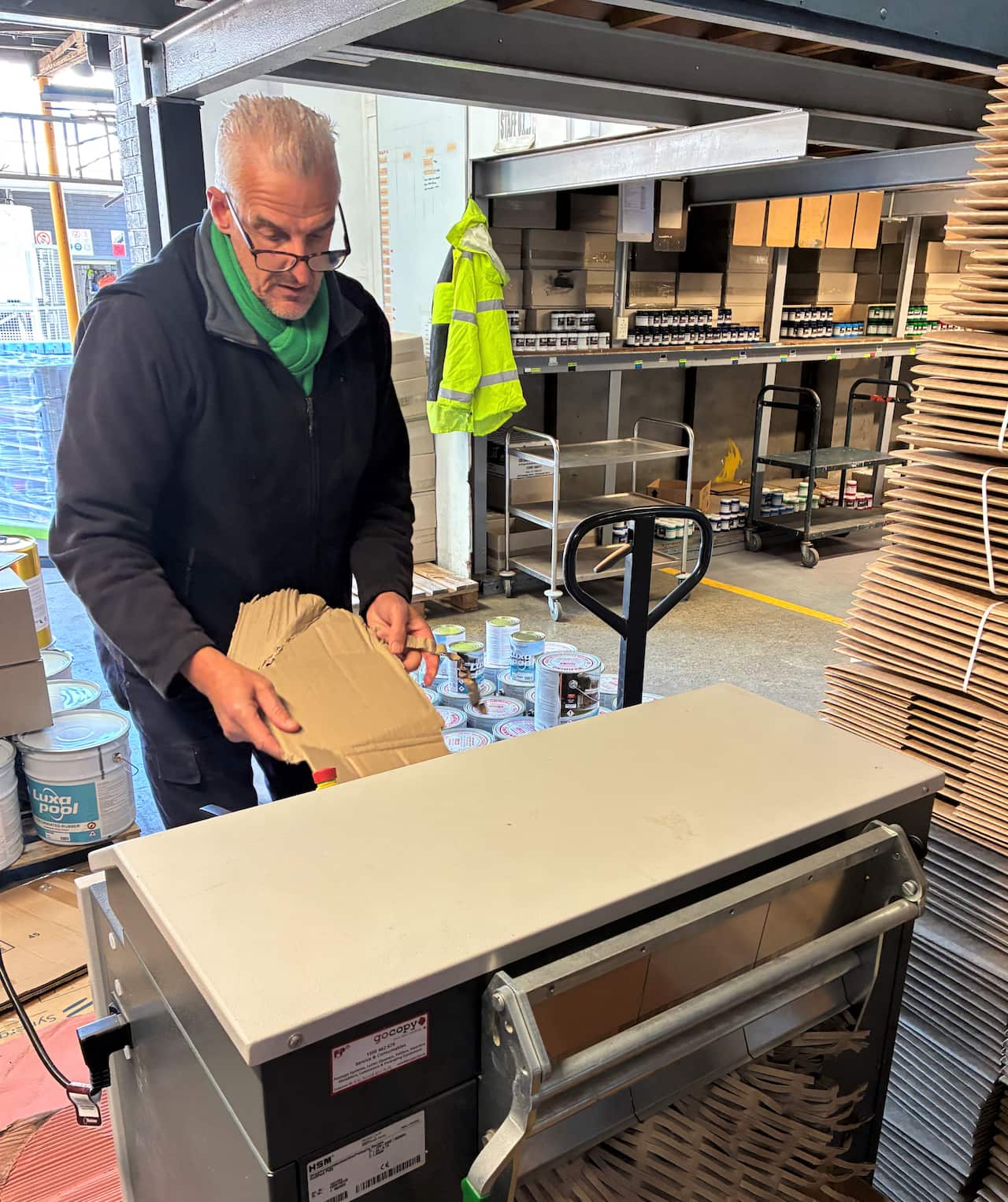
A man in a grey sweater feeds a cardboard panel into a machine.

David Stuart has implemented sustainable changes to his paint business, including the installation of a mega-shredder. Source: SBS / Sandra Fulloon

“We also bought a mega shredder. So, a lot of the cardboard that we had previously sent out to be recycled, we can now use on-site and give it a second life,” Stuart said.

He said switching to LED lighting is “something that any company can do at surprisingly little cost”.

“We’re now saving somewhere between $35,000 and $50,000 a year every year. That’s baked in!” he said.

Not a one-size-fits-all solution

However, going solar isn’t feasible for every small business, according to Matthew Addison, chair of the Council of Small Business Organisations Australia (COSBOA).
“If a business is in the right situation, they can look at putting solar panels and a battery in,” he said.
“Of the 2.5 million small businesses in Australia, 1.5 million are sole traders.”
“They don’t necessarily have the time or the financial capacity to invest in solar panels or a big battery.

“So for them [power] bill comparison may be a better option.”
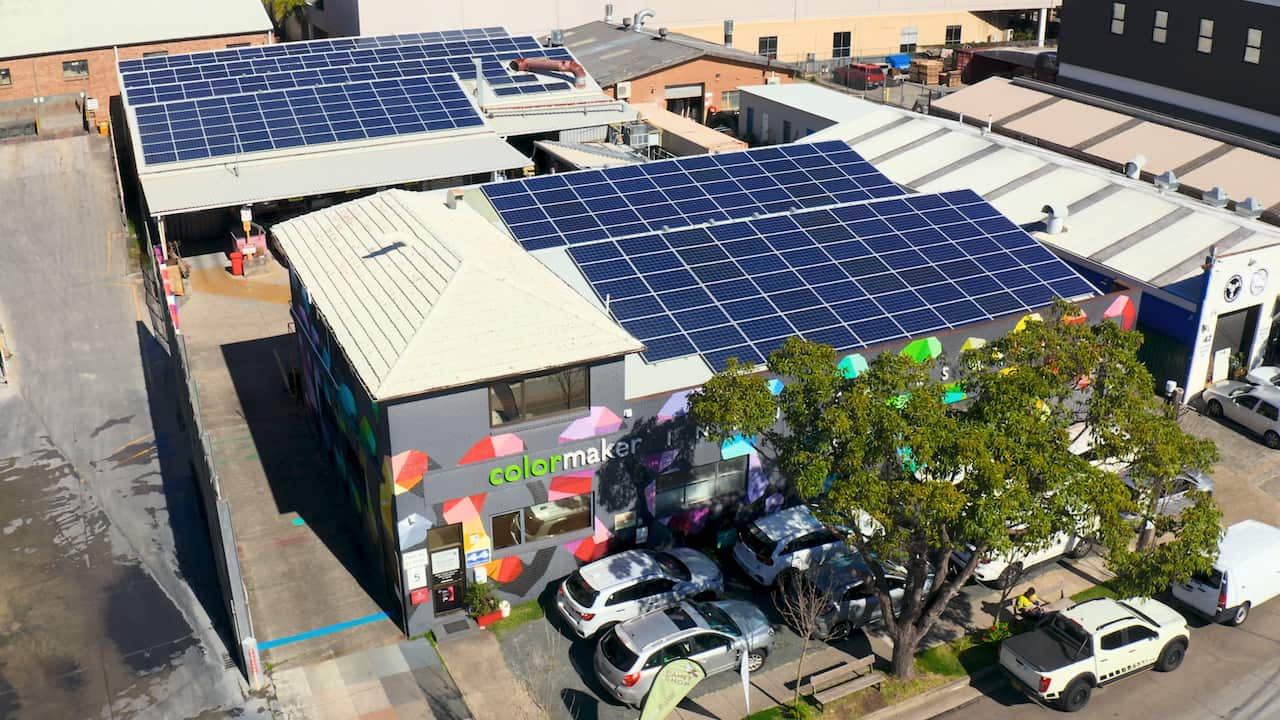
An aerial photo of a factory with solar panels on the roof.

Colormaker Industries rooftop solar array. COSBOA says solar may not suit all businesses. Source: SBS / Spencer Austad

However, Addison agrees with ACCI that ongoing economic pressures are testing small business owners “like never before”.

COSBOA’s recent report, conducted in collaboration with Commonwealth Bank Australia, surveyed 841 small business owners and found some improvement in business confidence.
However, it also revealed that many owners are working harder than ever to keep up with rising costs.
The report found 25 per cent are regularly dipping into their personal savings to stay afloat, while 64 per cent report lower profits than last year.

“Almost three-quarters of those surveyed also expect costs to increase again over the next 12 months,” Addison said.

Turning a profit amid rising costs

Small businesses are eligible for $150 in energy bill relief through two $75 quarterly instalments, automatically applied to electricity bills from mid-2025 to the end of the year.
But with profits under pressure, Stuart urged small business owners to innovate and save.
“As an Australian manufacturer, we were trying hard to compete on a world stage. However, rising power prices were taking money out of the bottom line, making our company far less competitive,” he said.
His Sydney factory has improved both profits and sustainability, he said, by investing in battery storage.

“Our big battery is a game changer. It’s an Australian innovation at its finest, and I’m absolutely passionate about it,” he said.
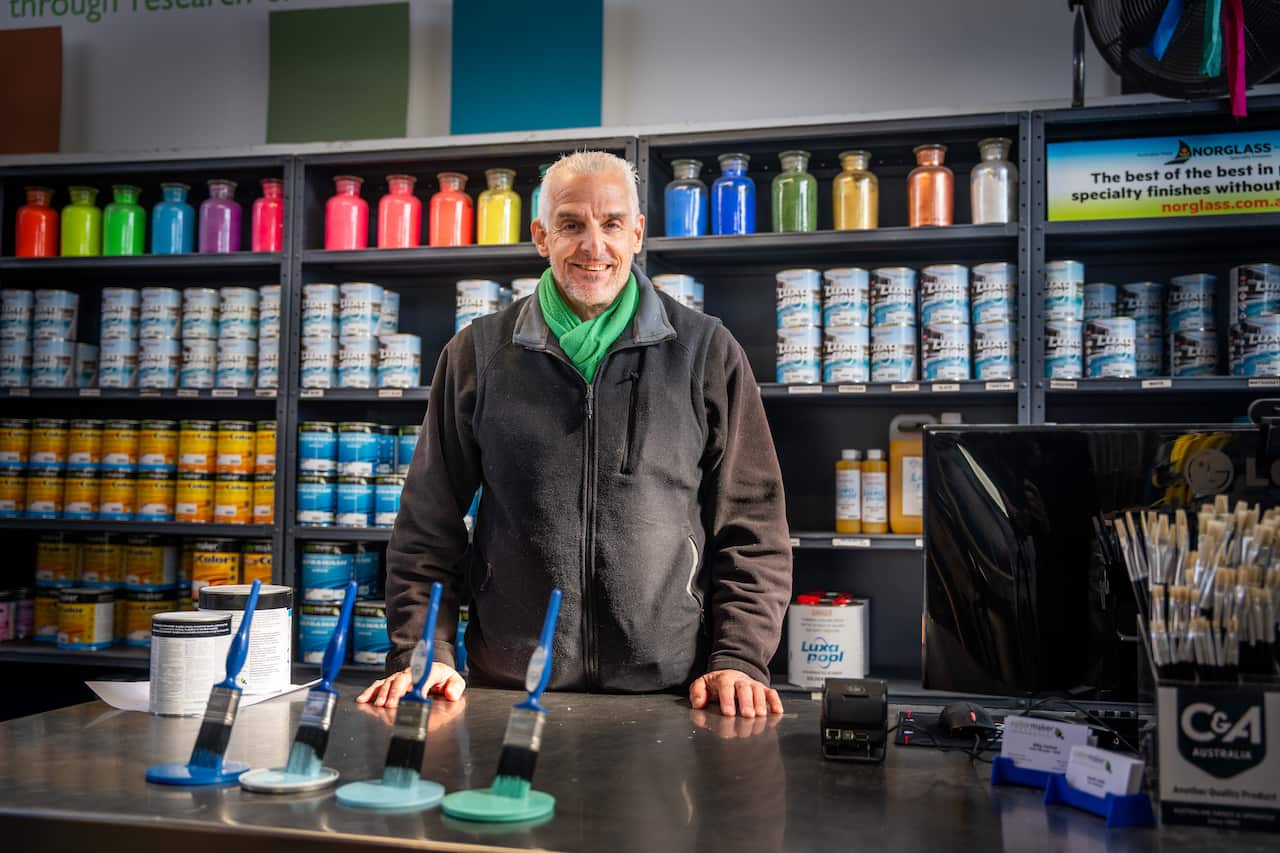
A man in a grey sweater stands at a counter in front of shelves of paint.

David Stuart said his paint business has improved both profits and sustainability by investing in battery storage. Source: SBS / Spencer Austad

Industry advocates report sales of big batteries are rising as upfront costs fall — by around 20 per cent last year alone.

Climate Council’s Greg Bourne said: “Initially, the cost of batteries was too high and the payback period didn’t really work.”
“However, that crossover point has passed and there are many more batteries available, whether it be at the residential level or at the small business level.”
Battery storage capacity has also increased over the past three years to more than three gigawatts, Bourne said.
“Australians can collectively save more than $4 billion on their power bills every year if we install two million more batteries in our homes and businesses by 2030,” he said.
“Pairing a battery with rooftop solar almost doubles savings, up to $2,300 less per year on power bills for the average household, compared to $1,500 in savings with solar only.”
Despite this potential, Bourne said only 8 per cent of the four million Australian households with solar currently use a battery to store excess energy.
A battery has helped Stuart to cut running costs.
With business failure rates forecast to remain above 5 per cent over the next year, he offers this advice:
“You don’t need a big budget to innovate.
“You just start where you can, measure the impact and go from there.”

Share this @internewscast.com
You May Also Like
Sydney to swelter through more heatwave conditions as nine regions face total fire bans

Sydney Braces for Intense Heatwave as Total Fire Bans Implemented Across Nine Regions

Authorities are on alert with extreme fire danger forecast across a large…
Aussies paying more for private health insurance and getting less

Australians Face Rising Costs and Diminishing Returns in Private Health Insurance

Australians are currently experiencing increased costs for private health insurance while receiving…
Bloodied man screams for help after alleged stabbing in Logan

Alleged Stabbing Shocks Logan: Bloodied Victim’s Desperate Cries for Help

A 35-year-old man has been charged with attempted murder after allegedly stabbing…

Australia Imposes Sanctions on Key Taliban Leaders Amid Growing Concerns

Top Taliban officials have been sanctioned and banned from travelling to Australia…
Bevan Spencer von Einem's lifeless body was carried away from prison.

Justice Served: Infamous Child Killer Bevan Spencer von Einem Dies Behind Bars

Bevan Spencer von Einem, a notorious convicted child murderer, passed away at…

FIFA Peace Prize: Unveiling the Controversy Behind Donald Trump’s Historic Selection

The draw for the 2026 World Cup took place in Washington on…

FIFA World Cup 2026 Draw: Australia Set to Challenge Host Nation United States in Group Revelations

The 2026 FIFA World Cup draw was as dramatic as the Andrea…

Leading Indigenous Child Advocate Criticizes New Victorian Youth Crime Legislation as ‘Unjust

The nation’s inaugural Commissioner for Aboriginal and Torres Strait Islander Children says…
Bevan Spencer Von Einem, guilty of the murder of 15yr Richard Kelvin.

Convicted Child Killer Bevan Spencer von Einem Passes Away in Prison

Bevan Spencer von Einem, a convicted murderer from South Australia, has passed…

Putin Escalates Tensions with Strong Donbas Threat, Jeopardizing Peace Deal Negotiations

Russian President Vladimir Putin said in an interview published on Thursday that…

Perth Airport Incident: Man Faces Charges for Disorderly and Aggressive Behavior

A man from Western Australia is scheduled to appear in court today…

Trump Administration Urges Strategic Shift: Cultivating European Resistance to Current Policies

The United States will reassert its dominance in the Western hemisphere, build…