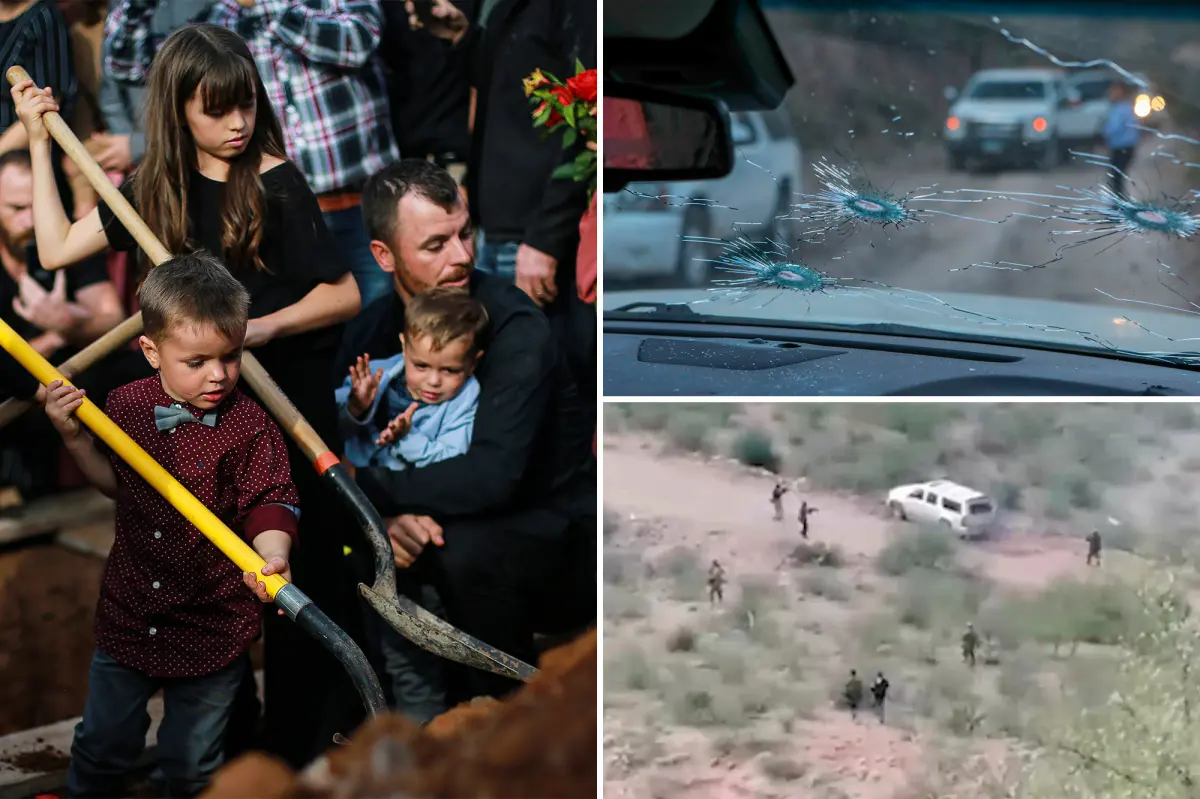
Almost seven years after cartel gunmen slaughtered nine Mormon mothers and children in northern Mexico, not a single person has been convicted of murder in the case — a painful symbol, one bereaved father and grandfather told The Post, of how deeply Mexico’s justice system has failed his family.
The victims — three women and six children — were killed on Nov. 4, 2019, after armed men attacked their SUVs along a remote road near Bavispe, Sonora, roughly 70 miles south of the US-Mexico border.
Rhonita Miller and Christina Langford had been traveling with their children to a wedding in Colonia LeBarón, while Dawna Ray Langford was driving with her children to reunite with her husband in Arizona, when members of La Línea, the enforcement arm of the Juárez Cartel, unleashed gunfire on the three-vehicle convoy. The attackers later torched the vehicle carrying Miller and her four children.
Dawna Ray Langford, two of her children, and Christina Langford were also murdered in the ambush. Seven of Dawna’s children survived, as did Christina’s 7-month-old baby.
Authorities have said roughly 100 people took part in the horrifying assault, which investigators believe was triggered by a deadly mistake: the gunmen allegedly thought the convoy belonged to Los Salazar, a rival criminal group.
But Adrián LeBarón, Miller’s father, told The Post he struggles to believe Mexico’s courts will deliver meaningful punishment — or any murder convictions at all — for the massacre.
“I’m not frustrated, because — as the saying goes — expectations breed frustration,” LeBarón said.
“I still don’t understand why that tragedy had to happen. Damn it, what the hell was going on in Mexico for things like that to happen?” he said. “For me, it’s a wake-up call to those realities, and the fact that these things keep happening tells me we’re screwed. There are people accused, but no one has been sentenced (on murder charges).”
So far, prosecutors have secured only two convictions tied to the massacre — neither for the murders. One cartel member received a 12-year sentence for organized crime and weapons possession, while a former public security chief was sentenced to 15 years for organized crime.
Jacinto “El Monster” Galindo, a former police officer and soldier, remains the only suspect who has been indicted on murder charges.
“I don’t have confidence in our justice system; I have more faith in the US system,” LeBarón said.
In the weeks after the killings, the grieving family went to Washington, D.C., and urged President Trump to classify Mexican drug cartels as terrorist organizations.
Less than a month into Trump’s second term, six Mexican cartels were designated as Foreign Terrorist Organizations (FTO).
The Juárez Cartel was not on the initial list but was added in July, which meant that the US could go after La Línea and extradite members to the US to be tried for crimes they have committed.
La Línea was formed by retired and active-duty local and state cops in 2008 as the Juárez Cartel’s chief enforcement unit in Ciudad Juárez, a city that has since been ravaged by their battles with rival cartels.
But Mexican authorities recently made moves against the deadly group.
La Línea regional leader Epifanio Villa and his son, Alejandro Villa, were arrested by the military Tuesday in Manuel Ojinaga, Chihuahua, less than four miles from Presidio, Texas, for charges unrelated to the 2019 killings.
Villa allegedly is in charge overseeing the production and trafficking of drugs for the street gang in the border city. He is also accused of leading the gang’s migrant trafficking operation from Mexico to the United States.
LeBarón believes Villa’s arrest was possible because of all that Trump and Secretary of State Marco Rubio had done in designating the Juárez Cartel a terrorist organization.
“When the United States takes the step of designating them as FTOs – now we’re talking,” LeBarón said.


