The Federal Reserve has increased interest rates for the first time in almost three years, stepping up its campaign to bring persistent inflation under control.
The Federal Open Market Committee, the Fed’s rate-setting panel, voted to lift its benchmark federal funds target by 0.25 percentage points, taking the range to between 3.75 percent and 4 percent.
The move marked the central bank’s first rate increase since July 2023, although financial markets had largely priced it in. Traders had assigned the decision an estimated 95 percent chance of going ahead.
“Investors were overwhelmingly expecting this hike, so the announcement itself was no shock,” former Goldman Sachs analyst Nic Puckrin told Our News Outlet. “The real issue is whether it stands alone or signals a longer series of increases.”
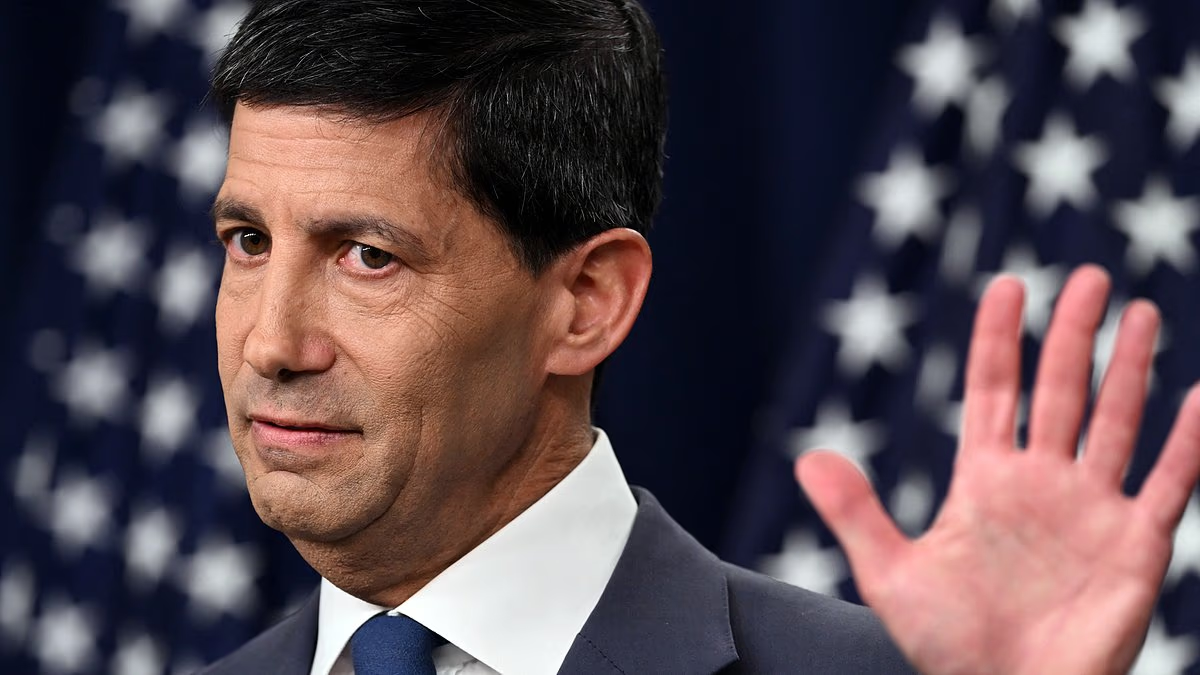
The vote was unanimous, with new Fed chair Kevin Warsh and his fellow policymakers aligned on the need to respond to elevated prices and reinforce confidence in the central bank’s credibility.
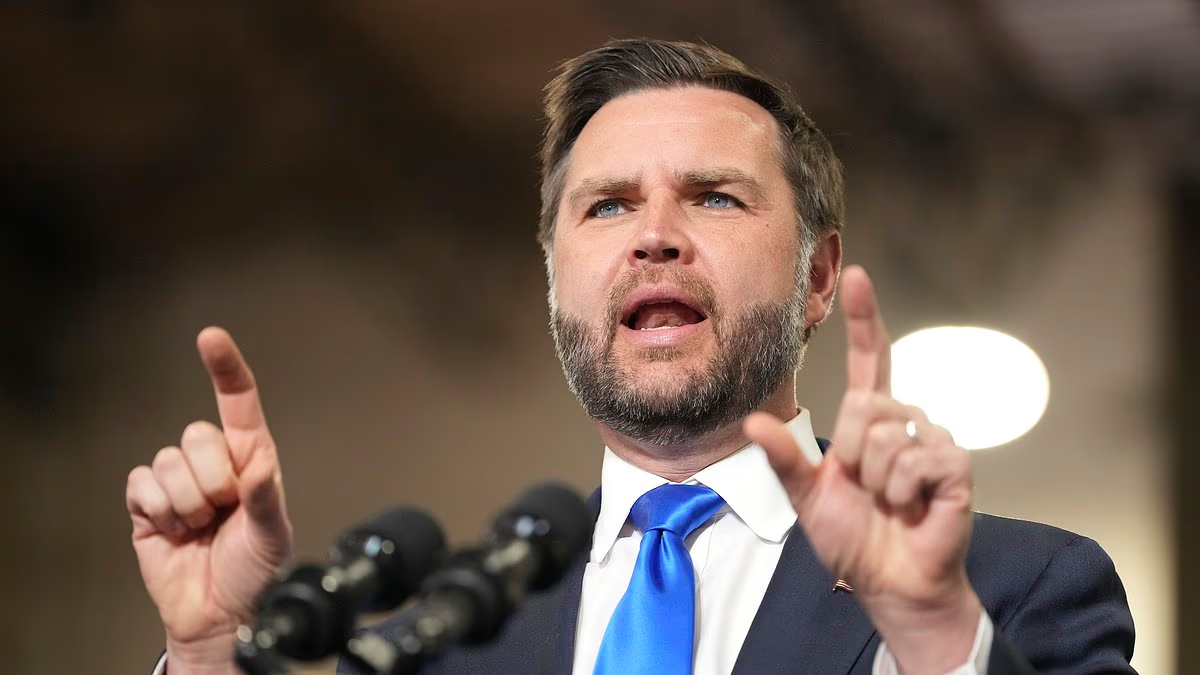
President Donald Trump has repeatedly called for immediate rate cuts, while Warsh has pledged that the Federal Reserve will remain “strictly independent” during his tenure.
Inflationary pressure in the US has intensified. Consumer prices have risen at an annual rate of 3.4 percent in recent months, while a separate wholesale-price gauge climbed as high as 5.4 percent last month.
Rising energy costs are adding to the pressure. As conflict in the Middle East escalates, crude oil has moved back above $100 a barrel for the first time since May.
“The straightforward reality is that inflation remains too high, and it has stayed there for too long,” Warsh said during a press conference following the meeting.

The rate decision was unanimous, with Fed chair Kevin Warsh and fellow policymakers agreeing that action was needed to tackle inflation

Donald Trump has repeatedly pressed the Fed to cut rates, but Kevin Warsh says the central bank will remain “strictly independent” under his leadership
AAA puts the nationwide average gasoline price at about $4.37 a gallon, while motorists in several western states are paying more than $5. Diesel prices have also reached a record, averaging $6.27 per gallon across the country.
The prospect of an expanding conflict, including attacks on Saudi Arabia and continued uncertainty surrounding US-Iran relations, has heightened concern about the impact of even more expensive fuel on American households.
“Inflation is still the Fed’s central concern,” LoanDepot chief economist Jeff DerGurahian told Our News Outlet. “Unless the labor market deteriorates substantially—for example, through a sustained rise in unemployment claims—employment figures are unlikely to shift policymakers’ focus away from prices.”
Attention now turns to the bigger question facing markets and households: how many further interest rate increases will be needed to bring inflation back down?
‘A single rate cut is not going to placate the bond market, as we see multiple meetings pricing higher than 50 percent probability for hikes currently,’ Byron Anderson, head of fixed income at Laffer Tengler Investments, told Our News Outlet.
Anderson emphasized that since Warsh has gotten rid of forward-looking guidance, there is a great deal of risk and uncertainty surrounding what the central bank might do next.
‘Fed Chair Warsh came out of the gate pushing to establish his credibility – and now he’s painted himself into a corner where really the only way to regain credibility is not one hike or a series of hikes, but to remove the market’s inflation worries,’ said Christian Hoffmann, head of fixed income at Thornburg Investment Management.
And that suggest we are at the very beginning of what could be a long period of higher interest rates.
In materials released with the decision, 16 out of 18 top Fed officials indicated they expect at least one more rate hikes this year, while four see two more rate hikes.
‘Another hike is now the base case, with a further move possible if inflation remains stubborn,’ eToro global market strategist Lale Akoner told Our News Outlet.
Consumers will feel the impact through higher credit card and auto loan costs, potentially within months.