
The former Ofsted chief has warned that a “big slice” of degree courses are consuming young people’s time without delivering any meaningful benefits.
Baroness Spielman, now the shadow work and pensions minister, said too many students were choosing degrees that did little to improve their long-term prospects.
The Conservative peer said most university courses offer value for money, but argued that a significant minority provide “no economic return”.
She also described student debt as an “enormous, threatening sword over young people’s heads” and suggested that many students were underoccupied during their time at university.
Baroness Spielman became known for her forthright approach to educational standards while leading Ofsted between 2017 and 2023.
Her remarks, reported by Times Higher Education magazine after a fringe event at the Tory party conference, come amid growing debate over student debt and rising youth unemployment.
Addressing party activists, she said: “It’s clear that too big a slice of degree courses essentially eat three years of a young person’s productive life for no real benefits.
“So we’re actually short-changing them by encouraging them to do those [degrees].”

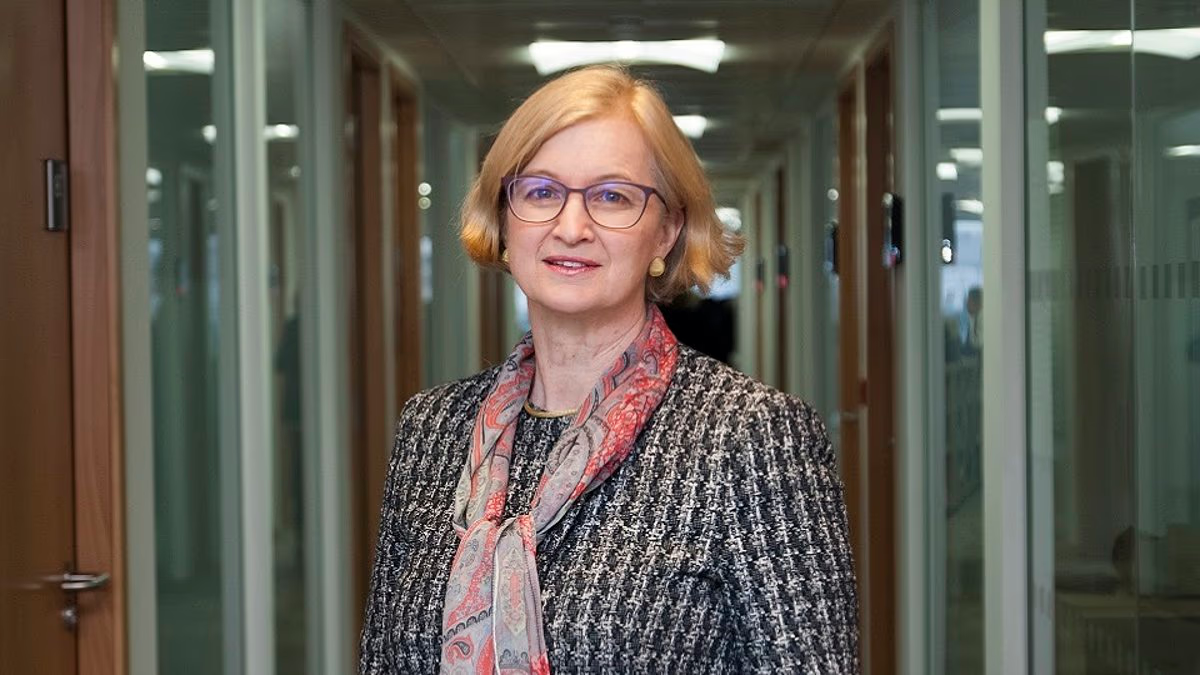
Amanda Spielman, the former Ofsted chief, has warned that a “big slice” of degree courses are consuming young people’s lives without delivering “real benefits”
Baroness Spielman cited a 2020 report by the Institute for Fiscal Studies, which found that 30 per cent of graduates receive “negative total returns” from their degrees.
The report measured total returns by assessing the combined effect of a degree on earnings for both the graduate and the Treasury.
It found that many subjects delivered “negative or near-zero average total returns”, including creative arts, languages, philosophy, physical sciences and biological sciences.
She further argued that many university courses did not occupy students sufficiently, while opportunities for part-time work were often limited.
MORE STORY: Canada Delays Medically Assisted Death for Mental Illness
“It’s blindingly clear that especially in the humanities, a lot of students basically spend three years, to far too great an extent, kicking their heels, going to a few hours of lectures and classes a week, writing one essay every few weeks, but really just not doing enough and having far too much time to get bored and lonely,” she said.
The peer urged policymakers to “think quite fundamentally about the design of mass higher education”.
The debate on the future of higher education was organised by the Policy Institute at King’s College London.
Official figures published in May showed that the number of 16- to 24-year-olds who were neither working nor studying had exceeded one million for the first time since 2013. The total reached 1.01 million in the three months to March.
Labour is also facing pressure to reverse its decision to freeze the earnings threshold for repaying Plan 2 student loans for three years, a move that would leave many graduates paying more.
Alison Wolf, a crossbench peer and former adviser on skills to a prime minister, also took part in the panel discussion.
She accused the Government of having an “obsession with qualifications” over plans to introduce vocational GCSEs.
She said: ‘GCSEs in plumbing? I don’t think so.’
The economist argued in favour of less centralised control over skills-focused training and proposed more industry-developed teaching.
A Department for Education spokesman said: ‘Every young person should be able to see a route to success, whatever their talents or ambitions. Our reforms will deliver high-quality technical and vocational education and prestigious qualifications, alongside academic achievement, to give more young people the chance to leave education with the skills, confidence and opportunities they need to thrive in today’s economy and the careers of the future.
‘University is still a good route for many and unlocks a range of careers with graduates expected to be on average around £100,000 better off over their lifetime. Graduates are also more likely to find and stay in full-time employment, and female graduates are more likely to enter full-time work.
‘But we know there are some courses that don’t deliver the outcomes promised to students, and we’re cracking down on poor quality courses.’