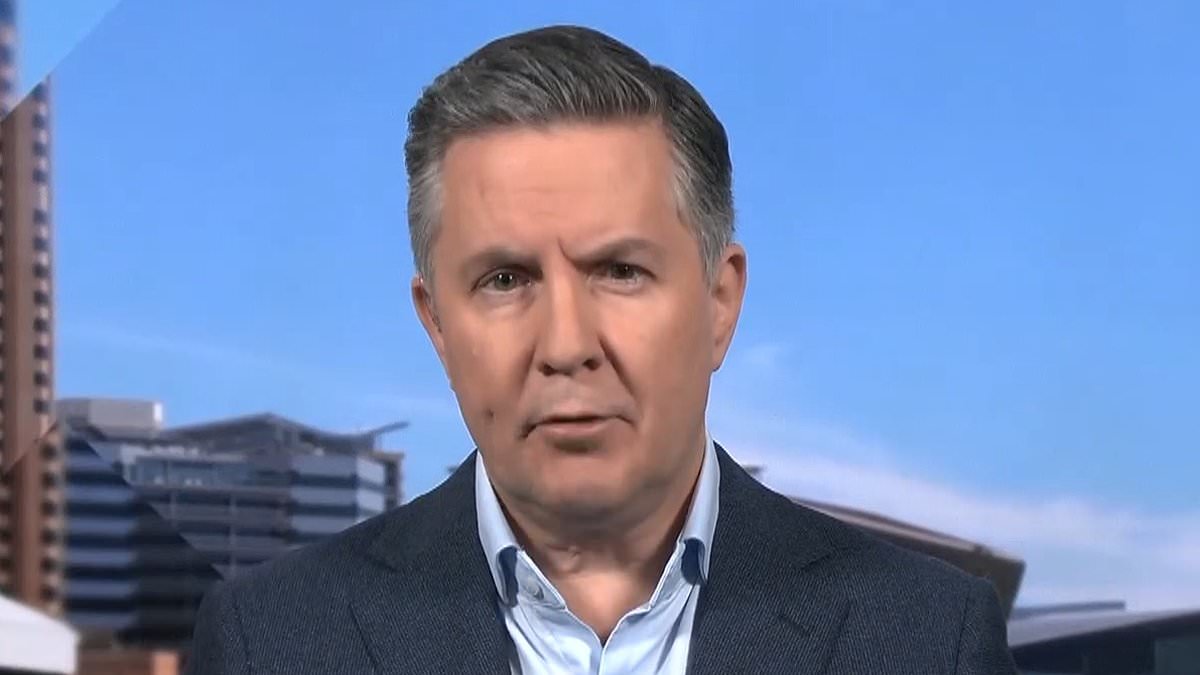

Health Minister Mark Butler has stood by major changes to the National Disability Insurance Scheme, despite stark warnings that the overhaul could put the lives of disabled Australians at risk.
Under the proposed reforms, around 160,000 people would be moved off the NDIS and redirected to alternative support services run by state governments, in a bid to rein in the rising cost of the $56 billion program.
In a submission to a Senate inquiry reviewing the package this week, disability ministers from states and territories argued their systems were not ready to absorb the shift, warning that many current participants could be left without adequate support.
The inquiry also received powerful testimony from disability advocate Hannah Diviney, who described the potential consequences of the legislation in deeply personal and alarming terms.
“You may cast me as a frightened little girl, but hear this: when disabled people die as a direct result of this bill — and they will — their blood will be on your hands,” she said.
“If the bill is passed into law, the fallout will be severe, widespread and almost impossible to reverse.”
But Butler said on Sunday that the government has no choice but to act to secure the scheme’s future.
‘The NDIS has got way off track. It’s grown far too big, it costs too much, and it’s become a honeypot for shonks and rorters,’ he told ABC Insiders host David Speers.
Health Minister Mark Butler (pictured) has defended NDIS changes which would see up to 160,000 people removed
Advocate Hannah Diviney (pictured) warned a Senate inquiry this week that people would ‘die’ from the overhaul
‘[The NDIS has] transformed the lives of hundreds of thousands of Australians for the better and I completely understand why they’re desperately concerned to hang on to that reform.
‘I’m desperately concerned to do that as well. I want to reassure them this will still be the biggest social program Australia has outside the aged pension.’
Butler also addressed the criticism from state and territory disability ministers, suggesting that they were exaggerating.
‘There’s a bit of posturing going on through this process,’ he said.
‘That submission was an extraordinary submission, given the clear commitments that premiers signed on to a few months ago, in exchange for which the Commonwealth has made available $25billion in additional funding to hospitals.’
Butler said details for some policies are unresolved, including who will decide whether a person has exhausted all treatment options before being allowed on the NDIS.
‘That will be the subject of further negotiation and advice in the months going forward,’ he said.
Speers pressed Butler on this, asking: ‘Will some people then have to try riskier treatments?’
ABC Insiders host David Speers asked whether Australians would be forced to try risky treatments before being allowed on the NDIS
Butler rejected this: ‘We wouldn’t expect them to undertake psychotropic treatment that would effectively amount to chemical restraint.’
Labor has said it hopes to have the changes pass the upper house before parliament rises for the winter break on July 2.
The federal government’s Thriving Kids program will inject $4 billion to support children under nine years old with developmental delays or autism, according to the Federal Budget.
The program, which will be rolled out from October, will deliver evidence-based support through allied health and community services.
It is part of wider reforms after a 2023 review of the NDIS recommended more support outside the scheme.
States and territories, which withdrew many disability services when the NDIS was launched, have agreed to develop new ‘foundational supports’ for people with lower needs.
Earlier this year, all jurisdictions except Queensland signed on to their own versions of the Thriving Kids model, in exchange for increased Commonwealth hospital funding.
‘The states didn’t sign up to cutting the growth rate of the NDIS down to two per cent, did they?’ Speers asked.

Butler said the government remains confident the changes will be in place from October
Butler insisted national cabinet had agreed to rein in the scheme and restore its original purpose, but admitted ‘a lot of work’ remains to build replacement services.
Pressed on whether the government would slow changes if those supports weren’t in place, Butler refused to commit.
‘We’re not going to leave people without support. But I’m not going to raise the white flag on those time frames now,’ he said.
The Senate inquiry will hand down its final report on the changes on Tuesday.
Opposition frontbencher Phillip Thompson, whose daughter is on the NDIS, said the government’s focus had been too heavily weighted on the dollar amount being saved.
‘They really make you feel like your loved one is an inconvenient dollar figure on the government’s Budget bottom line,’ he told Sky News.


