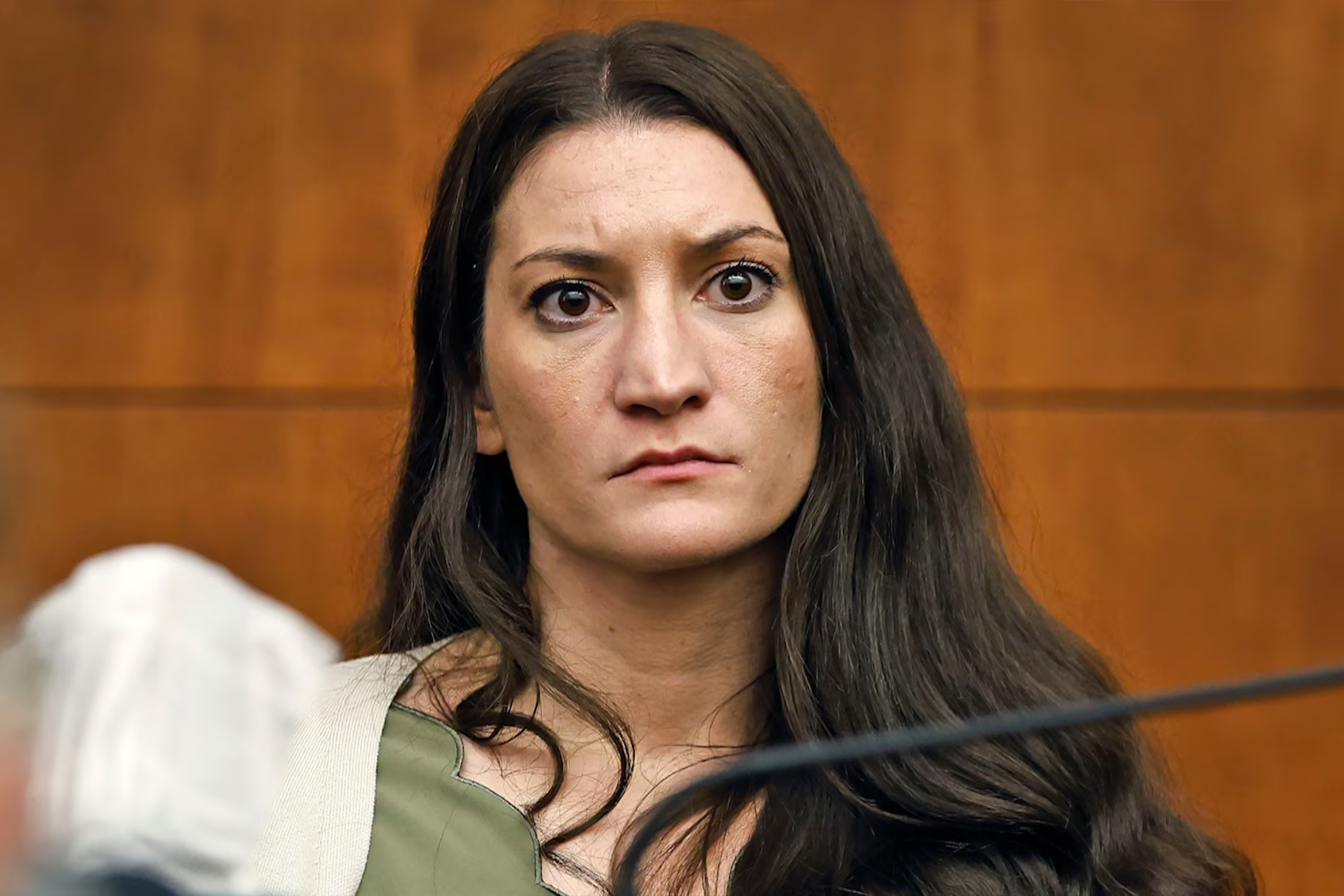

Jurors in Lindsay Clancy’s murder trial have been sent back to continue deliberations after informing the judge they were unable to agree on a unanimous verdict.
The 12-member jury told Judge William Sullivan on Tuesday, Sept. 1, that deliberations had reached an impasse on their fourth day, according to courtroom video.
“I know that this was a long trial. I know there were over 80 witnesses, there were over 300 exhibits,” Sullivan told jurors. “But because of that, I’m going to ask you to go back out, keeping in mind all the instructions that I gave you. To go out and to continue your deliberations at this time.”
The judge then reiterated his direction, adding, “I’d ask you to resume your deliberations at this time.”
Neither prosecutors nor Clancy’s defense attorney, Kevin Reddington, raised an objection to Sullivan’s instruction.
In Massachusetts, judges are permitted to direct a deadlocked jury to keep deliberating up to two times unless jurors consent to further instructions, NBC News reported. If no verdict is reached, Sullivan could declare a mistrial, leaving prosecutors to determine whether to retry the case.
Clancy faces three counts of first-degree murder in the 2023 deaths of her three children with ex-husband Patrick Clancy: 5-year-old Cora, 3-year-old Dawson and 8-month-old Callan.
Her defense team has not contested that Clancy caused the children’s deaths. Instead, her attorneys argue she was suffering from postpartum psychosis at the time and should not be held criminally responsible.
Prosecutors, meanwhile, have argued that Clancy acted intentionally and understood that what she was doing was wrong. The jury must decide whether prosecutors proved both the murder charges and Clancy’s criminal responsibility beyond a reasonable doubt.
Reddington previously told reporters that Clancy was feeling “very sad, scared” and “nervous” as the jury weighed the evidence.
The jury, nine women and three men, has to “weigh all of this evidence,” he said. “I believe that the government ultimately has not proven their case.”
If convicted of first-degree murder, Clancy faces life in prison without the possibility of parole. If she is found not guilty because of a lack of criminal responsibility, the court could order her hospitalized for evaluation and begin a civil commitment process.
The jury will return to court to continue deliberations.