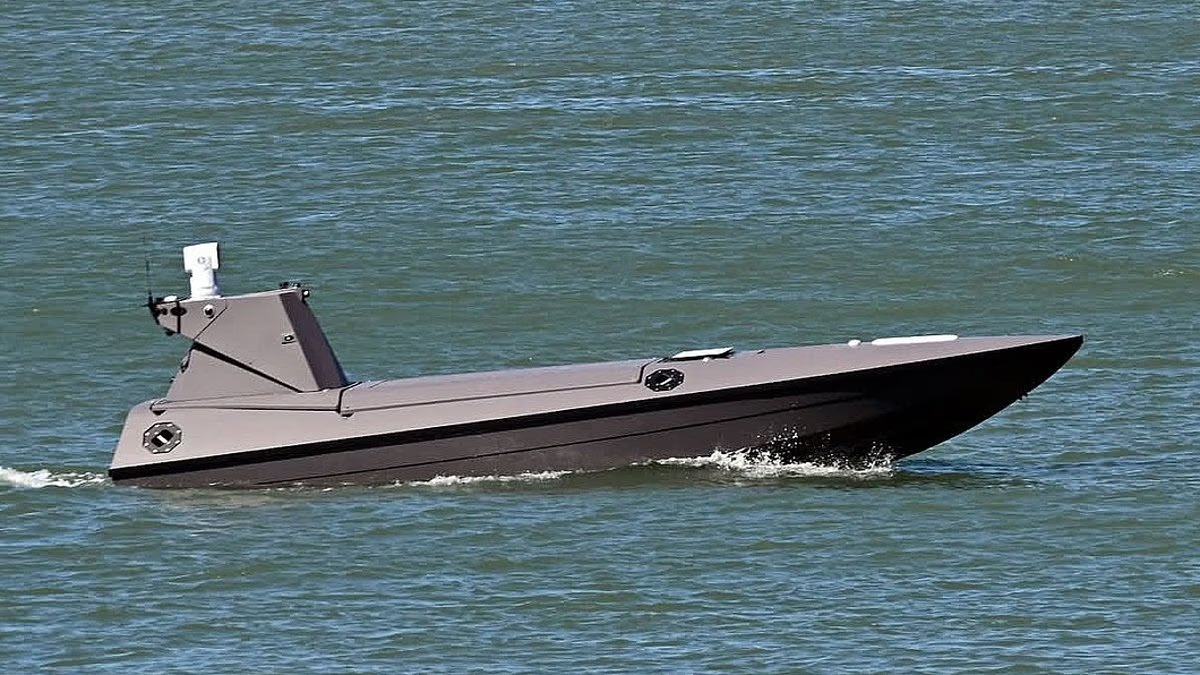

Surveillance drones deployed by Britain’s elite special forces were equipped with cameras containing Chinese-manufactured parts that were quietly transmitting data to a location in China.
The K3 Scout drones, used by Royal Marines, were discovered sending what are known as “heartbeat” signals to a Chinese IP address.
Those routine electronic messages are typically used to confirm to a remote system that the cameras are switched on, connected and functioning as expected.
The finding has sparked national security alarm inside government and prompted the Ministry of Defence to disable the cameras’ ability to connect to the internet.
Defence officials maintain that there is currently no proof any classified military data or Ministry of Defence networks were accessed, compromised or sent abroad.
However, the disclosure has intensified scrutiny of the UK’s defence supply chain and renewed concerns over whether Chinese-linked technology has entered sensitive equipment used by special forces.
The drone fleet, worth £12 million, has been operational since March and was provided by British defence firm Kraken Technology Group.
Kraken obtained the cameras through an external supplier, which had reportedly given assurances that the equipment met security requirements.

The K3 Scout drones, operated by Royal Marines, were found to be transmitting so-called ‘heartbeat’ communications to an IP address in China

Defence Secretary Wes Streeting poses with outgoing Chief of Joint Operations, Lieutenant General Nicholas Perry (left), and incoming Chief of Joint Operations, Air Marshal Allan Marshall (right)
An investigation subsequently discovered that the cameras contained components manufactured in China and were communicating with an IP address in the country.
The incident was considered serious enough to prompt concerns over the potential exposure of personnel at the Special Boat Service headquarters in Poole, Dorset.
There are also fears that the cameras may have been operating in the vicinity of sensitive meetings involving senior special forces personnel.
Particular concern has been raised over reports that the cameras could remain active even when the drones themselves had been switched off.
A defence source familiar with the matter told the Telegraph the drones had been used during preparations for a potential British defence package designed to help protect freedom of navigation through the Strait of Hormuz.
The source described the discovery as a serious procurement failure, saying confidence in the platform had been lost.
The incident is a major blow to Project Beehive, the Royal Navy programme aimed at integrating unmanned vessels with conventional warships.
The K3 Scouts form part of the Navy’s surface flotilla and are operated by the Coastal Forces Squadron and 47 Commando Royal Marines.
The unmanned vessels are intended to give British forces greater surveillance and war-fighting capabilities while reducing the risks to personnel.
The K3 Scout is capable of carrying a payload of up to 600kg and can operate continuously for as long as 30 days.
The system has also been acquired by US Special Operations Command and has taken part in Nato exercises and trials in the Baltic.
The discovery comes as Britain faces growing warnings over the potential security risks posed by China’s dominance of global technology and manufacturing supply chains.

Alicia Kearns, the shadow security minister, called for urgent scrutiny of military equipment containing components sourced from China
Join the discussion
How should Britain protect its military from hidden foreign tech threats in our supply chains?
Alicia Kearns, Tory security spokesman, said: ‘If we cannot say with confidence what is inside our own military equipment, we cannot say it is ours, or that we are sovereign.’
She called for urgent scrutiny of military equipment containing components sourced from China, warning that the incident demonstrated the risks posed by hidden vulnerabilities within apparently British systems.
The concerns come amid a wider series of warnings over Chinese technology.
Last year, MI5 warned MPs that Chinese intelligence services were making persistent efforts to interfere with and influence Parliament, including through professional networking platforms used to gather information.
The warning followed the collapse of a case involving two men accused of spying for China, after prosecutors faced difficulties in establishing the required legal classification of Beijing as an enemy state.
Britain has previously taken action against Chinese technology on national security grounds.
In 2020, the then Conservative government ordered the removal of Huawei equipment from the UK’s 5G network after security concerns were raised over the company’s links to China and the potential risks posed by Beijing’s national security laws.
More recently, vulnerabilities in military supply chains have led the MoD to remove Chinese-made hardware and cameras from sensitive locations.
The Labour Government has pursued a diplomatic reset with Beijing, including high-level visits aimed at improving relations and securing new trade opportunities.
Earlier this year, ministers approved plans for a controversial Chinese super-embassy at Royal Mint Court in London, despite concerns over the site’s proximity to sensitive communications infrastructure.
The case also comes shortly after British citizen and Hong Kong pro-democracy media tycoon Jimmy Lai was sentenced to 20 years in prison under the territory’s national security laws.
The MoD said the vulnerability was identified during a routine cyber security assessment.
It said investigators found no evidence that MoD information or systems had been accessed, compromised or transmitted outside approved channels.
An MoD spokesman said: ‘Our assurance and testing processes are designed to identify and address potential vulnerabilities early, and we continue to undertake routine security activity across our systems and equipment.’
Kraken Technology Group said it was aware that some of the cameras used in its systems contained a small number of components originating outside Britain.
The company said it had carried out a full audit alongside the Royal Navy and was satisfied that no sensitive information had been shared outside authorised channels, adding that any potential vulnerabilities had been identified and closed.
The cameras had been described as NDAA-compliant, a US defence procurement designation intended to ensure equipment does not contain components from prohibited manufacturers.


