
Donald Trump celebrated a significant milestone towards achieving peace with Iran as the country’s leaders declared the full reopening of the Strait of Hormuz. This announcement follows a ceasefire agreement between Israel and Lebanon.
On Friday morning, Iran’s foreign minister took to social media to reveal that ‘all commercial vessels’ are now allowed to navigate through the vital oil passageway, marking its reopening after being closed for nearly a month.
Seyed Abbas Araghchi, in a social media post, stated, “Aligned with the Lebanon ceasefire, the Strait of Hormuz is now completely open to all commercial ships for the duration of the ceasefire, following the established route as outlined by the Islamic Republic of Iran’s Ports and Maritime Organisation.”
Shortly after this announcement, crude oil prices tumbled by 10%, settling at $82 per barrel. The strait is a crucial channel that facilitates nearly 20% of the world’s oil transport.
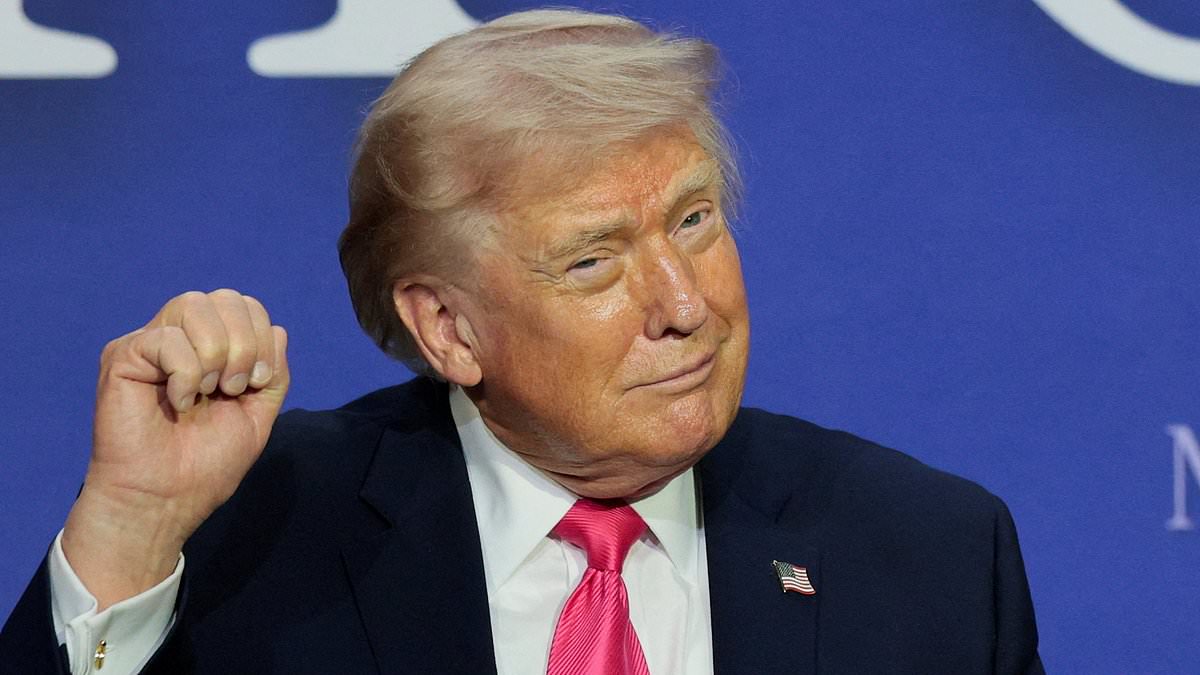
Trump, on Truth Social, expressed his gratitude towards the regime he once aimed to dismantle, posting, “IRAN HAS JUST ANNOUNCED THAT THE STRAIT OF IRAN IS FULLY OPEN AND READY FOR FULL PASSAGE. THANK YOU!”
He later noted that the U.S. naval blockade of the strait would continue “in full force” until Iran commits to a comprehensive peace agreement.
‘THE STRAIT OF HORMUZ IS COMPLETELY OPEN AND READY FOR BUSINESS AND FULL PASSAGE, BUT THE NAVAL BLOCKADE WILL REMAIN IN FULL FORCE AND EFFECT AS IT PERTAINS TO IRAN, ONLY, UNTIL SUCH TIME AS OUR TRANSACTION WITH IRAN IS 100% COMPLETE. THIS PROCESS SHOULD GO VERY QUICKLY IN THAT MOST OF THE POINTS ARE ALREADY NEGOTIATED,’ Trump wrote.
Iran had previously insisted the strait would only fully reopen if Israel agreed to a ceasefire in Lebanon, where Tehran-backed Hezbollah is active. On Thursday, Trump announced a 10-day ceasefire between Israel and Lebanon following a phone call with Benjamin Netanyahu.

Trump hailed a major step toward peace with Iran after the regime’s leadership declared the Strait of Hormuz ‘completely open’ following Israel ’s ceasefire with Lebanon

Iran had previously insisted the strait would only fully reopen if Israel agreed to a ceasefire in Lebanon, where Tehran-backed Hezbollah is active

The Strait of Hormuz is responsible for one-fifth of all global oil supply
After peace talks with the Islamic regime collapsed last weekend in Pakistan, the President launched a naval blockade of the strait. Iran had halted nearly all commercial transport through the passageway since the start of the war by deploying explosive suicide boats, drones, and mines.
Negotiations between the U.S. and Iran have picked up in recent days, with Washington weighing a proposal to release roughly $20 billion in frozen Iranian funds in exchange for Tehran surrendering its stockpile of enriched uranium, according to Axios.
‘Only announcements from President Trump or the White House — not anonymous sources — should be taken as fact,’ White House spokeswoman Anna Kelly said in response.
‘Productive conversations with Iran continue, but we will not negotiate via the press.’
Trump said Thursday that US and Iranian negotiators would likely meet this weekend for a second round of talks before a two week ceasefire approaches its expiration on Tuesday.
A source familiar with the mediation efforts said the talks will take place in Islamabad on Sunday.
Trump also told reporters on Thursday that Iran agreed to hand over highly enriched uranium he claims was buried following US airstrikes on key Iranian nuclear facilities last year.
There has been no confirmation from Iran, however, that it made this concession during talks with US officials last week.

US-Iran peace talks have progressed as Pakistan continues to act as a middle man in negotiations
Trump also noted he was willing to extend the temporary ceasefire beyond the April 21 deadline if peace talks progress.
Ensuring Iran cannot access their underground nuclear stockpiles, specifically the 450kg of 60 per cent enriched uranium, is a primary objective for the Trump administration.
Iran, meanwhile, is demanding full control over the Strait Hormuz, including the ability to tax foreign oil tankers.
Notably, the President referred to the waterway as the ‘Strait of Iran’ rather than the the Strait of Hormuz in his Truth Social post celebrating the opening.