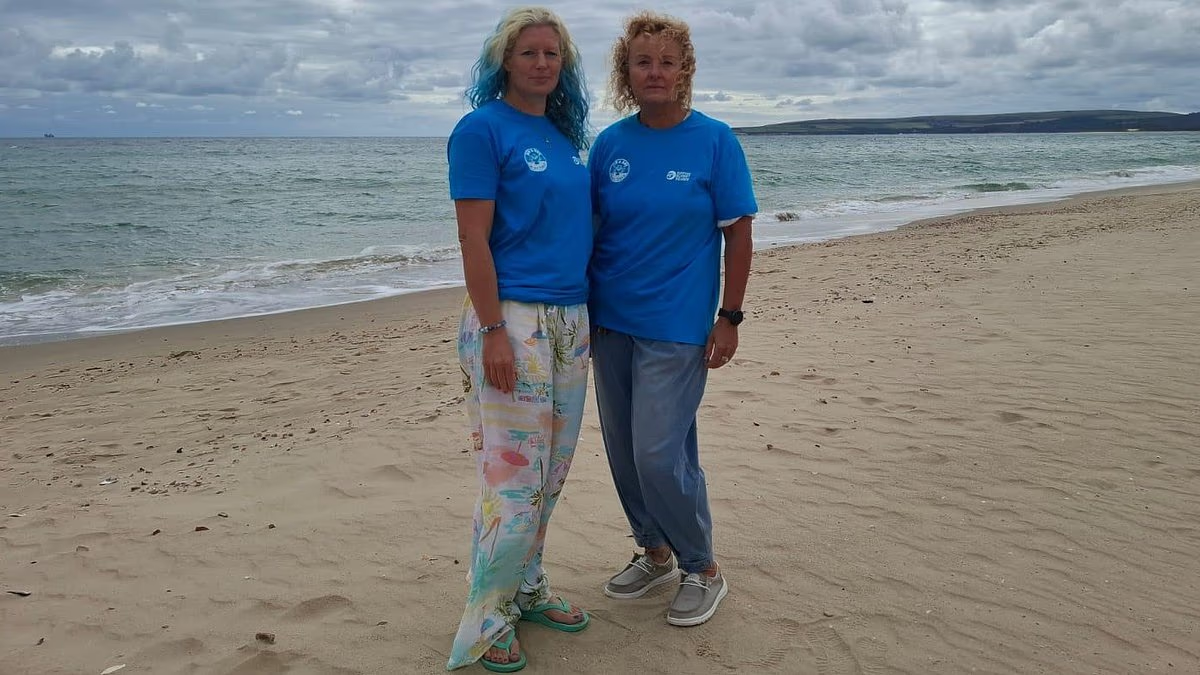

Swimmers in Sandbanks, the affluent coastal enclave in Dorset, were forced to call off their weekly sea swim after sewage was discharged into the water.
East Dorset Open Water Swimming Club has blamed Wessex Water for the pollution off Poole’s Blue Flag beach, following a period of heavy rainfall.
The club cancelled its regular event last Tuesday, warning that the contaminated water posed a “real risk” to swimmers’ health and safety.
Swimming instructor Elizabeth Mills said she was “furious” that water companies are allowed to release sewage near popular bathing and swimming locations.
She said: “We had to cancel our weekly East Dorset Open Water Swimming Club session to protect the safety of our swimmers.
“We received an alert through the Surfers Against Sewage app saying Wessex Water had discharged a significant amount of sewage at our swimming spot on Shore Road.
“When we arrived, there was brown sludge in the sea. We also saw one person swimming, but they stopped and got out of the water.
“It is a beautiful Blue Flag beach, and I find it disgusting that water companies are permitted to pollute the sea by dumping sewage into it.”

East Dorset Open Water Swimming Club has blamed Wessex Water for sewage discharges off a Blue Flag beach in Poole, Dorset, after heavy rain (swimmers pictured)

Angry swimmers in Sandbanks say sewage pollution forced them to cancel their regular weekly sea swim
Mills said the club was able to warn its members after receiving the sewage alert, but unsuspecting tourists and other beachgoers could still enter the water and risk becoming ill.
In a post on Facebook, East Dorset Open Water Swimming Club said: “After careful consideration, and because we have a duty of care to keep everyone safe, we have had to decide to cancel tonight’s swim.
‘We are truly sorry. If you feel the need to take action, please download the Surfers Against Sewage App. There is a link on there to write to our MPs and the water companies responsible. Thank you.’
Last month, two young girls were hospitalised with bacterial infections after swimming and paddleboarding in Christchurch Harbour along the south coast.
Keeva Hollow, eight, was hospitalised with campylobacter after swimming off Avon Beach, close to the entrance to the harbour.
She swallowed some water when she was hit by a wave and within 24 hours was ill with a high temperature and diarrhoea.
Keeva was rushed to A&E and was placed on an IV drip. She is still not fully recovered a month later and her family haven’t gone in the water since.
Her mother, Aisling McCarthy, said: ‘She lost a lot of weight because she didn’t really eat for two weeks, that was a really worrying time. The hospital found campylobacter, which can be caused by water pollution or food contamination.’

Keeva’s mother Aisling McCarthy said: ‘She lost a lot of weight because she didn’t really eat for two weeks, that was a really worrying time.’ (Keeva is pictured left)

Keeva Hollow, eight, was hospitalised with campylobacter after swimming off Avon Beach, close to the entrance to the harbour
More than 500 people attended a meeting in Christchurch last week to challenge Wessex Water and the Environment Agency about the state of the waterways.
Wessex Water confirmed there were four sewage discharges at Shore Road in Sandbanks on Tuesday afternoon.
A spokesman said: ‘While licensed overflows discharge mostly rainwater and groundwater, we agree they are outdated and we’re spending more than £8million every month on schemes to reduce how often they operate in our region.
‘Meanwhile, record investment in sewage treatment and infrastructure – including a programme of sewer relining in Shore Road this summer – is further safeguarding our region’s excellent beaches.
‘More widely, we believe rainwater should be better managed and returned to the environment close to where it falls rather than draining into sewers.
‘Alongside our ongoing investment, this requires the political understanding and will to bring forward policies in government that promote best practice in rainwater management at source.’
An Environment Agency spokesman said: ‘We take our role in improving water quality very seriously.
‘We are holding water companies to account by requiring water companies to make thousands of improvements, such as repairing sewage works and upgrading infrastructure.’


