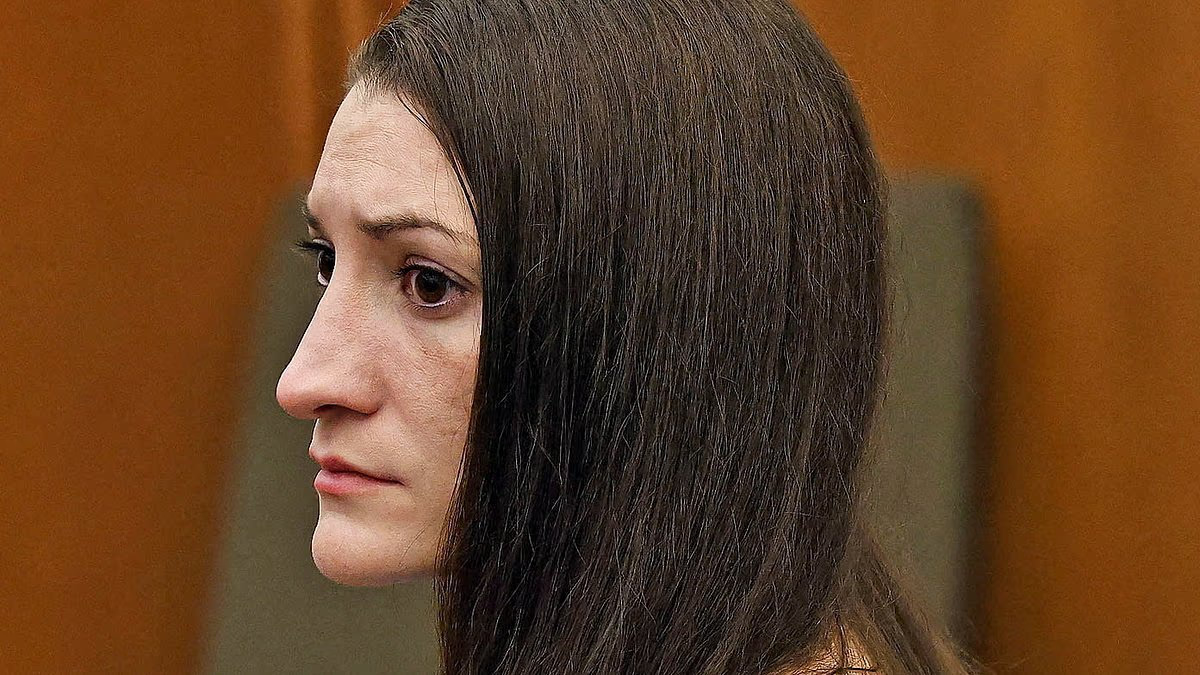

Lindsay Clancy’s defense lawyer said his client is “very upset” after jurors were sent home for the day, having informed the judge for a second time that they remained unable to agree on a verdict.
The 12-person jury, made up of nine women and three men, has now spent 29.5 hours deliberating whether Clancy should be found guilty of murder, convicted of manslaughter, or deemed not criminally responsible for her actions.
Leaving court on Wednesday, defense attorney Kevin Reddington described Clancy as devastated and anxious as she waits to learn the outcome of the high-profile murder trial.
“You see the mascara on my suit? That’s how she’s holding up,” Reddington told reporters. “She’s upset. She’s very, very upset.”
He said Clancy’s thoughts remain centered on her children, adding that she is “very, very sad.”
Reddington also expressed appreciation for the jury’s careful work and said he would be prepared to take the case to trial again as soon as next week if deliberations end in a continued deadlock.
“If they come back with a verdict, we’ll see what it is. If they don’t, I’m ready to try it next week,” he said outside the courthouse.
“I’m very proud of the jury. It’s a tribute to the system,” Reddington added. “They’re working very, very hard, and whatever happens in this case, nobody can say they haven’t given it everything they have.”

Lindsay Clancy, 36, has admitted to killing her children, but pleaded not guilty to murder by reason of insanity, citing postpartum psychosis

Clancy’s defense attorney, Kevin Reddington, revealed that the killer mom is ‘sad’ and ‘upset’ as she is waiting to learn her fate
Shortly after 2pm on Wednesday, the group sent a note to Judge William Sullivan saying they were at a standstill.
‘Members of the jury, I’ve got your question, and the question, or probably more of a statement than a question, saying, ‘After much deliberation, we are still unable to come to a unanimous decision,” the judge said.
He then read the panel the Tuey-Rodriguez instruction, also known as the ‘dynamite charge ‘–which guides them that they are in the best position to reach a verdict and that a future jury would not be better equipped than them.
It is a final instruction read to a jury in Massachusetts before a mistrial can be declared.
‘There is no reason to suppose that the case will ever be submitted to 12 persons more intelligent, more impartial or more competent to decide it. Or that more or clear evidence will be produced,’ Sullivan said.
‘With this in mind, it’s your duty to decide the case if you can do it conscientiously. In order to make a decision more attainable, the law imposes the burden of proof on one party or the other in all cases. In the present case, a criminal case, the burden of proof is on the Commonwealth to establish every element of the crime charged beyond a reasonable doubt.
‘If you are left in doubt of any element of the crime, the defendant is entitled to the benefit of the doubt and must be acquitted.’
The judge may give the jury the Tuey-Rodriguez instruction no more than twice; after that, the judge must declare a mistrial.

The jury was dismissed for the day on Wednesday after they told the judge they are deadlocked for a second time

Clancy is on trial for the murders of her three children, Cora, five, Dawson, three, and eight-month-old Callan, at her home in Duxbury, Massachusetts, in 2023
The group then continued to deliberate until 4pm, and they were dismissed for the day.
‘Members of the jury, I know it’s been a long day,’ Sullivan said. Some jurors looked tired and worn out as they nodded along to the judge.
He thanked them for their time and reminded the panel not to read or discuss anything about the case.
Sullivan then dismissed the panel until Thursday morning. The jury is not being sequestered.
Clancy, 36, is on trial for the murders of her three children, Cora, five, Dawson, three, and eight-month-old Callan, at her home in Duxbury, Massachusetts, in 2023.
She admitted to killing her children but pleaded not guilty to murder by reason of insanity, citing postpartum psychosis as a result of overmedication.
During the five weeks of testimony, prosecutors argued the killings were intentional and well planned, not the work of someone who had lost control.