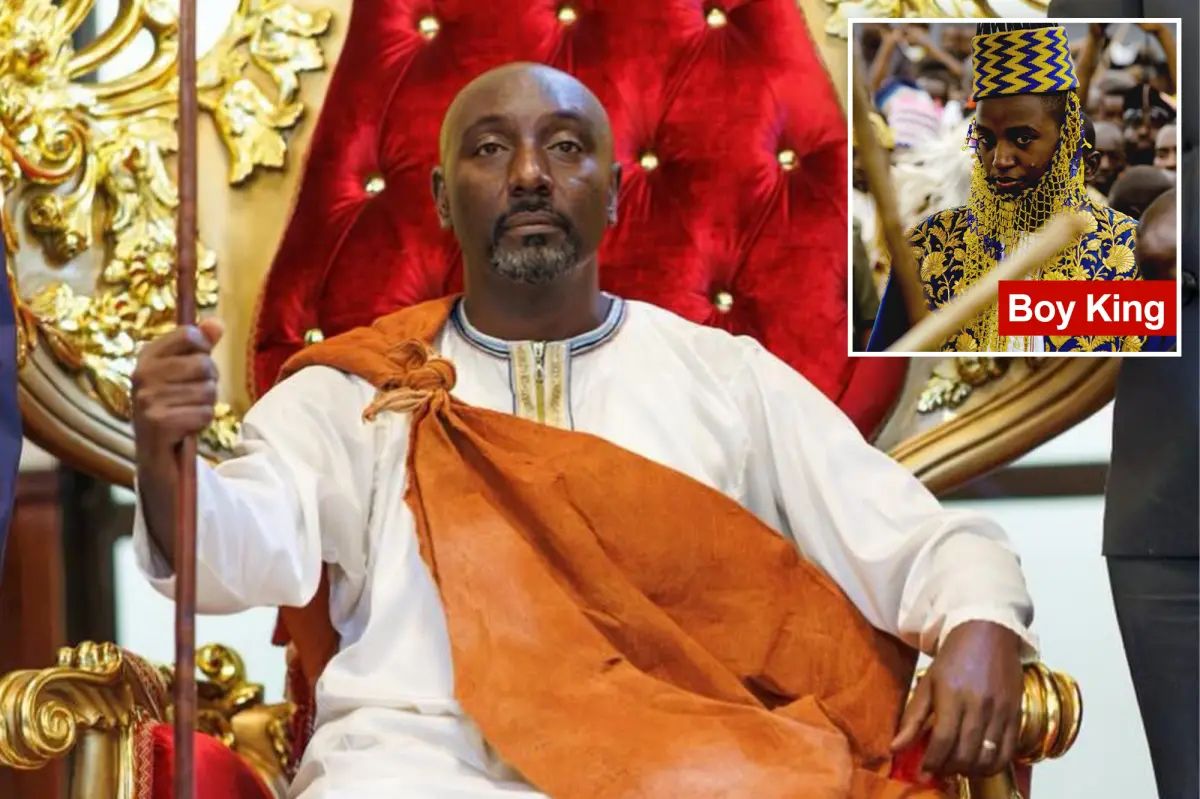
A journalist was due to be crowned Tuesday as the new king of Uganda’s Tooro Kingdom, a traditional monarchy still mourning the death of its former “boy king” and facing a contentious succession dispute.
The incoming monarch is a prince who spent years working as a broadcaster and editor for the Uganda Broadcasting Corporation.
He has taken the regnal name Edward Rukidi Nyabongo. After completing overnight rituals, he was escorted into the palace and was scheduled to be formally presented to his followers later Tuesday.
Uganda’s traditional kingdoms were abolished in the 1960s, following independence from British colonial rule, by a republican president who said the move would help unite the country. The kingdoms were restored in 1993.
Although traditional rulers have no formal governing powers and are prohibited by law from taking part in partisan politics, they retain considerable influence among their communities as custodians of culture and tradition.
Thousands of people are expected to attend the coronation in Fort Portal, a remote town in western Uganda near the border with Congo. The ceremony will also be shown on television.
Nyabongo was not considered a leading candidate in the line of succession. However, elders from the kingdom’s ruling Babiito clan selected him from a group of eligible princes after King Oyo Nyimba died of cancer in August at age 34, leaving no publicly known heir.
The queen mother, Best Kemigisa, challenged the decision, saying the selection of Nyabongo did not comply with the written will left by King Oyo.
Kemigisa has said Oyo had a young son whose identity would be disclosed at an appropriate time. Her claim has raised questions about Nyabongo’s legitimacy and the Babiito elders’ authority to choose him.
NEXT UP: Florida Sex Offender Accused of Using Babysitting Ad Trap; Police Probe Interstate Predator Claims
Local media reported tense moments at Oyo’s funeral on Sept. 12, including a brief dispute over custody of the late king’s remains.
The alleged son has not yet been publicly identified. Still, purported images of a child described online as “Baby Oyo” have spread widely on social media, offering hope to supporters of the late monarch.
Critics, however, argue that any child claiming the throne should have been presented to the kingdom’s elders while Oyo was still alive.
“They have demonstrated that these are the norms of the kingdom,” Nicholas Sengoba, a prominent Ugandan political analyst, said of the Babiito’s decision to select Nyabongo. “Many of these positions may not be popular.”
Oyo became king in 1995 at just 3 years old, following his father’s death. Dressed in colorful robes, the curious child became a beloved figure among his hundreds of thousands of followers.
During his coronation, Oyo took part in a series of traditional rituals and was escorted to the royal cemetery for a coming-of-age ceremony. There, he successfully tossed nine coffee beans into his father’s tomb.
Oyo was once recognized unofficially as the world’s youngest king. He remained a captivating figure, even for foreign leaders who met him at national events, including South Africa’s Nelson Mandela.
Libyan leader Moammar Gadhafi was among those who formed a close relationship with the Tooro royal family, treating them as though they were part of his extended household.
Gadhafi visited Uganda several times and supported Oyo and Kemigisa for years before his death in October 2011.
Regents appointed by the kingdom guided Oyo during his childhood and continued to oversee his affairs until he reached adulthood at 18.