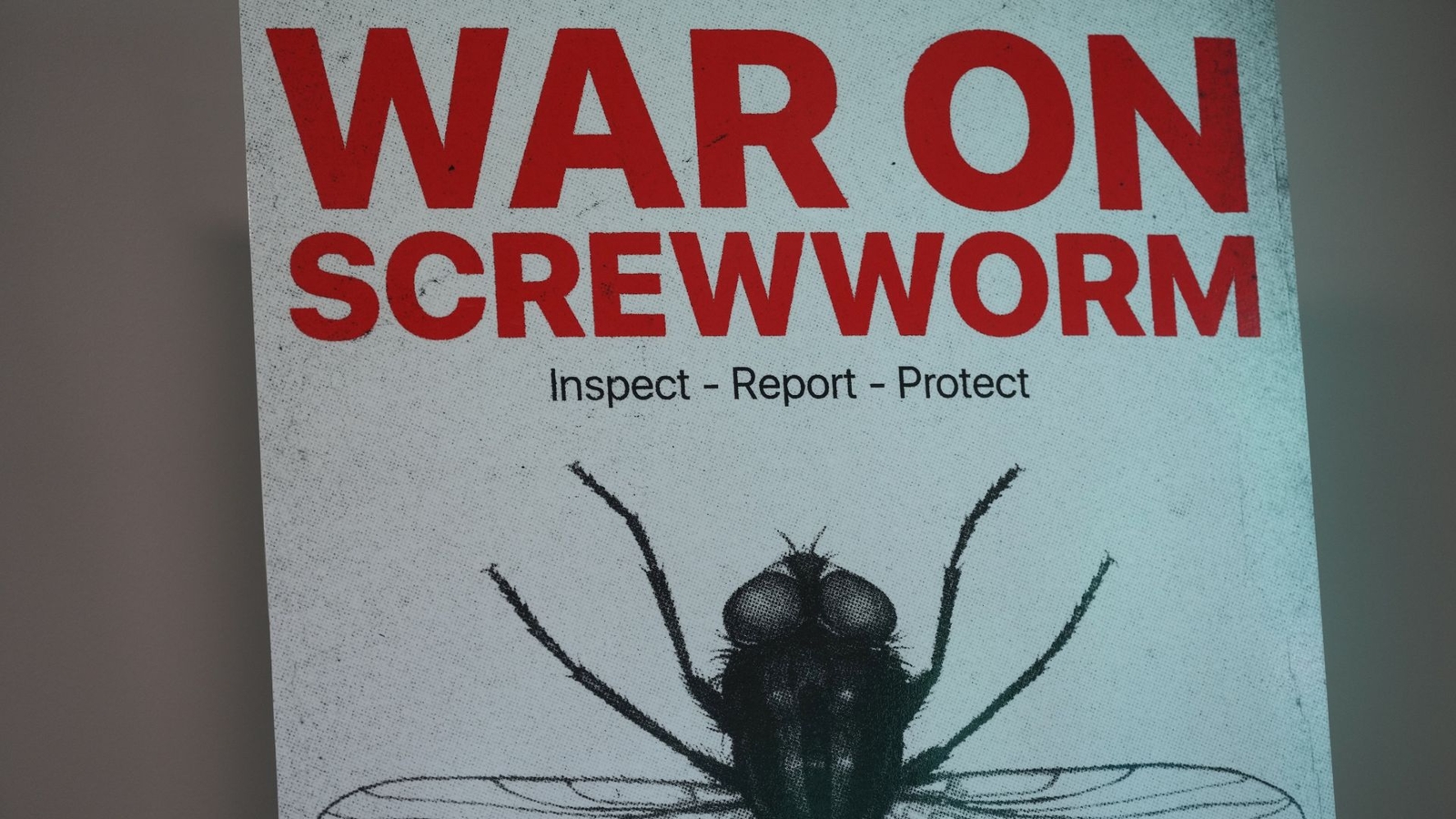

On Monday, the U.S. Department of Agriculture revealed the confirmation of three additional New World screwworm cases, with one case surfacing outside the primary cluster in Texas. This development underscores the challenge of controlling a reemerging pest that poses a significant threat to the country’s cattle industry.
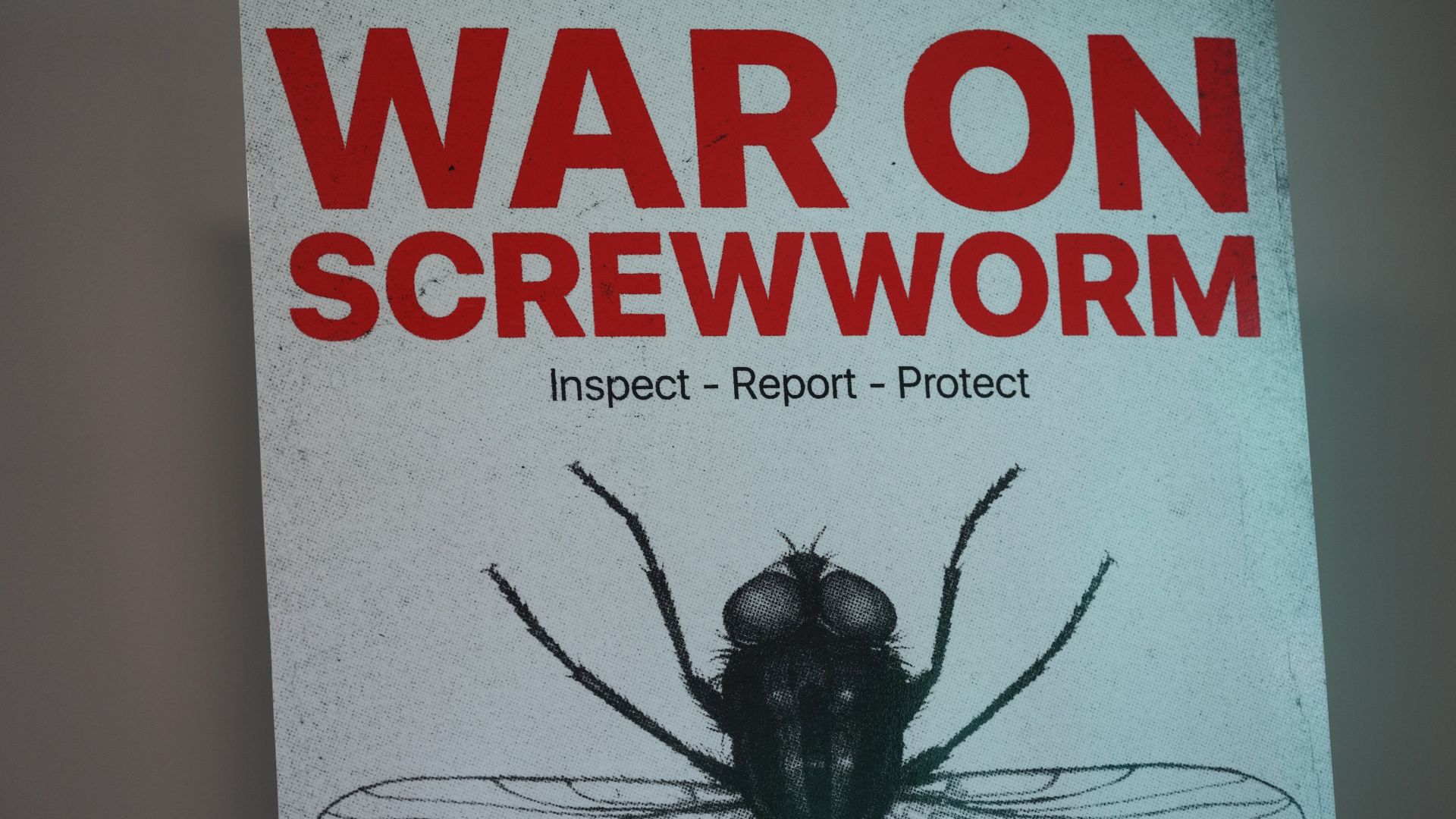
The screwworm, contrary to its name, is the larval stage of a fly that preys on living tissue, rather than decomposing matter. These flies deposit their eggs in open wounds on animals such as cattle, but they can also target wildlife, pets, and, on rare occasions, humans. The government combats this pest by releasing sterilized male flies from aircraft to mate with wild females, a strategy that has successfully confined the screwworm to Panama’s southern edge for many years.
Currently, there are five verified cases: three involving calves and a goat in Texas, along with a dog from Lea County, New Mexico. Initially reported as a Texas incident, the dog’s case was subsequently reclassified as New Mexico’s first when it was found that the pet hadn’t traveled to Texas or Mexico.
Authorities are conducting investigations around the property where the New Mexico dog resides. If infected flies are detected, the region will see increased animal inspections, according to New Mexico State Veterinarian Samantha Holeck, who addressed the issue in a virtual press briefing.
Screwworm cases continue to climb
The first two screwworm cases were identified last week in calves located a few miles apart in South Texas. The latest confirmations involve a calf in La Salle County, southwest of San Antonio, and a goat in Gillespie County, west of Austin.
To contain the pest’s spread, officials have established a 12-mile (20-kilometer) quarantine zone around each affected area.
Along with cattle and other warm-blooded livestock, scientists worry screwworms could devastate the millions of wild white-tailed deer in Texas.
Scientists expect new cases could pop up in the coming days and weeks, but it doesn’t mean screwworm is spreading rapidly, said Edward Burgess, a University of Florida entomologist who studies the fly.
“When that first case is seen, everyone is being vigilant and their eyes are on it more intensely,” Burgess said. “And when you are looking for something, you are more likely to see it.”
A race to stop the screwworm now moves to Texas
Screwworm gets its name from the maggots’ habit of burrowing – or screwing – into a wound, according to the USDA. The pest eats the flesh of the animal, further opening wounds and increasing the risk of deadly bacterial infections. Animals can die within a few weeks if not treated. There are a dozen government-approved medications to treat livestock.
The agency and the U.S. cattle industry have been racing to prevent an outbreak since screwworm was detected in Mexico late in 2024. The USDA has been dropping sterile flies in south Texas since February and is working to both increase sterile fly production in plants outside the U.S. and build a $750 million fly factory in Texas.
So far, screwworm’s reappearance hasn’t greatly affected beef prices, which are already near record levels because there are fewer cows in the United States. Although the parasite attacks live cattle, it does not infest meat or fruit.
Canada temporarily stopped importing cattle, horses or other livestock from Texas on Friday. The parasites prefer humid areas where temperatures are at least 77 F (25 C), making them more of a summer problem up north.
Fighting screwworms with sterile male flies
Burgess said the long-term solution – breeding sterile male flies – is months away. Since wild female flies mate just once, if that encounter is with a sterile male, outbreaks can eventually be halted as the flies die out.
The goal is to have enough sterile flies to stop the pests from returning in 2027 after the winter kills off most of them, USDA Secretary Brooke Rollins said at a news conference at the U.S. Livestock Insects Research Laboratory in Kerrville, Texas.
Scientists are also working on ways to sterilize only male flies to make the program even more effective.
Texas officials encouraged ranchers to keep a close eye on their herds and local wildlife. There’s now a 24-hour screwworm hotline and a website and map for reported cases.
“This is a highly treatable condition if you act on it immediately,” Republican Gov. Greg Abbott said.
However, Texas Agriculture Commissioner Sid Miller – who lost the recent Republican primary to a candidate backed by Abbott – said the federal response will take too long and risks crippling the cattle industry.
Instead, he says a poison bait could eliminate the screwworm problem in a few months, even if the USDA and other experts say the bait hasn’t been proven effective and could poison other flies, animals and even humans.
“What the hell is a good fly?” Miller said in an interview.
Associated Press writers Susan Montoya Bryan in Albuquerque, New Mexico, and Scott McFetridge in Des Moines, Iowa, contributed to this report.
Copyright © 2026 by The Associated Press. All Rights Reserved.


