
Most Iranian attempts to attack commercial vessels in the Strait of Hormuz have failed, and the strategically vital waterway remains open to shipping, U.S. Central Command spokesperson U.S. Navy Capt. Tim Hawkins told News Outlet this week.
Hawkins spoke after CENTCOM reported that the GFS Pride, a Singapore-flagged container ship owned by a Cyprus-based company, was struck by an Iranian projectile in the Strait of Hormuz on Wednesday. The vessel later sank while it was being towed to shore after a fire broke out onboard.
“The vast majority of Iran’s attempted attacks on innocent civilian mariners traveling through the Strait of Hormuz, an international waterway, have been unsuccessful,” Hawkins said. He added that U.S. forces have helped coordinate protection for thousands of vessels that safely made the passage. “About 97% of the ships seeking to transit the Strait of Hormuz have done so successfully without being struck by an Iranian projectile.”
“But let’s be clear: What Iran’s Islamic Revolutionary Guard Corps is doing is unjustified, and it is also failing because it has not achieved its objective of closing the Strait of Hormuz,” Hawkins said. “The waterway is open, it is available for transit, and shipping has continued even today.”
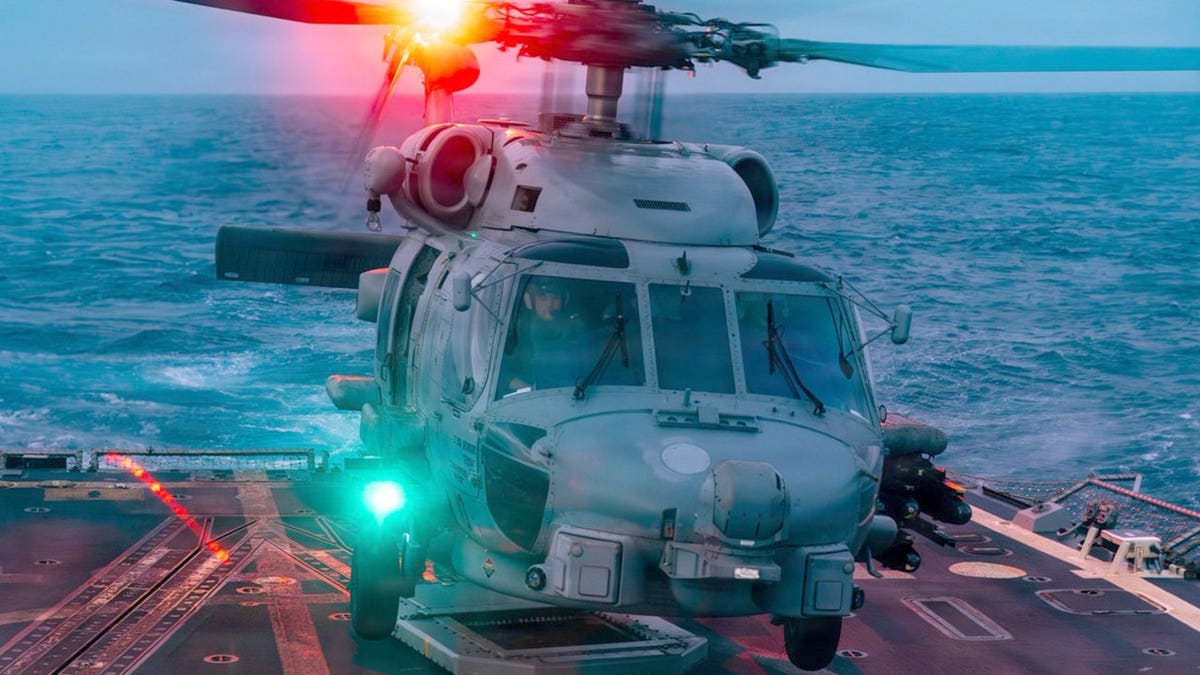
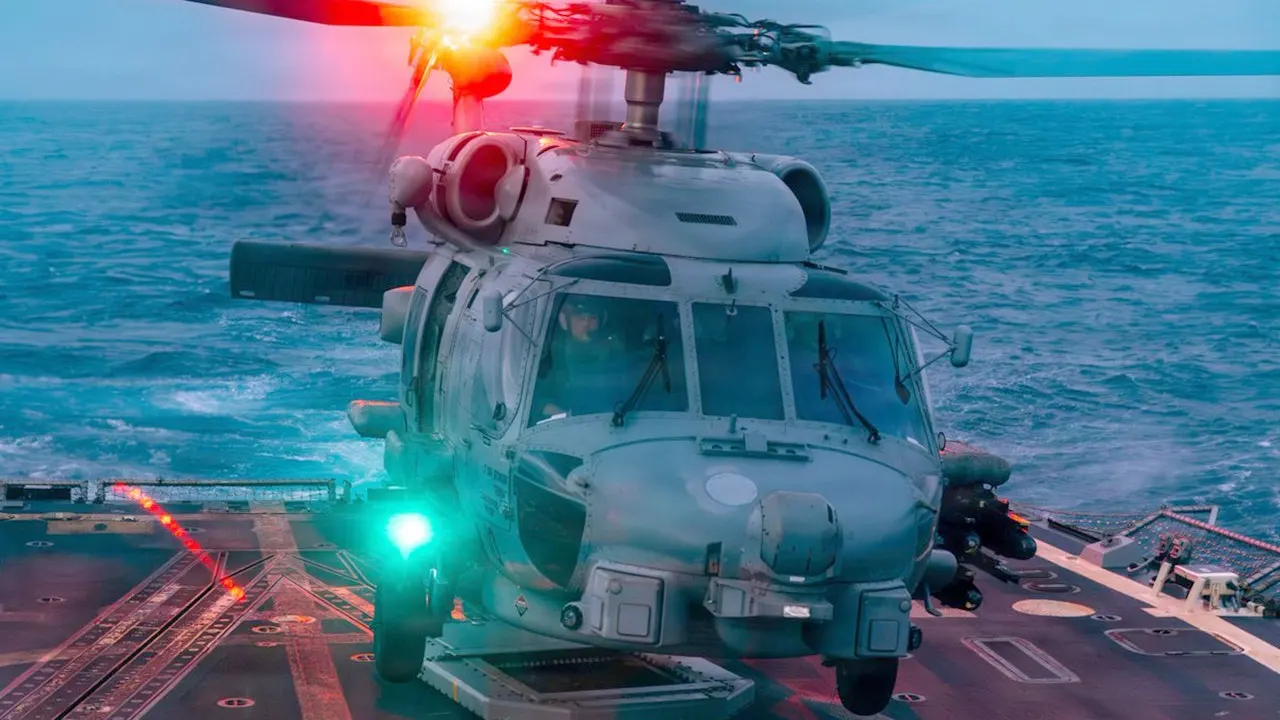
An MH-60R Sea Hawk helicopter lands on the flight deck of USS Rafael Peralta as it transits regional waters, in this photo released by U.S. Central Command on Oct. 15, 2026. CENTCOM said the USS Rafael Peralta is enforcing a military blockade of Iranian ports. (CENTCOM)
In a Friday update, CENTCOM Commander Adm. Brad Cooper said the IRGC had repeatedly attacked merchant ships using the Strait of Hormuz in recent days and months, killing civilian mariners in numerous incidents.
“The International Maritime Organization reports that more than 20 civilian mariners have been killed in Iran’s attacks on commercial shipping since February,” Cooper said.
“About 400 merchant ships have sailed through the Strait over the past seven days alone,” he said. U.S. forces also helped Gulf partners transport more than 100 million barrels of crude oil during that period, bringing the total volume assisted through the waterway in recent months to more than 1.3 billion barrels.
MORE STORY: Bills Star Reveals Trash Talk That Led to Rival’s Sucker Punch
Hawkins also said he believes “every American should be proud” of the U.S. service members deployed across the Middle East, particularly because they are carrying out two missions simultaneously in response to Iran.
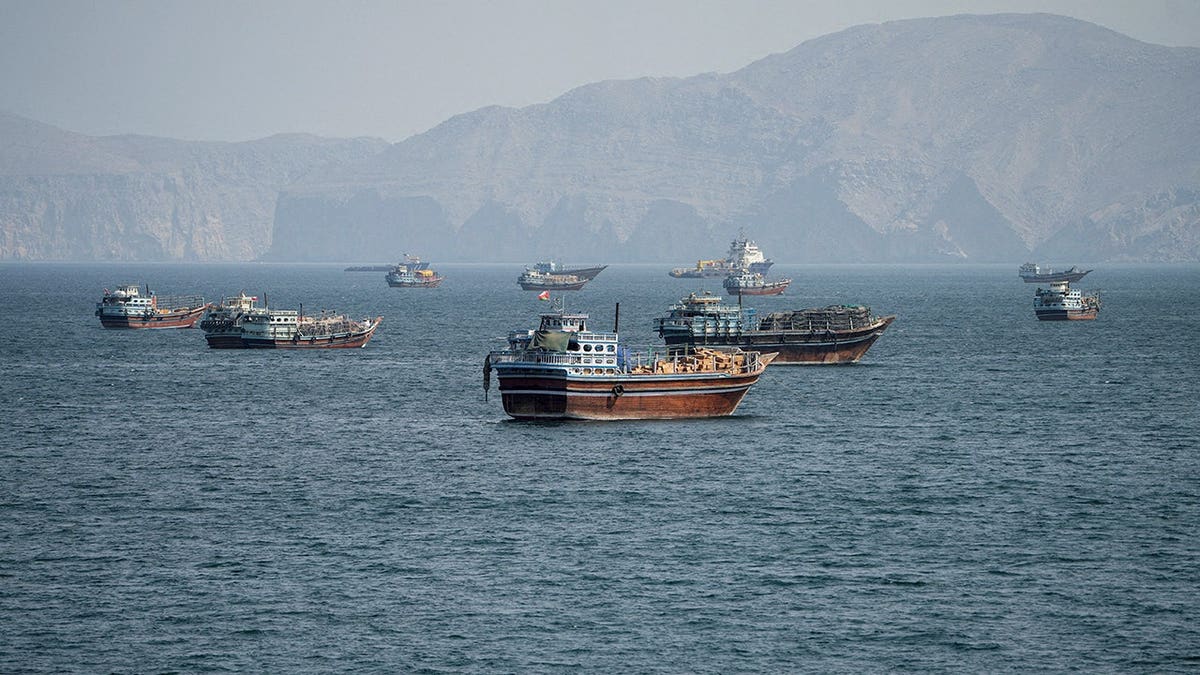
Vessels are seen in the Strait of Hormuz near Musandam, Oman, on Oct. 2, 2026. (Reuters)
One mission, Hawkins said, is supporting commercial traffic through the Strait of Hormuz despite what he described as Iran’s “unjustified aggression.” Thousands of ships have crossed the waterway in recent months, he said, along with more than 1 billion barrels of crude oil.
“At the same time they are encouraging traffic and supporting international shipping, they are maintaining a steel-wall blockade against Iran,” Hawkins said. “There have been no exports or imports to Iran without U.S. permission, apart from humanitarian ships being allowed to pass. That demonstrates the precision, dedication and professionalism of our troops as they carry out this complex mission — not just one mission, but two at the same time.”
More than 50,000 U.S. service members are currently deployed across the Middle East, according to Hawkins.
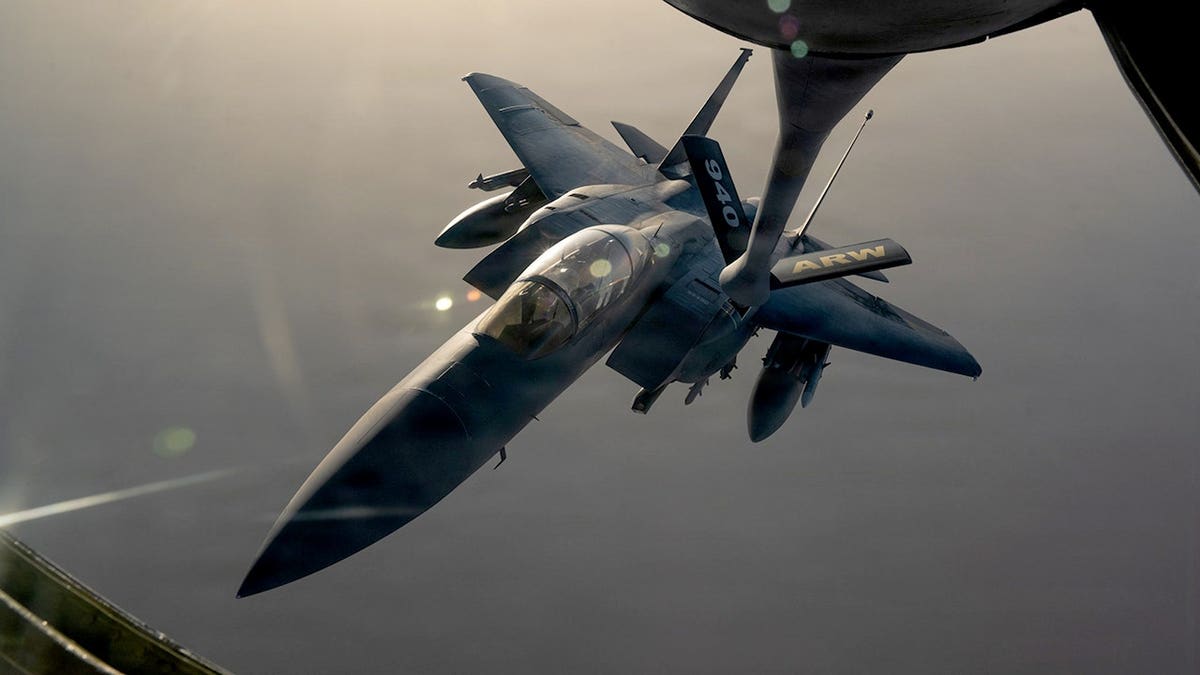
A U.S. Air Force F-15E Strike Eagle is refueled by a KC-135 Stratotanker while patrolling the skies over the Middle East, according to CENTCOM, in this image released on Oct. 2, 2026. (CENTCOM)
“They remain highly vigilant and deeply committed, serving with courage alongside our regional allies and partners,” Hawkins said. “It should not be forgotten that we continue to stand shoulder to shoulder with our Gulf allies and partners as they defend their airspace against unjustified and unwarranted Iranian attacks. We have been highly successful working together, and we will continue to do so.”