
Thousands of homeless individuals were registered to vote at Los Angeles shelters, even though many do not reside there, and some facilities lack any sleeping accommodations.
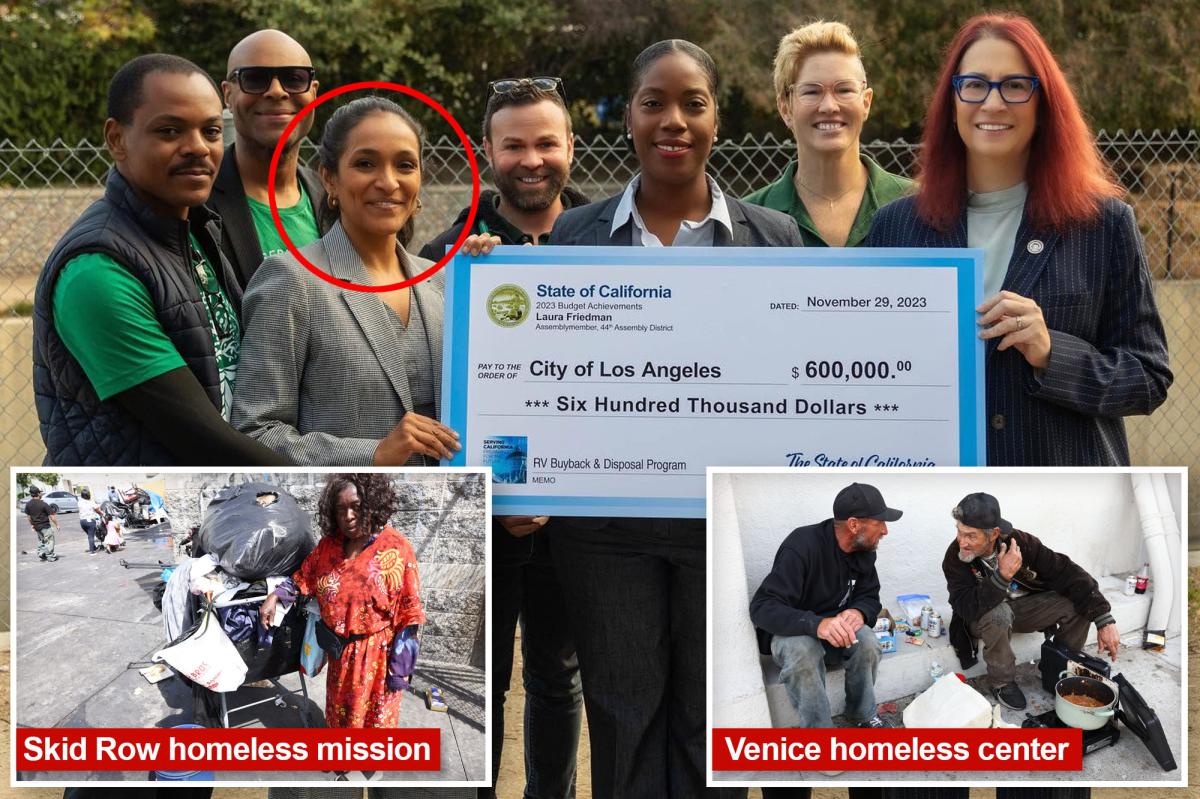
In a recent turn of events, Spencer Pratt was defeated by Nithya Raman in the mayoral race on Monday night. It has come to light that a drop-in center, which received $600,000 from Raman, a socialist candidate, has 185 registered voters at its address despite not offering any lodging.
This situation has led U.S. Attorney Bill Essayli to announce an investigation into the matters uncovered by The Post. He intends to “follow the evidence” to determine if any legal violations have occurred.
Records reveal that 7,600 voters are registered to addresses associated with homeless shelters and service providers.
One such example is the St. Joseph Center in Venice. According to voting records, this drop-in center had 185 voters registered at its location and received $600,000 in taxpayer funds from the homeless and housing committee while Raman chaired it.
Last week, The Post reached out to Raman’s campaign and the center for comments on the connection between the councilmember and the organization but has not received a response. Notably, a photo of Raman presenting a check was removed from the center’s website following these inquiries.
Martin Rowe, a homeless man living in Venice, told The Post he was registered to vote during an outreach effort outside a Ralphs grocery store.
“They asked you all the questions,” Rowe said. “They gave you a paper.”
The largest concentration of homeless voters as at the Midnight Mission in Skid Row, where voting records show 1,160 registrations â but its website shows it only has beds for 84 for men and 36 for women.
One homeless man on Skid Row, Norman, said he’s witnessed voter registration efforts in the area for years and claims he had previously been paid to help sign up voters â he also claims cigarettes were offered to some people during the drives.
“It was a big push to get a certain area of town registered to voting,” Norman, who declined to give a last name citing a pending court case, told The Post.
“They are just doing it because we’re here. You see people sitting around. It’s just a few lines to sign and you’re a registered voter.”
The Post could not independently verify who provided them or whether the activity was connected to any campaign, political organization or voter registration group â but the details echo a similar case previously reported by our newspaper. In that case, a Marina Del Rey woman agreed to plead guilty to bombshell charges that she paid homeless people on Skid Row to register to vote in a 20-year scheme tied to illegal petition signature collection.
Outside the Midnight Mission on Monday afternoon, The Post met with Bo Jackson, who is registered to vote but says he could not remember registering â he couldn’t even name a candidate in the LA mayor’s race.
The Post asked Midnight Mission staff for comment on how ballots are handled when they arrive at the shelter, but our reporter was kicked out and was left without a response.
Hundreds of voters tied to supportive housing developments and affordable housing projects have been further identified through our review of public records. Several locations added nearly 200 registered voters during the final weeks before the deadline.
Three addiction treatment and crisis-service providers also appeared among addresses with significant numbers of registered voters.
Voter registration records reviewed by The Post show more than 80 registered voters across four behavioral health and addiction-treatment facilities: The Corner of Hope Mental Health Service Center, Volunteers of America Alcohol Services, Los Angeles Centers for Alcohol and Drug Abuse, and Homeless Health Care Los Angeles’ Harm Reduction Center.
The Post also identified 313 registered voters tied to addresses associated with Los Angeles County social services facilities.
Essayli said, “California has effectively decriminalized election fraud by removing basic fraud detection that are common in other states.
“Dirty voter rolls, with no voter ID and unregulated ballot harvesting is a open invitation for bad actors to commit fraud.
“If California wants to restore public trust, we invite them to comply with federal law and allow us to audit it’s voter rolls – what are they afraid of.”
Garrett Fahy, an attorney who practices election law in California, told The Post the registrations identified during our review reflects how California’s election system is designed to operate.
“The system is not set up to prevent people from voting. It’s to ensure anyone who can register votes,” Fahy said.
He noted that county election officials generally are not tasked with independently investigating voter registrations but instead administer elections under state law and regulations established by lawmakers and the Secretary of State.
Fahy said the concentration of voters registered through shelters, service providers and other nontraditional addresses should be viewed within the broader framework of California election law.
“This is the system that our representatives have given to us,” Fahy said. “If you don’t like our system, don’t yell at your local elections official. Go yell at Sacramento and go yell at the Secretary of State because those are the people who determine the laws that we have.”
Fahy added that the voter registrations reviewed by The Post appear to be a product of policy choices made over many years by state lawmakers, not actions taken by local election workers.
“This is how our system works as it was intended to work,” Fahy said.
California law also permits voters to designate another individual to return a completed ballot on their behalf.


